
Scientists used Earth as a dark matter detector
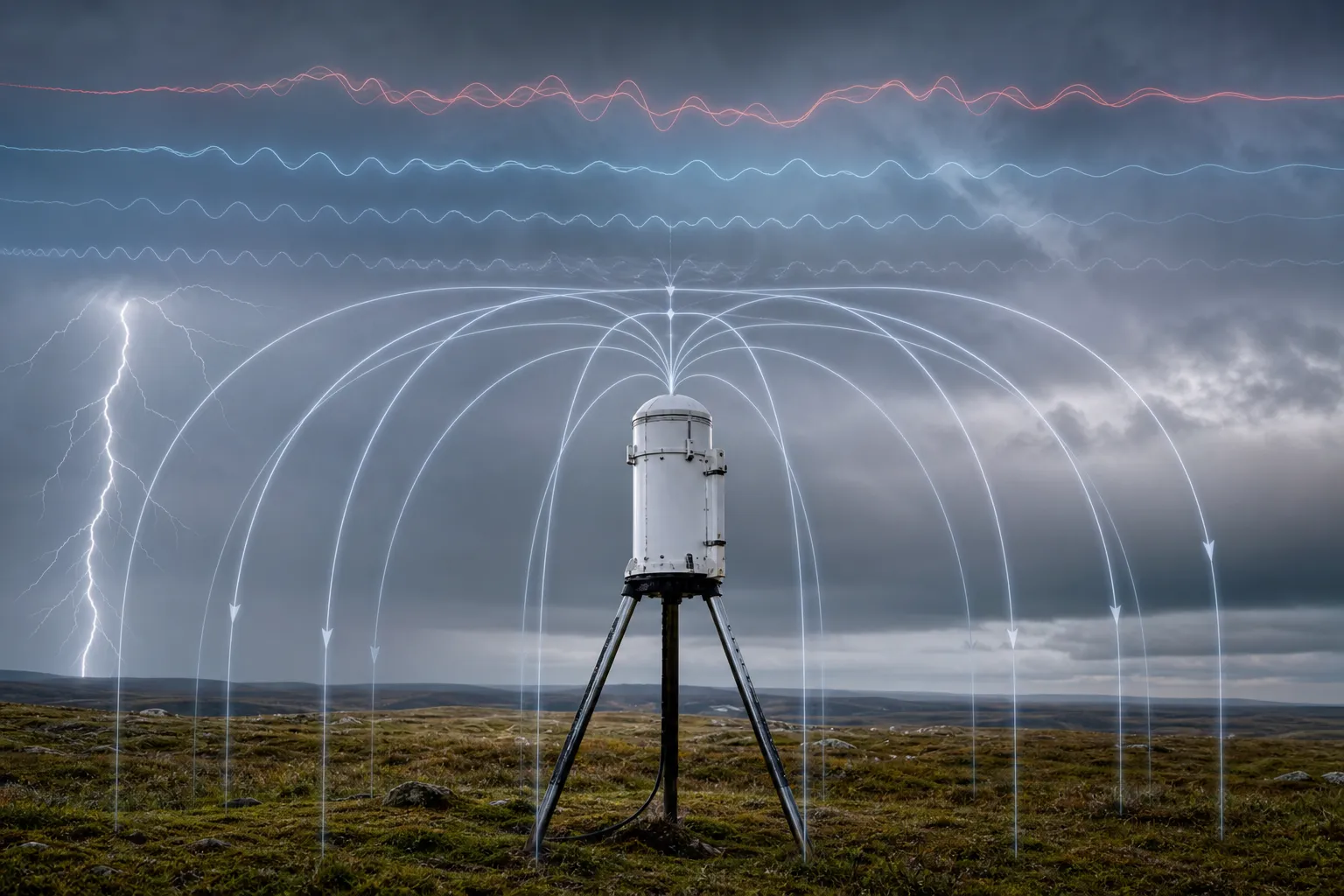
Researchers from Kyoto University, Hiroshima University and Nihon University used Earth’s magnetic field and atmosphere as a planetary detector to search for ultralight dark matter. An analysis of geomagnetic data made it possible to strengthen constraints on the interaction of axions with light and identify several dark photon signal candidates, ScienceDaily reports.
A resonator between Earth and the ionosphere
The scientists studied two hypothetical dark matter candidates: ultralight axions and dark photons. In the mass range considered, these particles would be approximately 19–21 orders of magnitude lighter than an electron.
The space between Earth’s surface and the ionosphere can resonate with electromagnetic waves. The authors developed a theoretical model that takes the atmosphere’s electrical conductivity into account. According to their calculations, the Earth-ionosphere cavity can amplify signals near 8 Hz, while the model makes it possible to reliably analyze frequencies up to approximately 30 Hz.
Previous theoretical approaches could reliably describe only frequencies below 1 Hz. The new model also predicts differences between possible signals: an axion signal would depend on the observation location and would be strongest in Southeast Asia, while a dark photon signal should be nearly equal in strength in different parts of the world.
More current news is available on the UA.News Telegram channel Telegram.
Analysis of geomagnetic data
The team analyzed approximately ten years of geomagnetic field measurements collected in 2012–2022 by the British Geological Survey’s Eskdalemuir Observatory. Artificial sources of noise were first removed from the data, after which the researchers searched for stable signals in a narrow frequency range that dark matter could produce over a long period of time.
Using Earth as a detector for a certain axion mass range made it possible to establish constraints on their interaction with light that are approximately 100 times stricter than the previous best result of a ground-based experiment. They also proved comparable to constraints obtained from astrophysical X-ray observations by Chandra and NuSTAR, although such astrophysical constraints depend on theoretical assumptions.
Dark photon signal candidates
During the search for dark photons, the researchers identified several candidate signals that could potentially be related to dark matter. At the same time, the source of these signals is currently unknown, and they have not been confirmed as evidence of the existence of dark matter.


