
In Poland, the political struggle is intensifying ahead of the upcoming parliamentary elections, which will take place in October 2027. Ukraine remains one of the hottest topics in the election campaign. Issues of military aid, European integration, and historical memory are increasingly being used as tools to win over voters.
At the same time, recent opinion polls show that aggressive anti-Ukrainian rhetoric does not always pay off politically. On the contrary, it can erode trust among the core electorate.
What were the consequences of the anti-Ukrainian statements made by one of the candidates for prime minister, why are Polish politicians changing their tone toward Kyiv, and how are Poles themselves reacting to this—read about it in this UA.News article.
The Political Struggle and the Candidates for Prime Minister
The election campaign in Poland appears to be entering a phase of intense confrontation between the main contenders for power—the right-wing conservative Law and Justice (PiS) party and the pro-European Civic Coalition.
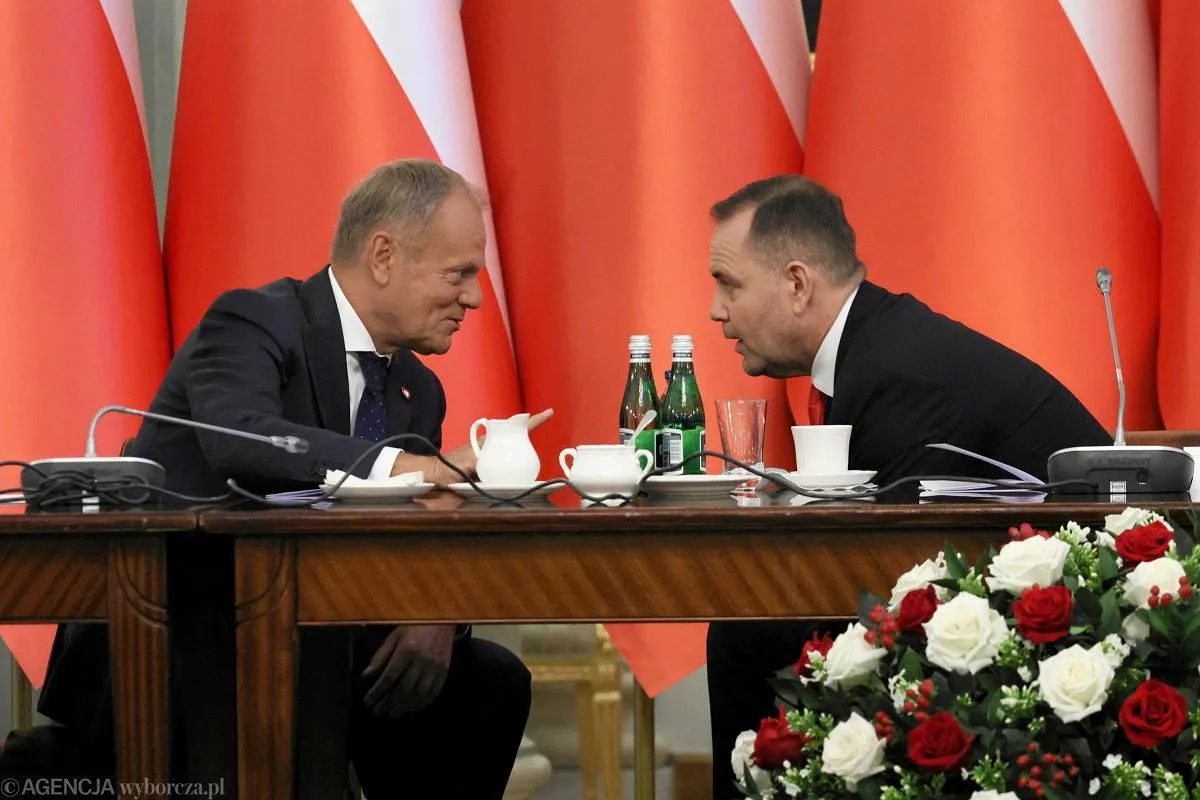
This is fueled by constant political competition at the highest levels of government, stemming from the fact that the president is Karol Nawrocki of PiS, while the prime minister is Donald Tusk, leader of the Civic Coalition.
The rivalry between the political camps is also complicated by constantly shifting voter preferences. According to polls, no political force currently has a guaranteed majority, so voters are evaluating not only the parties but also their respective candidates for prime minister.
The current head of government from the “Civic Coalition,” Donald Tusk, is losing support. Only about a third of Poles would like to see him remain prime minister after the 2027 election. Half of voters are firmly opposed to him.
The following well-known political figures are being considered as alternative candidates from the “Civic Coalition”: incumbent Foreign Minister Radosław Sikorski, Defense Minister Władysław Kosiniak-Kamysz, and Warsaw Mayor Rafał Trzaskowski.
The Law and Justice (PiS) party has named Przemysław Czarnik as its leading candidate for prime minister, although polls show that he is viewed controversially by a segment of the conservative electorate.
Przemysław Czarnek — PiS candidate
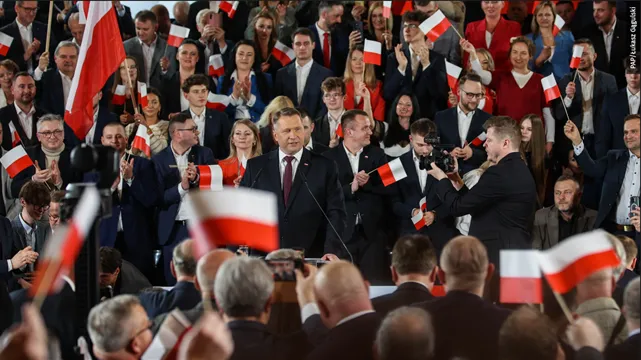
In March 2026, the PiS convention was held at the Sokół Arena in Kraków, during which the party’s leader, Jarosław Kaczyński, officially announced Przemysław Czarnik as the candidate for prime minister. It was here in 2015 and 2025 that the PiS leadership presented Andrzej Duda and Karol Nawrocki as presidential candidates.
Polish media describe Czarnik as a charismatic politician who speaks confidently at rallies. He is the vice president of PiS, a member of parliament, a former Lublin voivode, a former minister of education and science in Mateusz Morawiecki’s second government, a doctor of law, and a professor at the Catholic University of Lublin. Czarnek is also known for his criticism of the LGBT community and his public commitment to Catholic values.
Jarosław Kaczyński’s inner circle chose Czarneck primarily because of his anti-Ukrainian stance, which was expected to attract voters from the far-right “Confederation” and “Confederation of the Polish Crown” led by Grzegorz Braun. These political forces promote Russian narratives, demand an immediate end to all military aid to Ukraine, and call for the deportation of Ukrainian refugees.
Przemysław Czarnek has endorsed the rhetoric of Jarosław Kaczyński, who is categorically opposed to Ukraine’s accession to the European Union. But he has also taken up the arguments of far-right opponents. Appearing on the “Republika” television channel, he stated that the European Union must be forced to stop funding weapons for Ukraine and its reconstruction as long as Kyiv “glorifies Bandera’s ideology.”
“We must force the European Union—including through our position within the European Union—to immediately halt all funding for Ukraine’s armaments and reconstruction until Ukraine embraces humanitarian values,” said Čarnek.
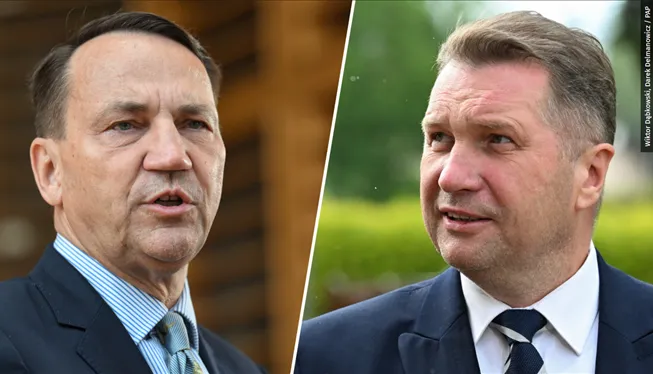
The prime ministerial candidate’s statements outraged Polish Foreign Minister Radosław Sikorski. He wrote on social media that with such calls, Czarnecki “wants to let Putin reach the Polish border,” and that the “PiS” party’s competition with the pro-Russian parties “Confederation” and “Confederation of the Polish Crown” over anti-Ukrainian rhetoric “is driving them out of their minds.”
Polish Defense Minister Władysław Kosiniak-Kamysz also spoke out against Czarneck’s rhetoric and the stoking of anti-Ukrainian sentiment.
“Anyone who confidently claims that support for Ukraine is unnecessary and harmful to Poland is undermining the security of the Polish state and acting against NATO’s interests,” the minister stated at a press conference following a meeting of the National Security Council.
Law and Justice (PiS) leader Jarosław Kaczyński intervened in the scandal and assured that Przemysław Czarnek’s statements against military aid to Ukraine do not reflect the position of the entire party.
“The Law and Justice Party maintains, and has always maintained, the position that military aid provided to Ukraine—including that from the European Union—is absolutely necessary. This is a key issue from the perspective of Polish national interests and our security,” Kaczyński wrote on social media.
“The Ukraine Issue” in Poland’s Elections
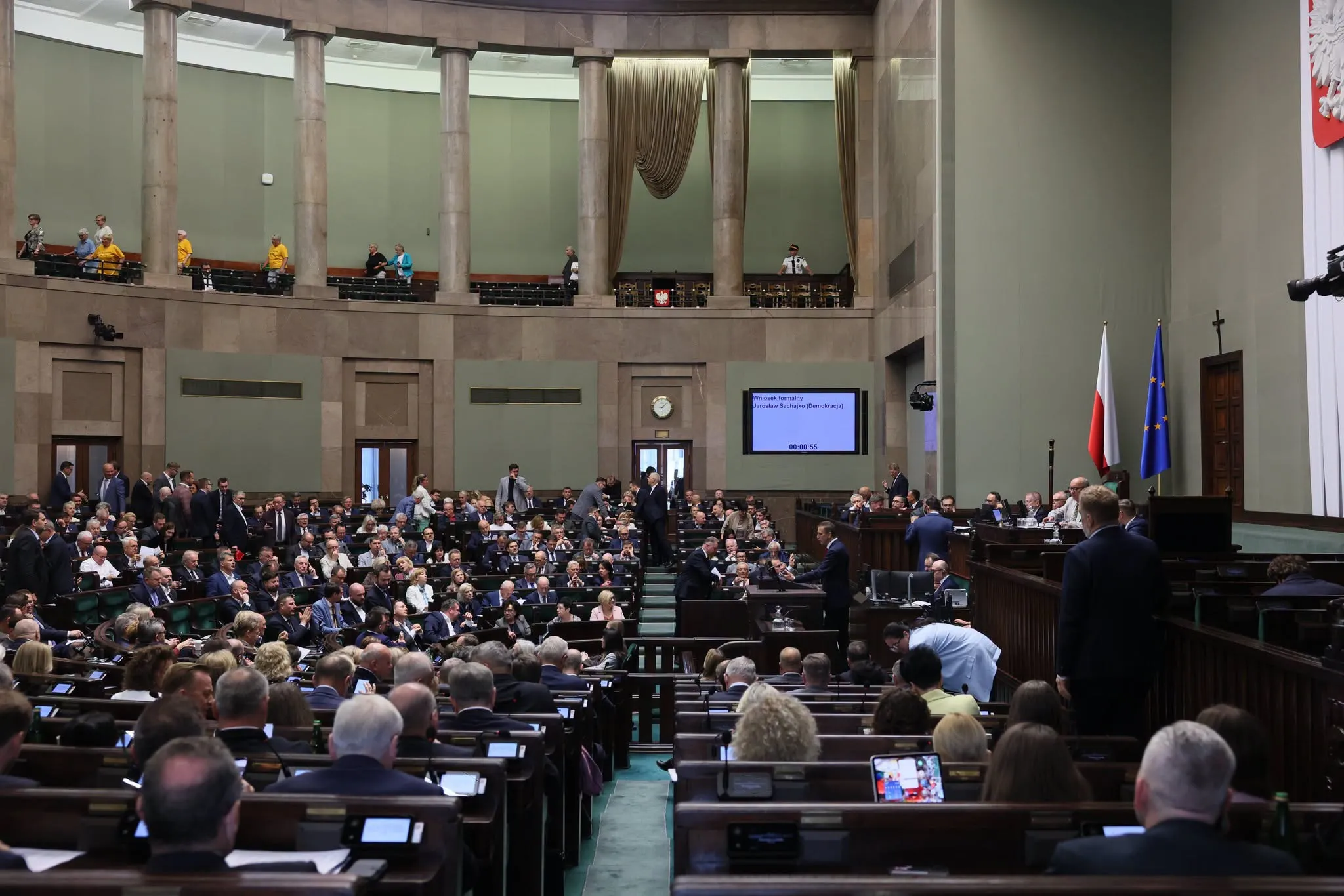
As the parliamentary elections approach, the topic of Ukraine is increasingly coming to the forefront of the political debate.
“Even without the controversy surrounding the UPA, everything would be the same. The ‘Ukrainian issue’ has become a factor in Poland’s domestic politics, not least because more than one and a half million Ukrainians live in the country,” explains Łukasz Adamański, director of the Mieroszewski Center, which specializes in Eastern European issues.
Influenced by information campaigns, public sentiment in Poland appears to be shifting toward negative trends. A poll by the Center for Public Opinion Research (CBOS) showed that 43% of Poles now view Ukrainians negatively, compared to 29% who express sympathy. In 2023, the figures were almost the opposite: 51% expressed sympathy, while 17% expressed hostility.
Polish experts call this a “vicious cycle”: the more politicians play the anti-Ukrainian card, the stronger anti-Ukrainian sentiments become. And the stronger these sentiments are, the more reluctant politicians are to resist them.
The problem is also that both main contenders for seats in parliament, “Law and Justice” and “Civic Platform,” risk failing to secure enough voter support to return to power and form a government. Therefore, they will be forced to form coalitions with other political forces. As opinion polls show, voters consider a coalition with far-right forces—who are the main critics of aid to Ukraine—to be the most likely scenario for the PiS party.
Przemysław Czarnek, in particular, embodied the new anti-Ukrainian course in PiS policy, which was not supported by all party members, although they did not publicly criticize it. One such opponent was former Prime Minister Mateusz Morawiecki, who noted that Poland had helped Ukraine “not out of any naivety or expectation of gratitude, but out of cold calculation... we knew that it was in our interest… to be separated from Russia by a state that would protect us from Russian imperialism.”
The attempt to distance themselves from Przemysław Czarnek’s anti-Ukrainian rhetoric demonstrated that the party understands: amplifying this issue could weaken its approval ratings. Statements aimed at voters of far-right parties unexpectedly met with resistance and a negative reaction from the PiS’s core electorate.
A poll conducted by CBOS in July was particularly telling. The questions concerned voters’ trust and distrust of Polish politicians. Among those whom Poles distrust the most were, for the most part, representatives of parties calling for a halt to European integration or military aid to Ukraine: Jarosław Kaczyński, chairman of the Law and Justice party (54%), Grzegorz Braun, leader of the “Confederation of the Polish Crown,” and Przemysław Czarnek, deputy chairman of PiS and the party’s candidate for prime minister (51% each). These statistics demonstrated a more complex and uncertain stance among Polish voters, particularly regarding the “Ukrainian issue.”


