
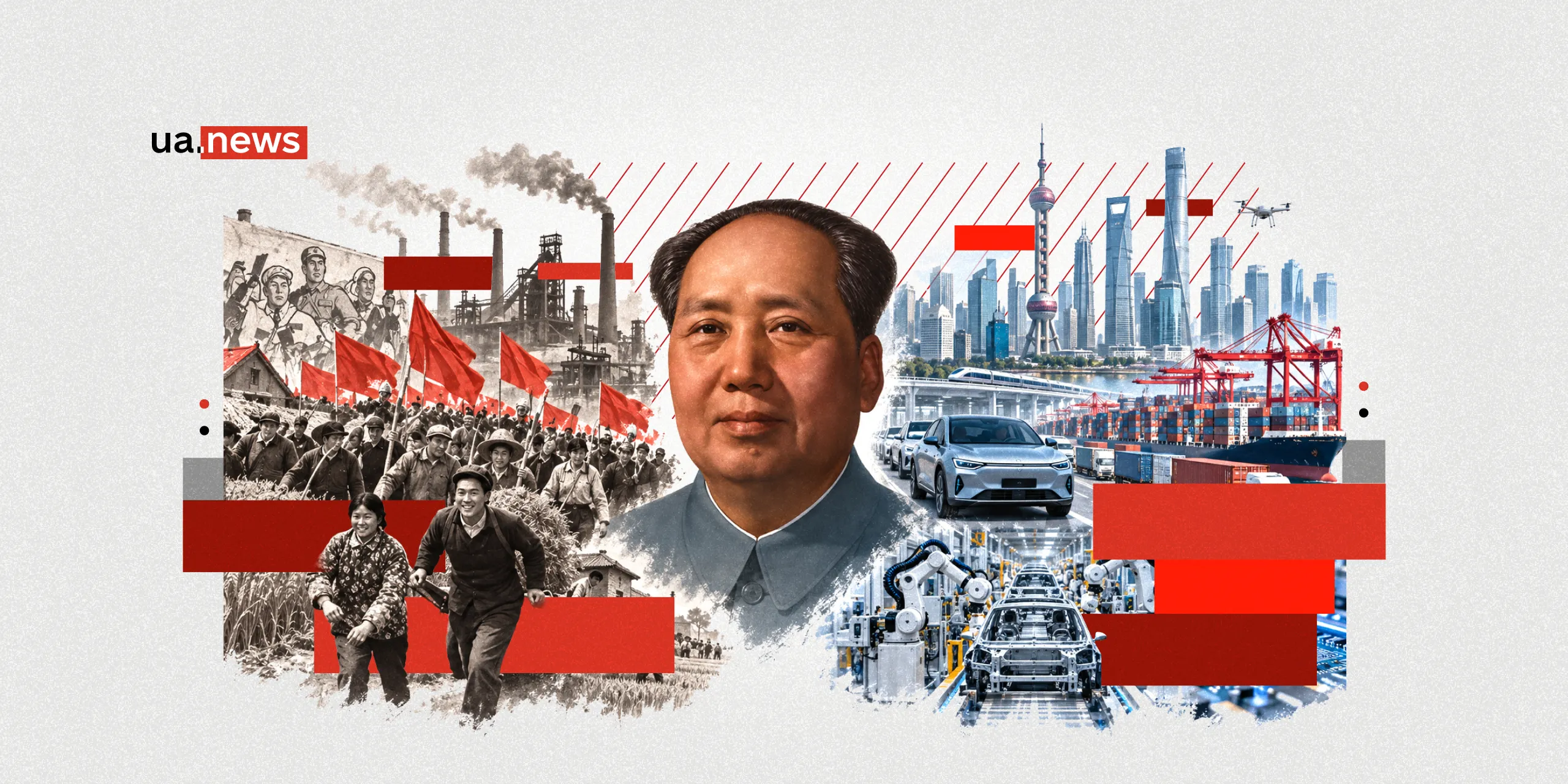
On September 9, 1976, Mao Zedong—the founder of the People’s Republic of China and the man who shaped the country’s political and economic course for nearly three decades—died in Beijing. The year 2026 will mark exactly 50 years since his death.
For modern China, Mao remains one of the state’s main symbols. His portrait still hangs above the Tiananmen Gate, and his ideas remain part of the Communist Party’s official ideology. Economically, however, the China of 2026 is almost impossible to compare with the country Mao left behind.
After his death, Beijing gradually allowed farmers to have greater autonomy over the fruits of their labor, began opening the country to foreign capital, created special economic zones, granted more freedom to businesses, and eventually integrated into the global trading system. Politically, China remained a one-party state, but economic rules changed so drastically that in less than half a century, the country went from being one of the world’s poorest economies to a global industrial hub.
UA.News explains what China was like at the time of Mao’s death, what changed after 1976, and how a country of peasants, communes, and centralized planning became the “world’s factory” and then began to compete with the West—no longer with cheap labor, but with electric vehicles, batteries, robots, and sophisticated electronics.
Mao left behind a great nation, but China was still a very poor country
When Mao Zedong proclaimed the establishment of the People’s Republic of China in 1949, the country was exhausted by years of war and internal strife. The new government began rapidly restructuring the economy according to the socialist model: the private sector was restricted, large enterprises came under state control, and agriculture was gradually collectivized.
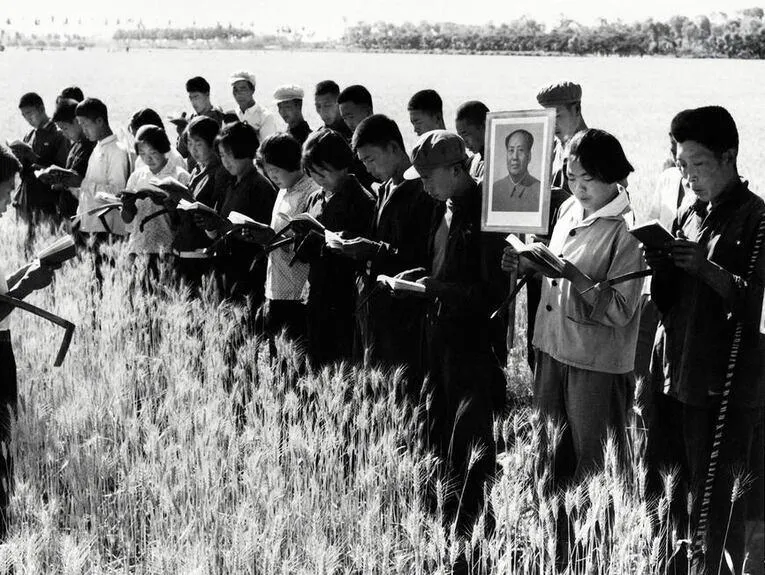
It cannot be said that China made no industrial progress at all under Mao. On the contrary, the first Five-Year Plan (1953–1957) laid the foundation for heavy industry. It was then that the initial foundation for socialist industrialization was established. Large metallurgical and machine-building enterprises, power plants, railroads, and other infrastructure began to emerge. Even in those years, China was striving to move away from being a predominantly agrarian nation.
But the subsequent attempt to drastically accelerate development turned into one of the greatest catastrophes of the Mao era. In 1958, the “Great Leap Forward” began. The authorities attempted to drastically increase both steel production and agricultural output simultaneously, established people’s communes, and set extremely ambitious targets.
Even the current official Chinese assessment of this period is critical. In a resolution by the Central Committee of the Communist Party of China on the party’s historical experience, the “Great Leap Forward” and the people’s commune movement are explicitly called mistakes. Toward the end of Mao’s rule, the country endured yet another extremely difficult campaign—the Cultural Revolution of 1966–1976.
Universities and schools operated intermittently; intellectuals and officials were persecuted; and political struggles permeated enterprises and government institutions. The current Communist Party also does not deny the scale of the consequences of this period. That same official resolution from 2021 states that the Cultural Revolution led to ten years of internal upheaval and inflicted the most serious losses and setbacks on the Party, the state, and the people since the founding of the People’s Republic of China.
On October 6, 1976, less than a month after Mao’s death, the so-called “Gang of Four” was arrested. In the Chinese government’s official chronology, this event is cited as marking the end of the decade-long Cultural Revolution. Economic indicators provide insight into the starting point from which China began its subsequent transformation.
According to data from the National Bureau of Statistics of the PRC, in 1978 the country’s gross domestic product was 364.52 billion yuan, and GDP per capita was only 381 yuan. In another official review summarizing 30 years of reforms, the Chinese statistics agency noted that gross national income per capita in 1978 was approximately $190. At that time, China ranked only tenth among the world’s major economies and was among the poorest countries.
In other words, Mao left behind a country that was already more industrialized than it had been in 1949, but the majority of the population still lived in extreme poverty, a significant portion of the Chinese people remained in rural areas, and the country was poorly integrated into the global economy.
After Mao’s death, China changed its guiding principle: economic growth became more important than ideological purity
Mao’s death did not in itself signify an immediate transition to a new economic system. Over the next two years, a struggle raged within the country’s leadership over the future course of the nation.
The turning point came in December 1978. The Third Plenum of the 11th Central Committee of the Communist Party of China took place from December 18 to 22. It is this plenum that official Beijing today considers the de facto start of the “reform and opening-up” policy.
Documents from the National People’s Congress note that the plenum adopted a historic decision to shift the primary focus of the party and the state to economic development and to launch a policy of reform and opening up.
Deng Xiaoping became one of the main architects of this course. The reforms did not begin with large corporations or stock exchanges, but with agriculture. Under the people’s commune system, a family’s output was only loosely linked to its personal income. Reformers gradually began to give peasant families greater responsibility for the land and allow them to keep a portion of their produce after fulfilling their obligations to the state.
In effect, this meant the return of an economic incentive: the more a family produced, the more it could earn. At the same time, the state began granting enterprises greater autonomy.
China did not eliminate the state sector or abandon central planning. Instead, it began to create a mixed system in which the state retained control over strategic sectors, but prices, competition, private initiative, and profit gradually played an increasingly important role.
It was this model that later came to be known in China as the “socialist market economy.” The main paradox was that the political system remained virtually unchanged. The Communist Party continued to maintain a monopoly on state control.
In the economy, however, China began experimenting with tools that, even under Mao, might have been considered capitalist.
This yielded very rapid results. According to estimates by the National Bureau of Statistics of the People’s Republic of China itself, between 1979 and 2007, the Chinese economy grew by an average of 9.8% annually. By comparison, the average growth rate from 1953 to 1978 was 6.1%.
Thus began one of the longest periods of exceptionally rapid economic growth in modern history.
Shenzhen became an experiment through which China tested whether capitalism could function within a socialist state.
The next major step was opening the country to the outside world. The Chinese leadership did not change the rules for the entire country all at once. Instead, it chose a much more cautious model—the creation of separate territories where experimentation could take place.
In 1980, the first special economic zones were established: Shenzhen, Zhuhai, Shantou, and Xiamen.
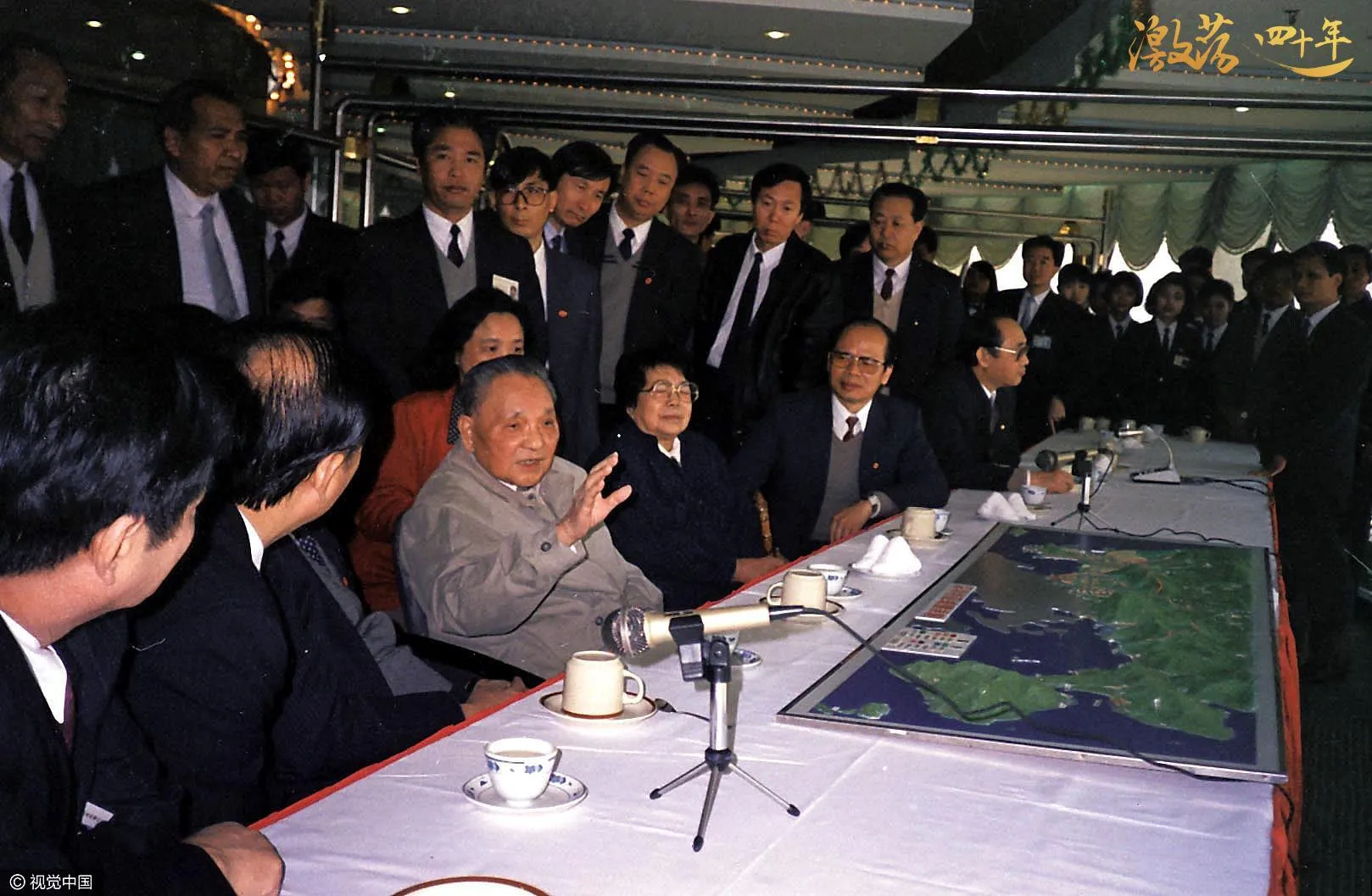
Shenzhen was of particular importance. The city is located right next to Hong Kong, which was then under British control and was already one of Asia’s major financial centers.
This meant access to capital, entrepreneurs, foreign markets, and technology. In the special economic zones, companies enjoyed more favorable conditions for investment, while local authorities had greater freedom to conduct economic experiments.
The logic was simple: first test the new model in a small area, and if it works, expand it further. This is exactly how China reformed over the decades.
Following the success of the first zones, the government began opening new coastal cities, expanding investment areas, and creating industrial clusters along the coast.
This is how the new China gradually took shape. The coastal provinces were transformed into manufacturing hubs for American, European, Japanese, Korean, and Hong Kong companies.
In the early stages, China’s main advantage was its cheap labor force. But that wasn’t enough to become the world’s factory. Beijing simultaneously built roads, ports, power plants, and industrial zones. Enterprises producing finished goods, components, packaging, equipment, and raw materials were concentrated in a single region.
Over time, a system emerged that was very difficult for competitors to replicate. It was profitable for a factory to operate in China not only because labor was cheaper, but also because dozens or even hundreds of necessary suppliers could be located nearby.
It was precisely this economy of scale that eventually became one of the main competitive advantages of Chinese industry.
Joining the WTO finally made China a part of the global economy
The second major turning point occurred two decades after the start of the reforms. On December 11, 2001, China officially became the 143rd member of the World Trade Organization. The negotiations had lasted nearly 15 years.
On September 17, 2001, a WTO working group concluded negotiations on the terms of China’s membership, and on November 10, the organization’s ministerial conference approved the agreement. For China, this meant significantly deeper integration into the global trading system.
For global corporations, it meant greater predictability in doing business with the Chinese market. The following years marked an era of massive relocation of manufacturing operations to China. China offered a vast labor force, developed infrastructure, ports, an ever-expanding network of suppliers, and access to a domestic market of over a billion consumers.
At first, the country was associated primarily with cheap goods. Clothing, shoes, toys, simple household items, furniture, and inexpensive electronics were mass-produced with the “Made in China” label.
But along with foreign factories, China gained much more than just jobs. Technology, management expertise, quality control standards, engineers, and manufacturing know-how flowed into the country.
Chinese companies began moving higher and higher up the value chain. They transitioned from simple assembly to manufacturing their own components, then to their own products, and eventually to developing their own technologies. This gradually changed the very meaning of the term “Chinese goods.”
China started with cheap exports, and today it manufactures almost everything
The scale of this transformation is best illustrated by current official data. In 1978, China’s GDP stood at 364.5 billion yuan. In 2025, according to preliminary data from the National Bureau of Statistics of China, it reached 140.19 trillion yuan.
Of course, simply dividing one nominal figure by another is not accurate due to nearly half a century of inflation and price changes. But the scale of the economic transformation is still evident. The structure of the economy has also changed.
In 2025, the primary sector—agriculture, forestry, and fisheries—accounted for only 6.7% of China’s GDP. The secondary sector, which includes manufacturing and construction, accounted for 35.6%, while the service sector accounted for 57.7%. At the same time, manufacturing remains the foundation of China’s economic power.
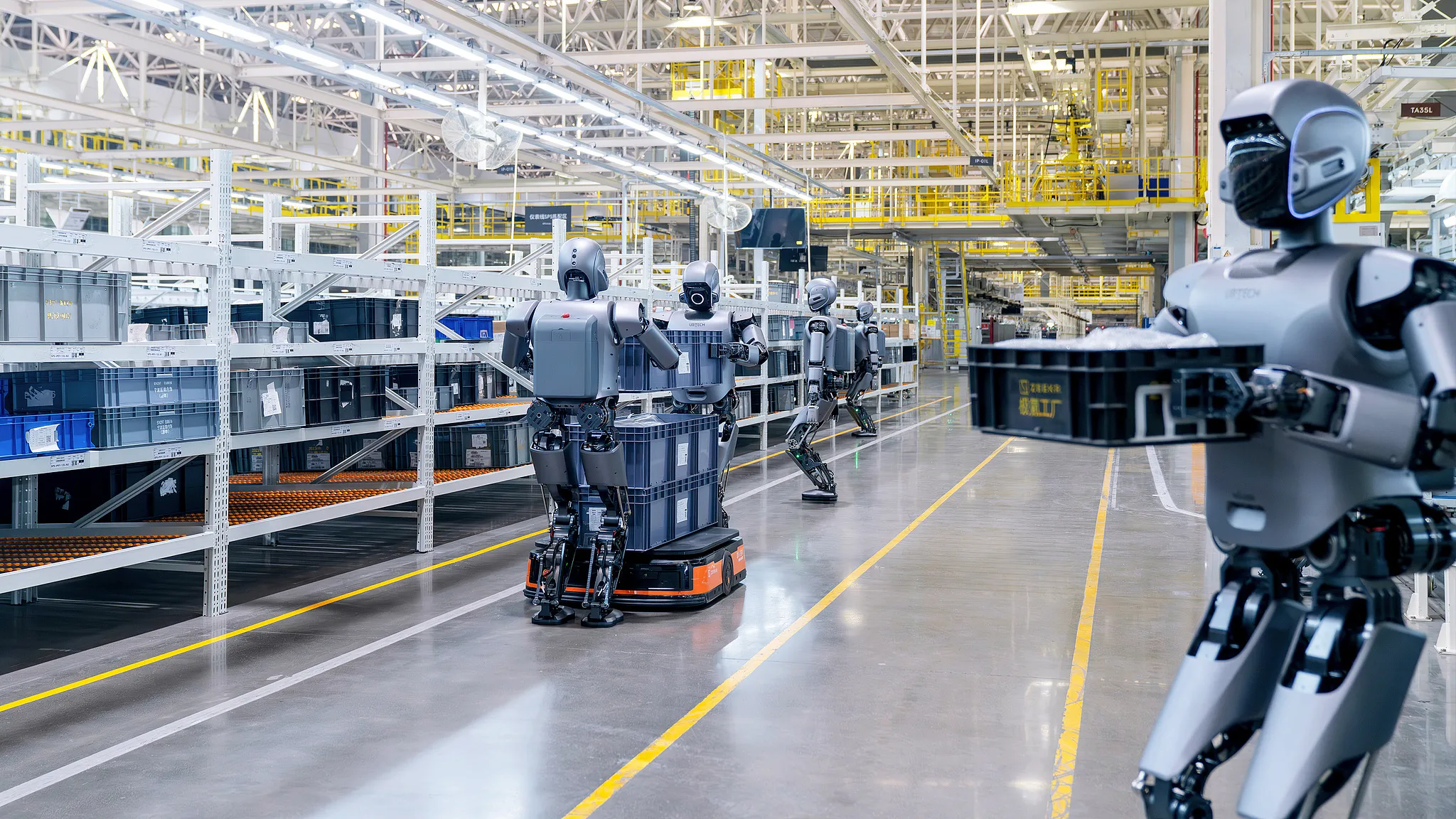
In 2025 alone, Chinese manufacturers produced 34.78 million vehicles. Of these, 16.52 million were new-energy vehicles—primarily electric vehicles and plug-in hybrids.
In the same year, China manufactured approximately 484 billion integrated circuits and 773,000 industrial robots. Industrial robot production grew by 28% over the year. Even more dramatic changes are evident in exports.
In 2025, China exported goods worth approximately 26.99 trillion yuan. Exports of mechanical and electronic products totaled 16.47 trillion yuan, while high-tech exports amounted to approximately 6.78 trillion yuan.
In other words, modern China sells the world far more than just textiles or cheap household goods. In its review of industrial development, the National Bureau of Statistics notes that in 2025, industrial goods accounted for 95.8% of China’s total merchandise exports.
New industries are growing particularly rapidly. Exports of electric vehicles, photovoltaic products, and lithium batteries alone reached approximately 1.28 trillion yuan in 2025. Chinese companies are now competing with global leaders in sectors that were virtually out of reach for the country just a few decades ago.
BYD has become one of the world’s largest automakers. CATL is one of the world’s leading battery manufacturers. Huawei competes in telecommunications equipment and electronics.
China holds key positions in the production of solar panels, batteries, electric vehicles, drones, consumer electronics, and an ever-increasing range of industrial equipment.
In other words, in the 50 years since Mao, it is not only the scale of Chinese manufacturing that has changed—its complexity has changed as well.
China is no longer a country of peasants: hundreds of millions of people have moved to cities
The economic revolution has simultaneously become a social one. Mao’s China was a country where the overwhelming majority of the population lived in rural areas. Today, the situation is the opposite.
According to official data from the National Bureau of Statistics of the People’s Republic of China, 953.8 million Chinese lived in cities at the end of 2025. This represents 67.9% of the country’s population. About 451 million people, or 32.1%, remained in rural areas.
The World Bank also documents the scale of urbanization: according to its World Development Indicators, China’s urban population grew from less than 300 million in 1990 to more than 930 million in the mid-2020s. This means that the Chinese economic miracle literally displaced hundreds of millions of people.
Former farmers became factory workers, construction workers, drivers, engineers, office workers, and entrepreneurs. Small towns became megacities. Shenzhen remains the most famous example, but similar processes took place practically along the entire eastern coast.
Shanghai, Guangzhou, Dongguan, Suzhou, Ningbo, and dozens of other cities became part of vast industrial and logistics systems. Investments moved alongside the people. For decades, China built subways, railroads, highways, airports, container ports, residential neighborhoods, and industrial parks.
It is this infrastructure that has become yet another element inseparable from China’s industrial success.
The economic miracle created new problems that Mao’s China could not even have imagined
However, the model that turned China into the world’s factory is now beginning to function differently. Demographics have become one of the main challenges.
At the end of 2025, China’s population stood at approximately 1.405 billion—3.39 million fewer than a year earlier. Over the course of the year, only 7.92 million children were born in the country, while 11.31 million people died.
At the same time, the population is aging. People aged 60 and older already account for 23% of China’s population. This means that an economy that for decades could count on a virtually unlimited flow of young workers from rural areas must now seek a new model.

That is precisely why China is increasingly relying on automation. Whereas cheap labor used to be the country’s competitive advantage, it is now increasingly being replaced by automated factories. Another problem is real estate.
For decades, residential construction was one of the main drivers of China’s growth. Mass urbanization created enormous demand for apartments, and local authorities reaped significant revenue from land sales.
Now this model is much weaker. External pressure is compounded by internal difficulties. The United States and the European Union are increasingly trying to reduce their dependence on Chinese supply chains, especially in strategic sectors.
But this is precisely where we can see just how deeply China has integrated into the global economy. Relocating a single factory from China is relatively simple. It is much more difficult to simultaneously relocate hundreds of suppliers, engineers, ports, highways, parts manufacturers, and logistics operations, all of which may be concentrated in a single Chinese region.
Therefore, even amid trade conflicts, the country’s exports remain enormous. In 2025, China’s total trade volume reached approximately 45.47 trillion yuan. The country exported 26.99 trillion yuan worth of goods and recorded a trade surplus of 8.51 trillion yuan. More than half of the total foreign trade turnover is now accounted for by private Chinese companies.
This is yet another telling result of the reforms. A country where private enterprise was virtually eliminated in the first decades after the revolution now relies on private business as one of the pillars of its foreign trade.


