
Women in Rawalpindi prepare for floods near Nullah Lai — Dawn
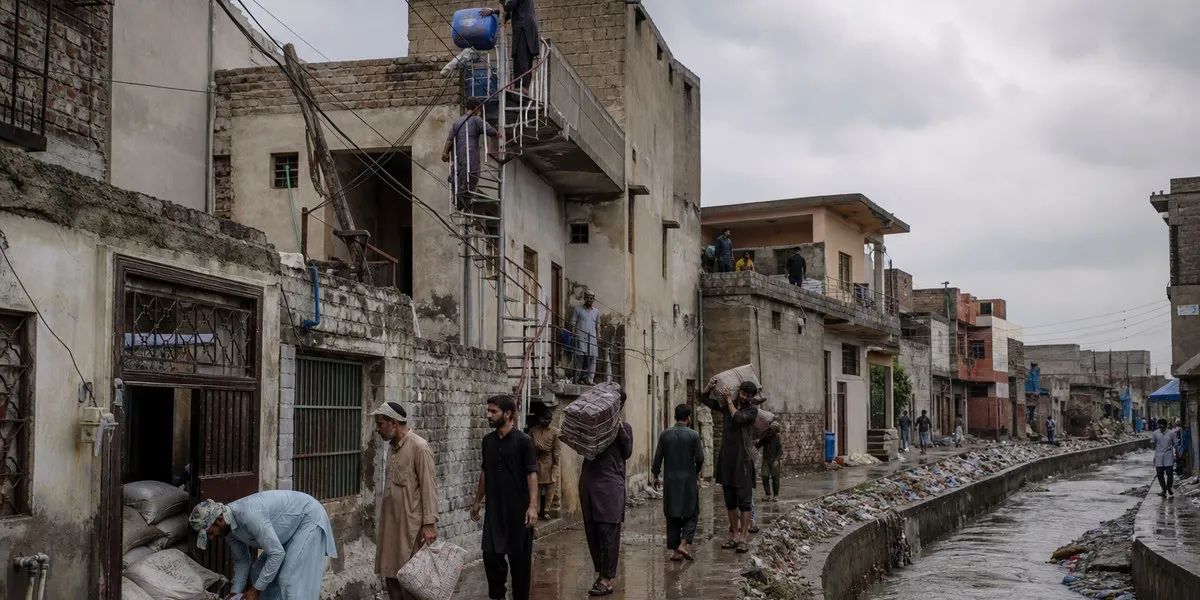
In Rawalpindi, Pakistan, women from the Gawalmandi and Arya Mohalla neighbourhoods have developed their own ways of preparing for floods on the Nullah Lai watercourse over the years. During one of the floods, the water level rose by more than 20 feet, overflowed its banks and began flooding homes. Dawn reports on the experiences of women living in neighbourhoods along the watercourse.
Forty-year-old Shazia said her family has lived near Nullah Lai for six decades and monitors the arrival of water using a mark on a tree. When the water begins to rise, the family first moves the children to the roof and then lifts the parents, mattresses, beds and refrigerator there. During one flood, Shazia also helped a pregnant neighbour who was alone reach a safe place.
Preparing for the monsoon
Residents of neighbourhoods along Nullah Lai begin preparing even before official warnings are issued. Nusrat, who lives about one kilometre from the watercourse, said that after the previous flood, women raised a freezer onto bricks because it could not be moved upstairs. They also cover toilets to prevent sewage from flowing back into their homes and set up improvised barriers of boards and sandbags near doors.
During downpours, women manually clear drains, directing water and mud into the drainage system. Families keep bags with clothes and personal hygiene items ready and turn to relatives living on higher ground if they need to leave home. Twenty-three-year-old Saima said that during one flood, her house was inundated by water 12 feet high.
More current news is available on the UA.News Telegram channel Telegram.
Scale of the risks
Nullah Lai collects water from a basin of about 235 square kilometres, roughly three-fifths of which is located in Islamabad. The watercourse then passes through densely populated areas of Rawalpindi and flows into the Soan River. An application to the UN Adaptation Fund mentions 19 floods on Nullah Lai over 59 years; according to its estimate, about 400,000 city residents are affected by them every year.
The worst flood occurred on 23 July 2001, when 620 mm of precipitation fell in Islamabad and Rawalpindi in approximately half a day. A study of the disaster recorded 74 deaths, including 64 in Rawalpindi. Nine out of ten surveyed households reported property losses.
Drains and evacuation
Urban planner Abida Perveen of Shehersaaz believes that widening the drainage channel alone is insufficient: permeable open areas have been replaced by roads, roofs and concrete surfaces, causing a larger volume of rainwater to enter the system more quickly. According to the report, around 600 cubic feet of wastewater per second also enters Nullah Lai every day, creating risks of pollution and disease.
National Assembly member for NA-57 Daniyal Chaudhry called for a shift from responding after water levels rise to risk mapping, preparedness and timely evacuation. He also said that women should not only be aid recipients but also participants in developing preparedness plans. Women residents stress that if authorities offer relocation, they need money or land to arrange housing in a safe place.




