
Astronomers have discovered a new planet orbiting a star 63 light-years from Earth
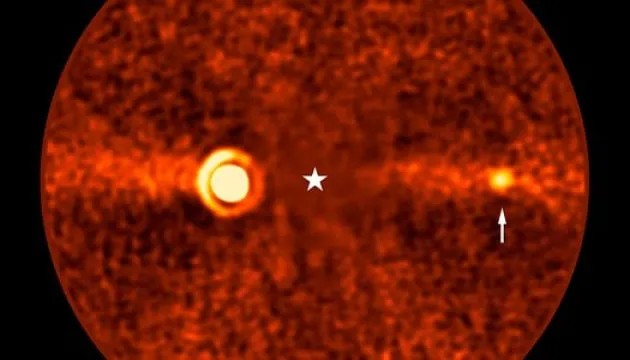
An international team of astronomers has discovered a third exoplanet orbiting the star Beta Pictoris, located approximately 63 light-years from Earth.
The discovery was made using the Very Large Telescope in Chile. The new study will help scientists better understand the formation and evolution of planetary systems.
The new planet, Beta Pictoris d, is 100 times fainter than Beta Pictoris b, which was the first planet discovered orbiting Beta Pictoris.
Like the other two planets in this system, the newly discovered planet is a gas giant, similar to Jupiter or Saturn. It is located 63 light-years from Earth.
However, Beta Pictoris d has a much wider orbit than Beta Pictoris b and Beta Pictoris c.
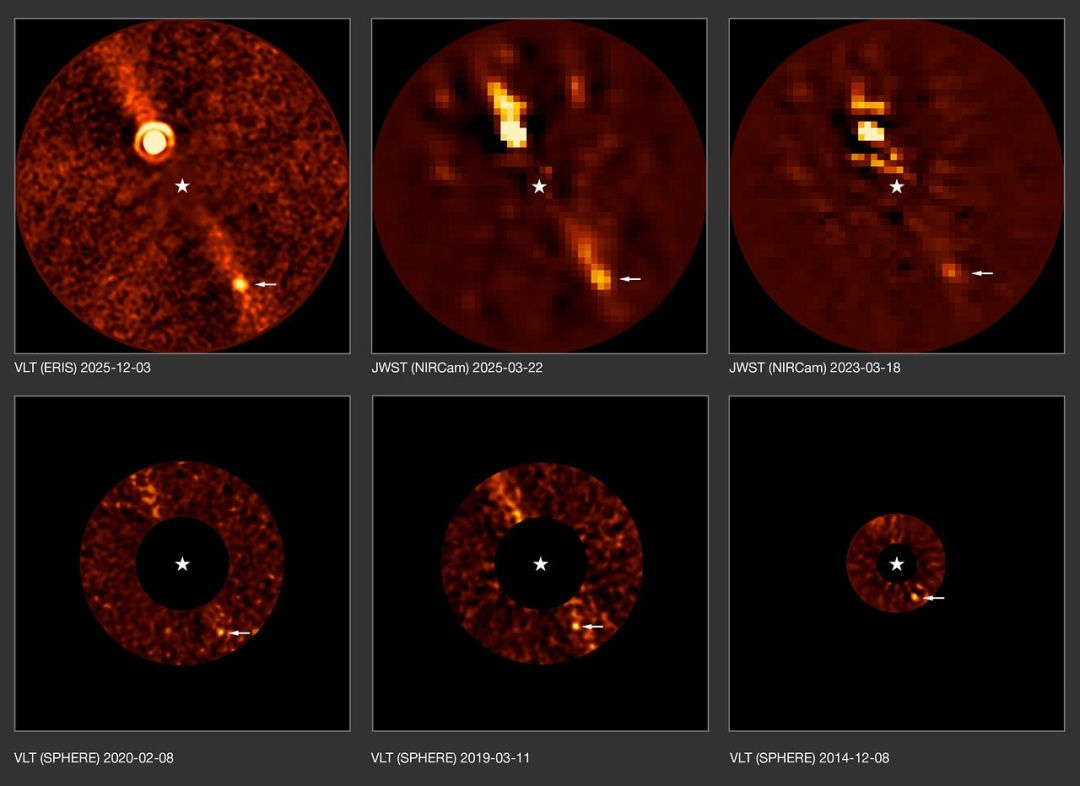
The mass of the newly discovered planet is “only” 2.4 times that of Jupiter, whereas the masses of the other two planets in this system are approximately 10 times that of Jupiter.
The planet is also relatively cool and therefore faint compared to its host star.
It is noted that obtaining a direct image—where light from the object is captured just as in a photograph—is only possible for planets that are sufficiently bright next to their much brighter host stars. Therefore, obtaining a direct image of such a faint planet as Beta Pictoris d is considered a significant achievement.
The European Southern Observatory (ESO) reported this on Wednesday, July 15.
Astronomers have discovered a strange planetary system that is changing right before our eyes.
Meteorologists are forecasting the formation of the El Niño climate phenomenon as early as May, and by the end of 2026, it could become the strongest in the last decade.


