
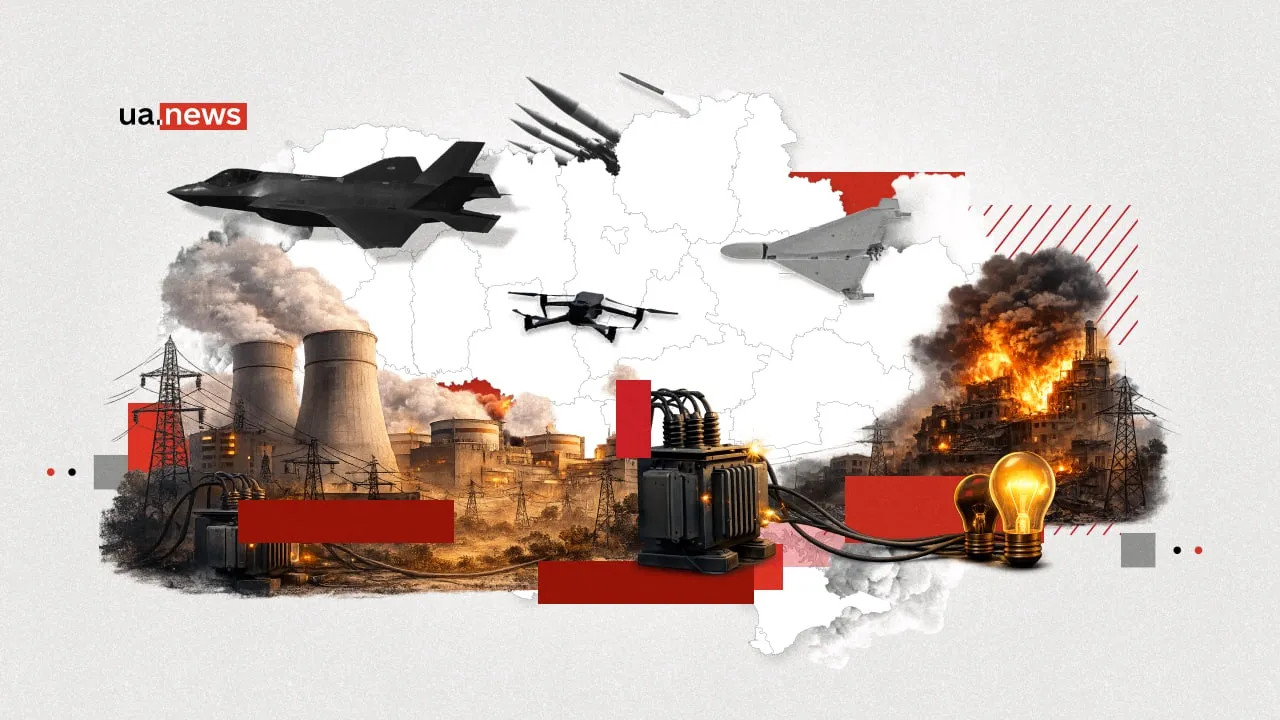
It is late March. Ukraine has just endured the most difficult winter in the history of its energy system. The word “endured” should be written in bold, with a footnote: barely, under horrific conditions, when in some places electricity was unavailable for several days at a time, heating even less so, and across the country the State Emergency Service set up warming centres where people went simply to stay alive in their freezing apartments.
But nature follows its own immutable laws. Winter has retreated, the cold has passed, and, as always, spring has arrived. The warmth and sunshine of March have led to a drop in electricity consumption, and scheduled outages are no longer as pressing as they were a month ago. For now, the situation with electricity has improved significantly.
Does this mean we can relax? Not at all. Most likely, the situation this summer will be no less difficult than in winter—except that cold weather will no longer be a threat.
So, should we expect new blackouts this summer? What exactly will happen in the energy system as temperatures begin to rise? Political analyst Mykyta Trachuk of UA.News examined the issue together with experts.
Spring Sun: Why the Improvement Is an Illusion
If someone believes that the main threat to Ukraine’s energy sector is solely Russian missile strikes, they are partly right. The military threat has not disappeared. Russia continues its attempts to destroy infrastructure. It is just that in warmer months the consequences are less visible to consumers, as the deficit is partially offset by lower demand and renewable energy generation.
However, in summer the enemy is likely to change tactics. There is already public information suggesting that the focus may shift to hydraulic infrastructure (water-related facilities) and major transmission networks. Strikes on transformer substations—each of which is physically impossible to fully protect—are already ongoing. Summer, therefore, is not a respite, but rather a period when Russia may exploit high temperatures and resume large-scale attacks.
Yet there are factors that make the situation critical even without enemy strikes. The first and most important is the maintenance campaign at nuclear power plants. Nuclear energy is the backbone of Ukraine’s energy system—the only factor that has so far prevented a total blackout.
However, nuclear units cannot operate continuously. For safety reasons, they must be periodically shut down for scheduled maintenance, fuel replacement, and technical servicing. Traditionally, this takes place in spring and summer, when consumption is expected to be lower. But in current conditions, as soon as two or three units go offline simultaneously, generation drops so significantly that the system is pushed to the brink.
There is also another nuance often overlooked by supporters of “green” energy. Solar and wind power do help. On a sunny summer day, they can generate up to 15–20% of total consumption. But the sun has one inconvenient characteristic: it sets. And it sets precisely when people return home and begin using electricity—lighting, air conditioning, microwaves, washing machines, televisions, and so on. Renewable energy is unstable, and Ukraine lacks sufficient large-scale storage to cover the evening peak. Moreover, due to damaged grids, it is sometimes impossible to transmit all the energy produced.
Add to this the factor of heat. When temperatures exceed +30°C, electricity consumption rises sharply. Air conditioners, office cooling systems, industrial refrigeration—all increase the load on an already fragile grid.
Nor should we rely too heavily on imports. While electricity imports from Europe exist, politics may interfere. Hungary and Slovakia, which have the largest transmission capacities to Ukraine, could restrict supply. Other neighbours, such as Romania and Poland, are helping, but their transmission lines are already operating near maximum capacity. It is physically impossible to supply more than the grid allows.
Finally, there is the issue of “metal fatigue”. Energy infrastructure has either been destroyed or heavily damaged and has been operating under constant strain for years. This resource is not infinite—although Soviet-era facilities were built with significant safety margins, which still help Ukraine today. Altogether, these factors create what can be described as a “perfect storm”.

A “Perfect Storm”: What Outages Might Look Like
To understand what lies ahead, it is enough to recall the summer of 2024. In Kyiv, electricity—and often water—was unavailable for up to 16–18 hours a day. Perishable goods disappeared from shop shelves because they spoiled and became unsafe.
If all negative factors converge again—mass strikes during peak nuclear maintenance combined with extreme heat—the situation could worsen. Over the past two years, the energy system has sustained further damage, reducing its resilience.
Thus, the return of scheduled outages is almost inevitable. The only question is their severity:
- Optimistic scenario: 4–6 hours per day
- Pessimistic scenario: emergency outages without clear schedules
In summer, outages may feel less severe than in winter due to longer daylight and no need for heating. But this is misleading. Without electricity, multi-storey buildings lose hot water. In the heat, this means no showers, no proper sanitation. Without air conditioning, upper-floor apartments become unbearably hot—especially dangerous for the elderly, people with cardiovascular conditions, and young children. Long outages also threaten food safety, as products spoil quickly.
Expert Opinions
Energy expert Oleh Popenko believes that a full blackout is unlikely, but outages are inevitable:
“I wouldn’t speak about blackouts this summer. A full blackout — meaning a complete shutdown of everything — is, most likely, not going to happen. However, regular power outages are almost certain. Everything depends on the weather, on strikes, and on many other factors. If temperatures remain above 30°C for an extended period, outages could last up to 6–8 hours during peak demand — for example, from 7 to 11 a.m., and in the evening from 5 to 10 p.m. And it is likely that outages will be more frequent in the evening. But again, it all depends on many factors, not just strikes. For instance, weather conditions differed in 2024 and 2025. The summer of 2024 was unusually hot, while the following one was relatively cool — and this had a direct impact on the number of outages,” said Oleh Popenko.
A senior electrical engineer, Serhii T., who has worked at Ukrainian nuclear power plants for many years, also believes that a blackout can be avoided in the summer of 2026. However, he considers emergency outages during peak hours — especially after Russian strikes — to be highly likely.
“Two nuclear units have already been taken offline for maintenance — just last week or the week before. There have also been new enemy strikes. For now, this is not particularly noticeable. But the question is — where is it not noticeable? In Kyiv, perhaps not so much, although I would say the situation in the capital is not very good either. This was demonstrated by recent outages that occurred in broad daylight, without any strikes, in good weather. Meanwhile, in the south, the situation is much worse. In Odesa, for example, there are already many outages. So in summer, much will depend on the region — that’s the first point. Secondly, we don’t know how the Russians will behave, which targets they will go after: electricity, water, sewage systems, or everything at once.
Overall, I think the situation will remain much the same as it is now. If solar, hydro and wind generation operate at full capacity, things should be manageable. But incidents are possible — like the recent one in Kyiv, when a substation failed. So there will likely be no consistent system or stable schedules; instead, there will be emergency outages and varying conditions across regions — some places will be fine, others not,” Serhii said.

In summary, it is already clear that Ukraine is unlikely to have an easy summer in terms of energy. The current situation resembles the calm before another storm. Once large-scale maintenance at nuclear power plants begins and temperatures exceed +27–30°C, the power deficit will become evident to everyone.
Should we expect a total blackout? Most likely not. But that does not mean outages can be avoided. The most probable scenario for the summer is a return to scheduled outages, with the only question being how severe they will be.
There is some hope that the situation of summer 2025 — which was relatively cool and therefore saw fewer outages (except after strikes) — could be repeated. However, forecasters are already warning that after an unusually cold winter, the coming summer is likely to be quite hot.
What does this mean for the average Ukrainian? Only one thing: it is too early to relax — if anyone in Ukraine is still able to relax at all. It is worth preparing alternative power sources now. Incidentally, during the off-season, power banks, generators and portable power stations can be 20–40% cheaper than at peak demand. If financially possible, purchasing them now is a sound investment in energy independence.
For its part, the government should focus on two priorities: maximising the development of distributed generation (which, frankly, should have been done back in 2022) and improving relations with neighbouring countries that, while not always politically aligned, could provide crucial support during peak demand periods.
In the broader sense, attention must be given to reviving the peace process — which currently appears more dead than alive — in order to address the root cause of the energy crisis: the war.
Ukrainians have managed to get through an extremely difficult winter. But in the energy sector, unfortunately, there is no such thing as a “seasonal break”. Summer 2026 will be another test of resilience — and it is best to prepare for it in advance, as much as possible.




