
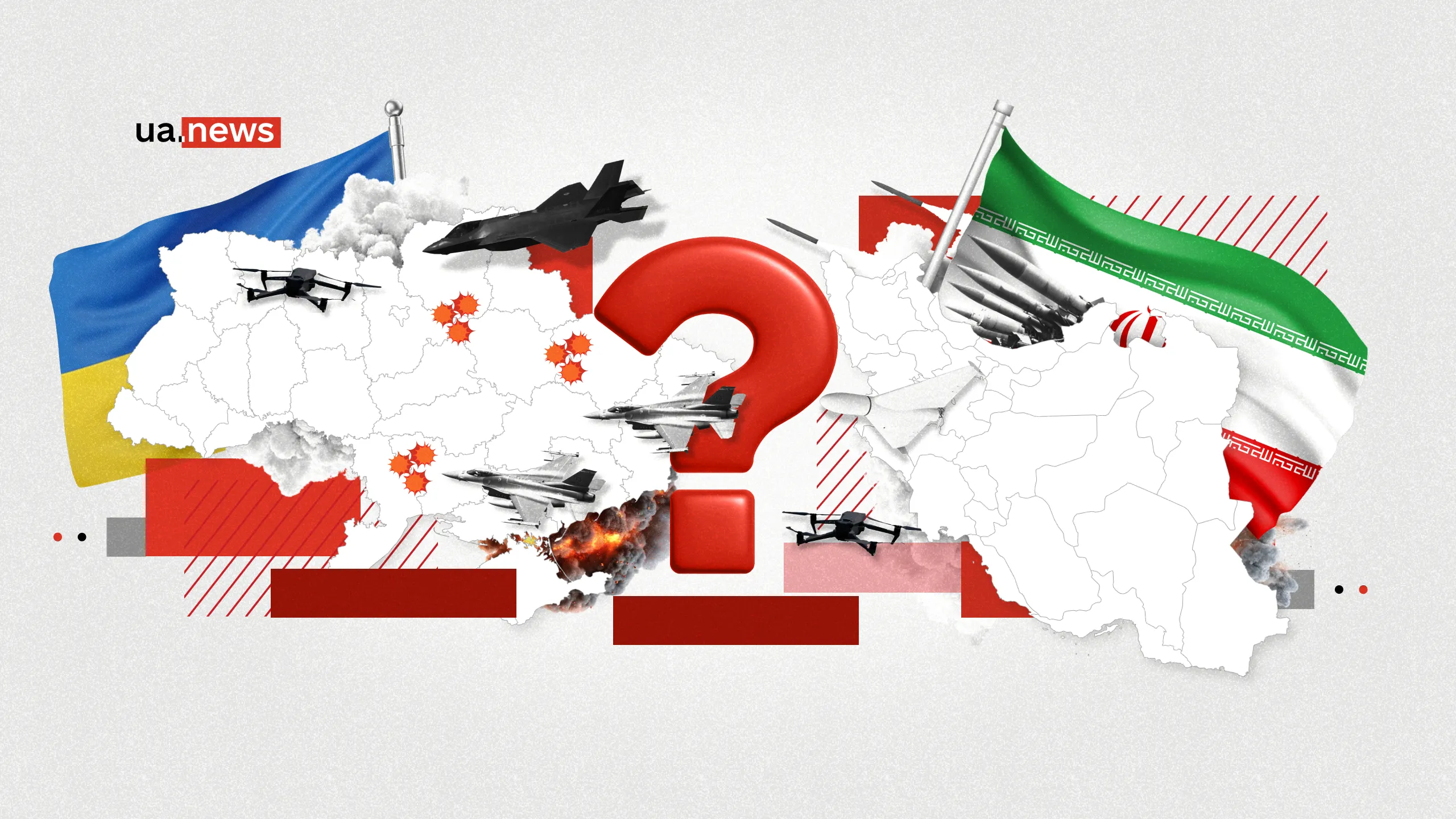
The new war in the Middle East has been raging for nearly three weeks, and its scope is gradually expanding. A few days ago, a statement was made that prompted government officials, experts, and ordinary Ukrainians to take a closer look at the world map. Indeed, Ibrahim Azizi, chairman of the Iranian Parliament’s Committee on National Security and Foreign Policy, explicitly stated that Ukraine “has become a legitimate target” for Tehran. The alleged reason was Kyiv’s assistance to Israel regarding drone technology. It is worth noting that there is no official confirmation of such assistance from any party other than Iran.
Azizi’s direct statement is absolutely unambiguous: he called Ukraine a “failed state,” accused it of providing support to Israel, and emphasized that from now on, in accordance with Article 51 of the UN Charter, the entire territory of Ukraine becomes a “legitimate target” for Iran. And this is not just another emotional statement from the Middle East, of which there have already been many. This is an official position voiced at the level of a parliamentary representative—that is, a person who, among other things, directly shapes the country’s foreign policy.
For a state that has been fending off a full-scale invasion for the fifth consecutive year, the emergence of yet another threat from an enemy armed with medium-range ballistic missiles is a challenge that requires the most serious and sober assessment. On the one hand, we should not give in to panic; on the other, we should not ignore objective reality.
So, could Iran attack Ukraine, how might it do so, and should Ukrainians fear strikes from Tehran? UA.News political analyst Mykyta Trachuk, along with experts, examined the issue.
Iran as an enemy: from “martyrs” for Putin to official threats
Before assessing the likelihood of strikes and Tehran’s technical capability to carry them out, it is worth stating the main point: Iran has long been an openly hostile state toward Ukraine. And the issue here is not at all about our hypothetical support for Israel, although it is precisely this argument that Tehran is currently using as a casus belli.
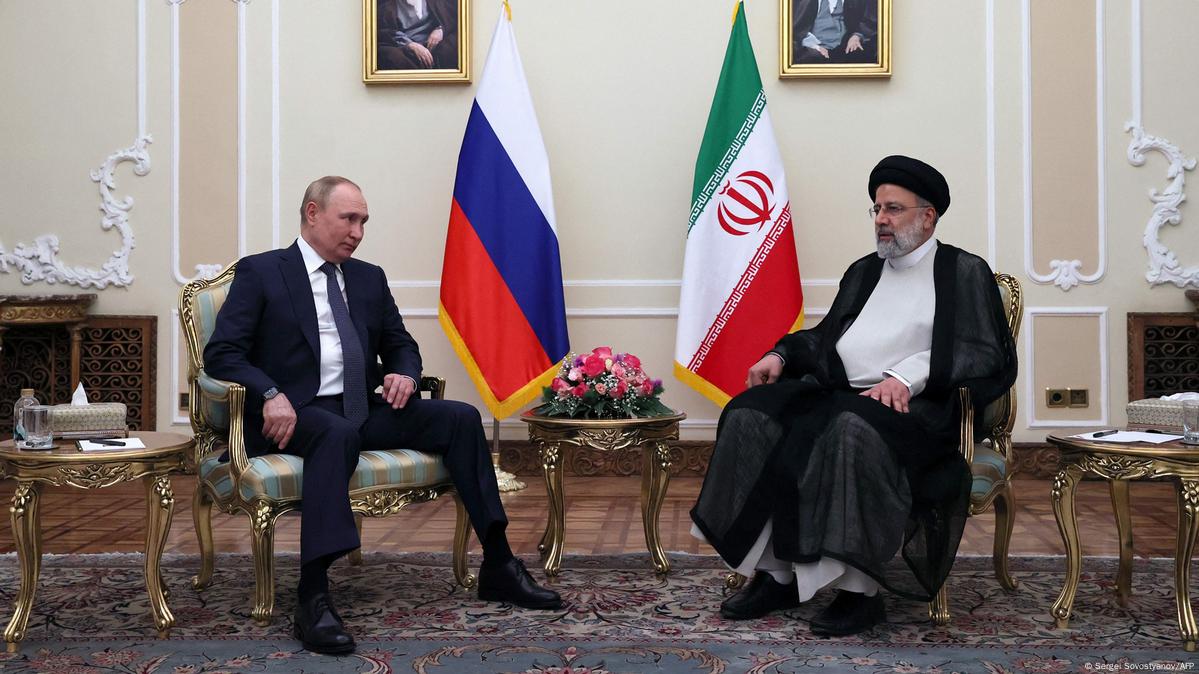
The fact is that Iran has been a key ally of Russia in the war against Ukraine for years. Specifically, it was Tehran that supplied Moscow with those very “Shaheds”: initially, it provided the drones physically, and later helped establish production by transferring the relevant technology. Russian “Geraniums” are, in fact, Iranian “Shaheds,” just with a different name and assembled in Russia. Moreover: at the start of the war, the Russians did not yet know how to operate UAVs, so it was Iranian operators who launched them over Ukraine.
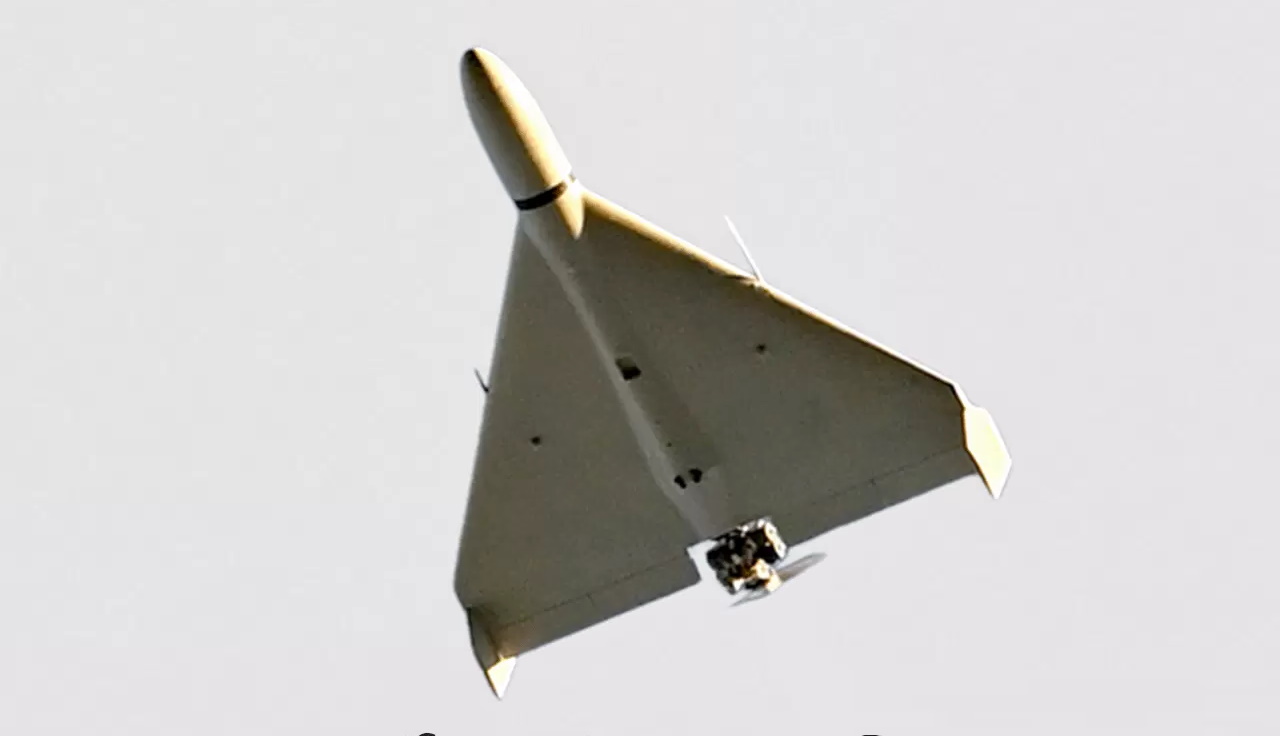
Thus, Iran is a very important player in the group of countries that have been helping Russia destroy Ukraine for many years. It has profited from Ukrainian blood and also gained invaluable military experience and technology by testing its drones in real combat conditions. Therefore, the threats voiced by Azizi should be taken very seriously. Tehran possesses not only the political will to strike but also the technical means to carry out such strikes. History offers numerous examples of the Iranian leadership moving from words to action when it believed its red lines had been crossed.
Can Iran “reach” Ukraine? The answer to this question, unfortunately, is yes. And this has nothing to do with drones, which would have to traverse the airspace of many countries simultaneously to reach Kyiv, making their use extremely difficult. The main threat lies in Iran’s missile arsenal.
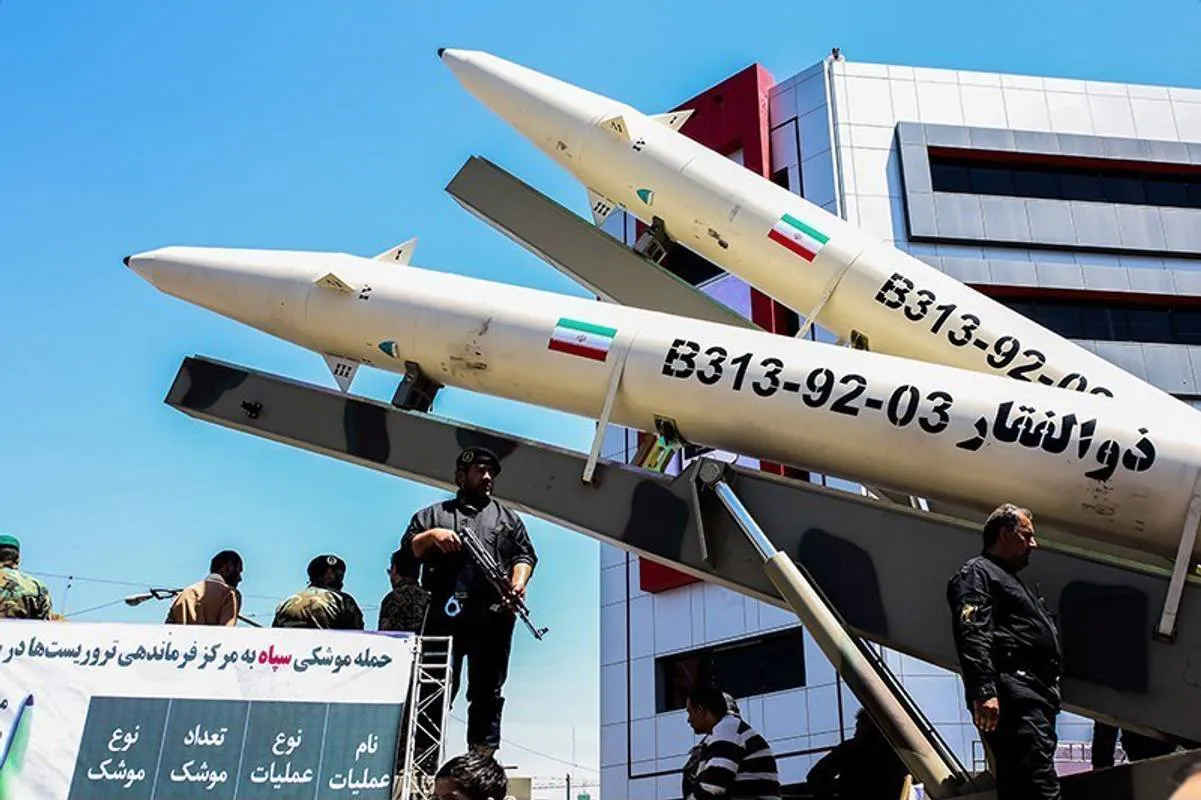
Over the past decades, Iran has built one of the most powerful missile programs in the Middle East, investing billions of dollars in the development of ballistic technologies. The regime possesses missiles capable of striking targets several thousand kilometers away. These are medium-range ballistic missiles, which in theory could easily reach Ukrainian territory.
The most powerful missile in Iran’s arsenal is considered to be the “Khorramshahr,” capable of carrying a warhead weighing nearly two tons over a distance of up to 2,000 kilometers. However, according to military experts, if the weight of the warhead is reduced, its maximum range could reach as far as 3,000 kilometers. This is sufficient to reach not only Ukraine, but also Poland or even Germany.
Other types of missiles, such as the “Sejil,” “Ghadar,” or “Emad,” have a slightly shorter range—up to 2,000–2,500 kilometers—but they also pose a threat to Ukraine, as they cover its entire territory. Of course, launching such strikes requires political will and a willingness to risk opening a new theater of operations—but it’s important to understand that, from a purely technical standpoint, all of this is entirely feasible.
Sober calculations instead of fear: why there’s no need to panic
Despite the presence of missiles and explicit threats, one should not overestimate the immediate threat of an Iranian strike on Ukraine. There are several compelling reasons for this.
First, Iran’s situation is currently extremely difficult. It has just lost its top leadership and is waging war against two extremely powerful adversaries simultaneously. On one side is the Israel Defense Forces (IDF), considered the most powerful military force in the Middle East. On the other side is the United States, the most powerful military in the world.
Tehran is now forced to expend its missile arsenal on strikes across the entire Middle East, implementing a strategy of chaos. Diverting scarce and expensive ballistic missiles to a distant and, to put it mildly, far from the highest-priority Ukrainian front is a luxury Iran is unlikely to afford in the near future. It currently needs every available resource to deter far more serious adversaries right on its doorstep.
Second, the threats against Kyiv still look more like an attempt to “cool down” the Ukrainian leadership, which is demonstrating its loyalty to the U.S. and Israel too actively in the eyes of the Iranian authorities. This is political pressure rather than a real plan of attack. There is simply no point in launching a massive strike against Ukraine, just as there is no point in striking a hypothetical Dubai or Tehran right now.
Third—and this is the most important point—Ukraine has been living under constant missile and drone attacks for five years now. The domestic air defense system, although it has serious gaps, is still one of the most experienced in the world, as it has been operating daily under real-war conditions for many years. Therefore, shooting down isolated missiles—should Iran indeed dare to launch a demonstrative strike—is a perfectly feasible task for the Air Force, provided there is heightened vigilance and combat readiness.

Expert Opinions
Military expert Oleg Zhdanov urges taking threats from Iran seriously. In his view, there is no need to panic, but the situation should not be underestimated either.
“There is cause for concern following Iran’s statements. The Iranians can reach Ukraine. Meanwhile, we do not have missiles capable of reaching Iran. But the fact is that we are looking at everything from a very one-sided perspective. The question arises: why didn’t we declare back in 2022 that Iranian territory is a legitimate target for us? Whose “Shaheds” are flying over our heads? Iran handed all of this over to the Russians: both finished products and production technology. We know full well that there were Iranian instructors in both Russia and Belarus who taught the enemy how to operate UAVs. So who was the first to get dragged into this war? The answer is Iran, not Ukraine. The problem is that we don’t have enough systems to combat ballistic missiles. And we can’t shoot down intercontinental ballistic missiles at all, because we simply don’t have the kind of systems that the U.S. and Israel have. So I’ll put it this way: Iranian threats aren’t a catastrophe, but they are yet another threat. I think Ukraine’s political leadership needs to issue an official statement and warn Iran that their territory is also a legitimate target for us. What’s more: this should have been done a long time ago. By the way, here’s an interesting fact: the Iranian embassy in Kyiv is still operating; there have been no protests or diplomatic notes. That’s quite surprising given the current situation,” Oleg Zhdanov asserts.
Ukrainian Armed Forces soldier and reconnaissance company commander Denys Yaroslavskyi answered UA.News’s question in a military manner—directly and concisely.
“Iran became a legitimate target for us back when it started supplying Russia with missiles, especially ‘Shaheds.’ Since then, for many years now, it has been a legitimate target for Ukraine. Period. At the same time, whatever they say over there plays no role for us. Iran is very far from Ukraine, and even if they launch any missiles, we will be able to intercept them, as there will be plenty of time to react. Everything else is irrelevant; I do not see any fundamentally new threat to Ukrainians in this situation,” says Denys Yaroslavsky.
How to properly respond to the Iranian challenge
So, how should we view Ibrahim Azizi’s statements? The wisest approach is to treat them as an official warning from an aggressive and radical regime that is technically capable of striking our territory. Such signals should not be ignored, as Iran has already proven it is capable of attacking anywhere within its reach. Its missiles have sufficient range, and Tehran’s political logic is often unpredictable to an outside observer.
However, the most likely scenario today is either a complete absence of attacks or a limited, symbolic strike. This could involve the launch of several ballistic missiles at any target, as one can expect anything from the Ayatollahs’ regime. There is a possibility that the Iranians will “show solidarity” with the next large-scale Russian attack and launch something in sync. An increase in sabotage activities or the use of Iranian intelligence services to destabilize the situation is also possible.
For ordinary Ukrainians, however, this means only one thing: to continue doing what we have been doing every day for over four years. Namely: to pay attention to air raid sirens and not to neglect safety rules.
It is frankly difficult to scare Ukrainians with missile strikes in 2026: throughout the war, we have already seen the worst the Russian army could “offer,” and we have survived. A few missiles from the Middle East—if they are launched at all—are unlikely to fundamentally change anything.
However, this does not mean that nothing needs to be done at the international level. Ukraine would do well to tone down its rhetorical involvement in the war in the Middle East. We should publicly emphasize that we are not a party to this conflict—essentially saying, “Work it out yourselves; this is far from us; we stand for peace throughout the world.” Diplomatic de-escalation in this case is not a sign of weakness, but a pragmatic step to prevent Tehran from having a pretext to carry out its threats. After all, Iran, like any authoritarian regime, needs only a formal pretext to justify its aggression.


