
The Ukrainian Ambassador to Israel explained why we will not receive the “Iron Dome” and how he handed Netanyahu a fragment of a Shahed drone
Ukraine is trying to engage as many allies as possible in its confrontation with the Russian aggressor. Work in this direction is also being done in Israel, which has to balance between supporting Ukraine and not wanting to spoil relations with Russia—a country that influences Israel’s main enemies: Iran, the Palestinian Authority, and previously also Syria. Ambassador Extraordinary and Plenipotentiary of Ukraine to the State of Israel Yevhen Korniichuk told a UA.News journalist about the nuances of Middle Eastern diplomacy.
— How does Middle Eastern diplomacy work?
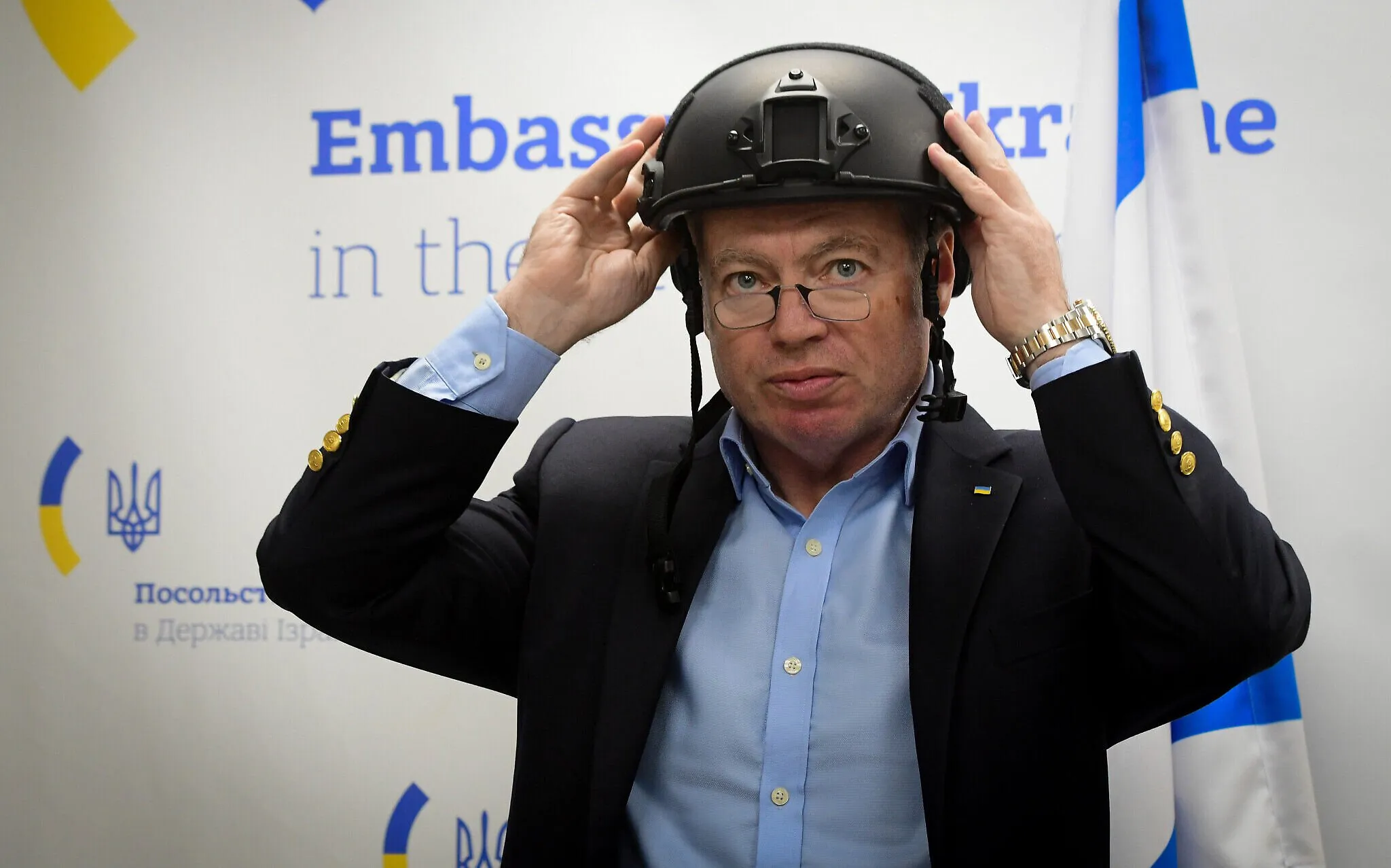
— We have things to learn here. On the other hand, it is difficult to achieve results, because the local establishment expects reciprocal steps. Roughly speaking, “you give us something, we give you something.” So we must take non-standard steps that other diplomats rarely dare to take. When the Israelis did not want to give us helmets, arguing that they could be used as weapons or for attacks, I invited journalists, put a helmet on my head and asked: “Show me how you can kill someone with this? It’s for protecting soldiers!” At that time, we were only discussing the possibility of providing Ukraine with non-military assistance. My photo in the helmet spread across all the local media, and things began to move.
Another example of such “diplomacy”: I brought a piece of a Shahed drone that had been shot down in Ukraine when Netanyahu’s government came to power, and I presented it to the head of the local National Security Council. I asked him to pass this fragment to the new prime minister with the words: “If we do not cooperate and jointly look for ways to counter this threat, one of these will come to you too.” A year and a half later, unfortunately, a Shahed did hit the territory of a training base 60 km from Tel Aviv. Many Israeli servicemen were injured. Some time later, a journalist from Channel 12—the main TV channel here—came up to me and said: “You are our Moses! Why didn’t our government listen to you?”
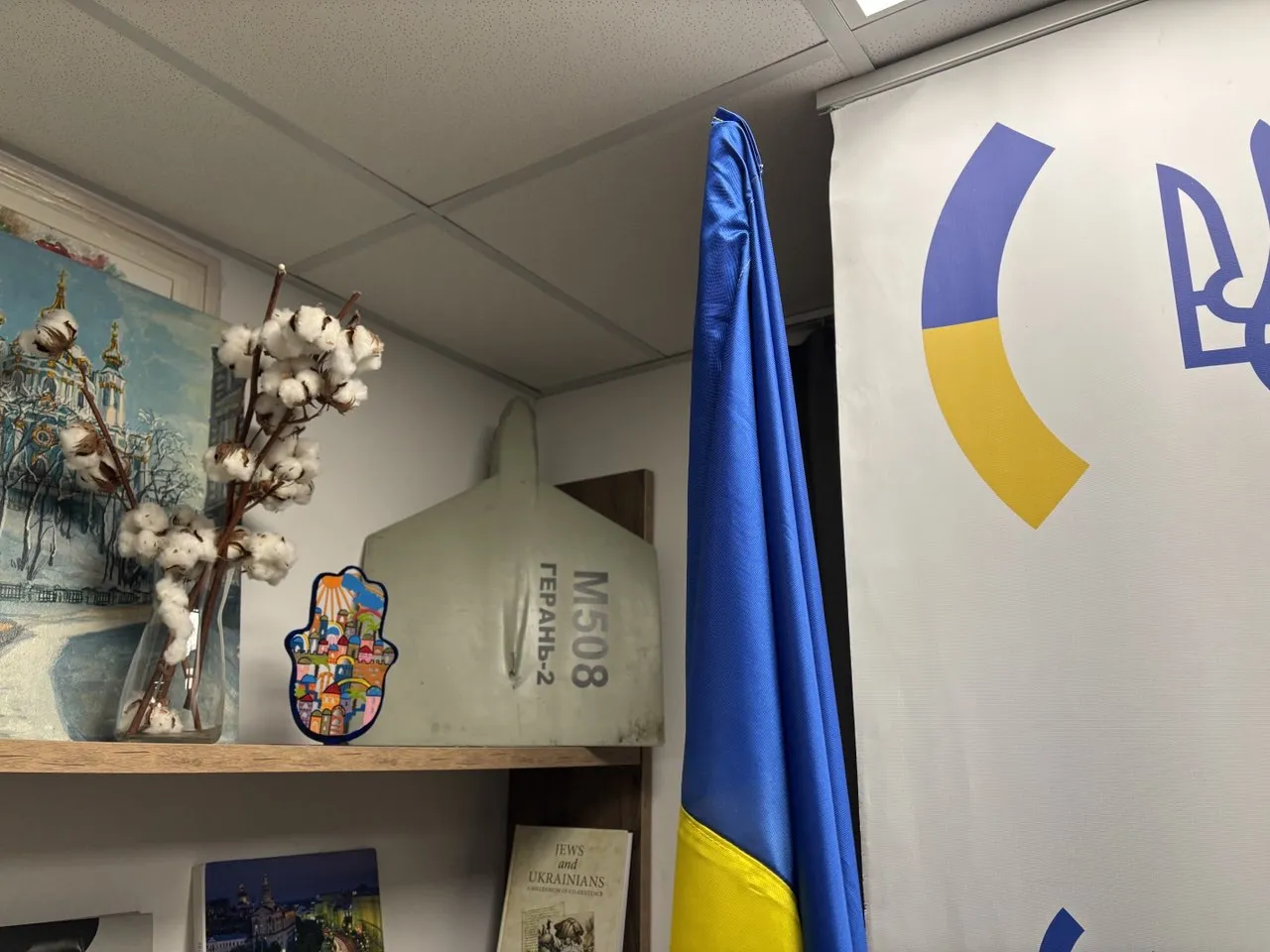
Another Shahed fragment stands in the Ukrainian Cultural Center / Photo: UA.News
— How has the new war in the Middle East affected our military cooperation?
— Before the war of October 7, 2023, our cooperation was much better. Since then our messages get through with much more difficulty, but at the same time one could say that work on military-technical cooperation has improved. Of course, it is not ideal. But objectively, after the war started here, the Israelis were forced to suspend contracts for supplying air-defense systems to third countries—contracts signed five years ago—because they need them for themselves.
— Are they unable to cope with today’s challenges?
— What is Iran doing? It overloads Israel’s air-defense system. In about two weeks, roughly 550 ballistic missiles were launched at them—I might be slightly off on the number. From February 2022 to June of this year, 850 ballistic missiles were launched at us. Imagine the scale of that attack. The accuracy of these Iranian missiles has also improved, not least thanks to Russian assistance. Israelis know this. Ordinary people understand everything. Mid-level politicians understand as well. But… it’s still very difficult here.
Earlier the Israelis said they could not supply weapons to Ukraine because Russia was essentially their northern neighbor on the Syrian border. They coordinated all their strikes on Iranian positions in Syria with the Russians to avoid direct clashes. But then both the Iranians and Russians were pushed out of there; nominally two bases remain. Everything was removed from the bases, the ships sailed away, only guards stayed behind. Yet now information is emerging that pro-Israel forces in Washington are lobbying to keep those bases under Russian control. This is something Israel needs as a counterbalance to Turkey.
On the other hand, the Palestinians have supported Russia openly since the first day of the war in Ukraine. Last year there was an attempt to somehow change the situation. As part of a UN program, we sent 8,000 tons of grain to Gaza. We received no thanks, and the next day a Hamas delegation flew to Moscow. So we decided to reduce our representation in Ramallah to just one diplomat.
Photo: Embassy of Ukraine in the State of Israel
— But can we still count on non-military cooperation?
— Right now we are negotiating the supply of an educational system for schools that can be used in bomb shelters. It is produced and used in Haifa, which is heavily shelled—rockets from Lebanon reach it quickly, since the border is only 60 km away. We are running a pilot project. This system works with a 3D effect, projecting teaching materials for children onto walls and floors. Projectors, computers, software… We are negotiating with a sponsor to install one such system in underground schools in Zaporizhzhia and Kharkiv.
— How is bilateral cooperation developing overall?
— I began my work in Israel at a time when, in 2021, the Law “On Preventing and Combating Antisemitism” came into force, giving grounds to hope for more effective cooperation with Israel. Before that, a free-trade agreement had been signed with Israel, with certain exceptions on Ukraine’s side. Recently, we resumed the work of the intergovernmental Ukrainian-Israeli commission on trade and economic cooperation.
— How is the work on opening a Ukrainian diplomatic office in Jerusalem progressing?
— After President Volodymyr Zelenskyy announced this during his meeting with Prime Minister Benjamin Netanyahu, I began working on opening a branch of the Ukrainian embassy in Jerusalem. This is an important issue for them. I found premises and coordinated them with our Foreign Ministry. It would also be good for us to have an embassy branch in Jerusalem. We found a location. Around the anniversary of diplomatic relations—the end of 2021—I said that we were finalizing the issue and that the president supported us. And in return the Israelis were supposed to open an investment and innovation office. But for now this has been postponed.
— As far as we know, Ukraine’s presence in Israel is still expanding, and a few years ago the Ukrainian Cultural Center opened in Tel Aviv.
— Yes. We opened this cultural center after the start of the full-scale war, when Ukraine’s First Lady Olena Zelenska came here. Renovation was funded by sponsors. Real estate prices in Israel are extremely high, so the first year was paid from the state budget, and further operation of the center is supported by patrons.
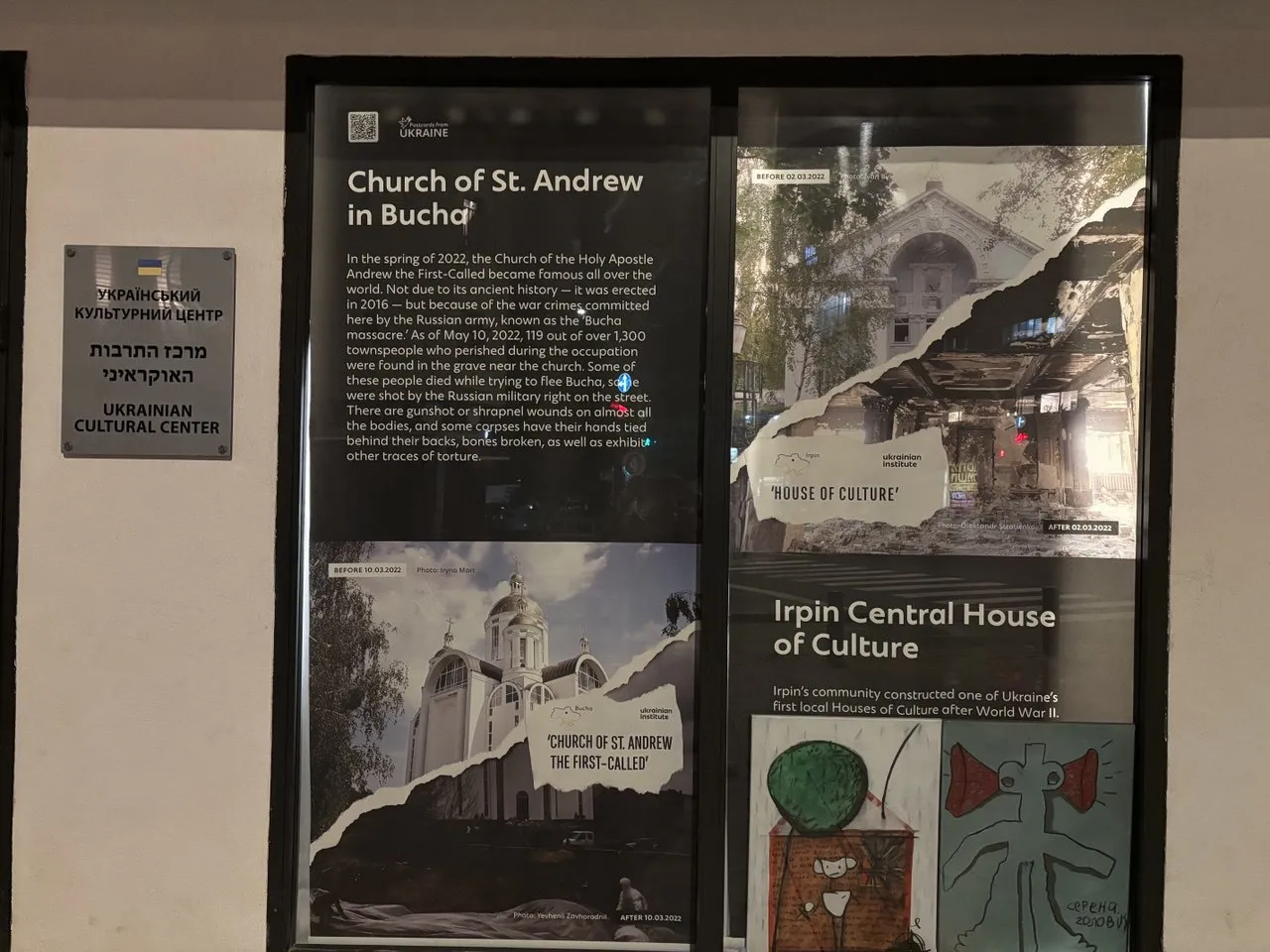
Ukrainian Cultural Center in downtown Tel Aviv / Photo: UA.News
The center hosts cultural events. On the first floor we hold film screenings, and on the second floor we have a conference room. We gather journalists here and tell them about what is happening in Ukraine. At the beginning of the war I gathered 15–18 camera crews here every week for press conferences.
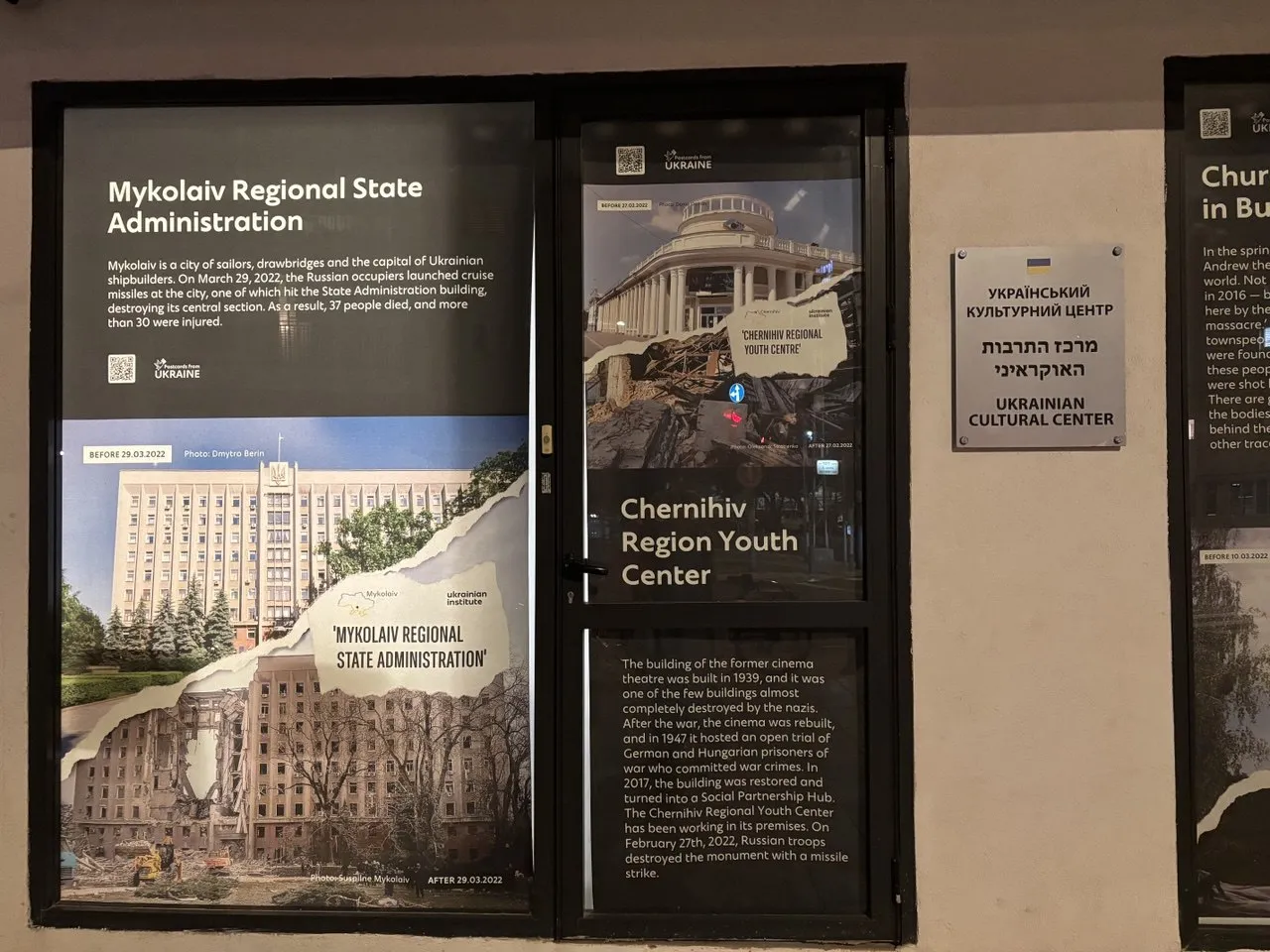
From the street, Tel Aviv residents can see the consequences of Russia’s attack on Ukraine / Photo: UA.News
The cultural center also unites our community, which is very diverse and complicated. But for the first time we managed—and I consider this an achievement—to create the Federation of Pro-Ukrainian Organizations of Israel, which includes more than 30 organizations. They now share information and take part in joint events. A film club was created that tours Israel with Ukrainian films. They hold concerts and raise funds for the Armed Forces of Ukraine.
— On December 3, a Holodomor memorial was unveiled in Jerusalem. What other ideas are there?
— I still can’t believe we managed to install a Holodomor memorial in Jerusalem. It took three years and a lot of nerves. The memorial was funded by Canadian James Temerty. The monument was also brought from Canada.
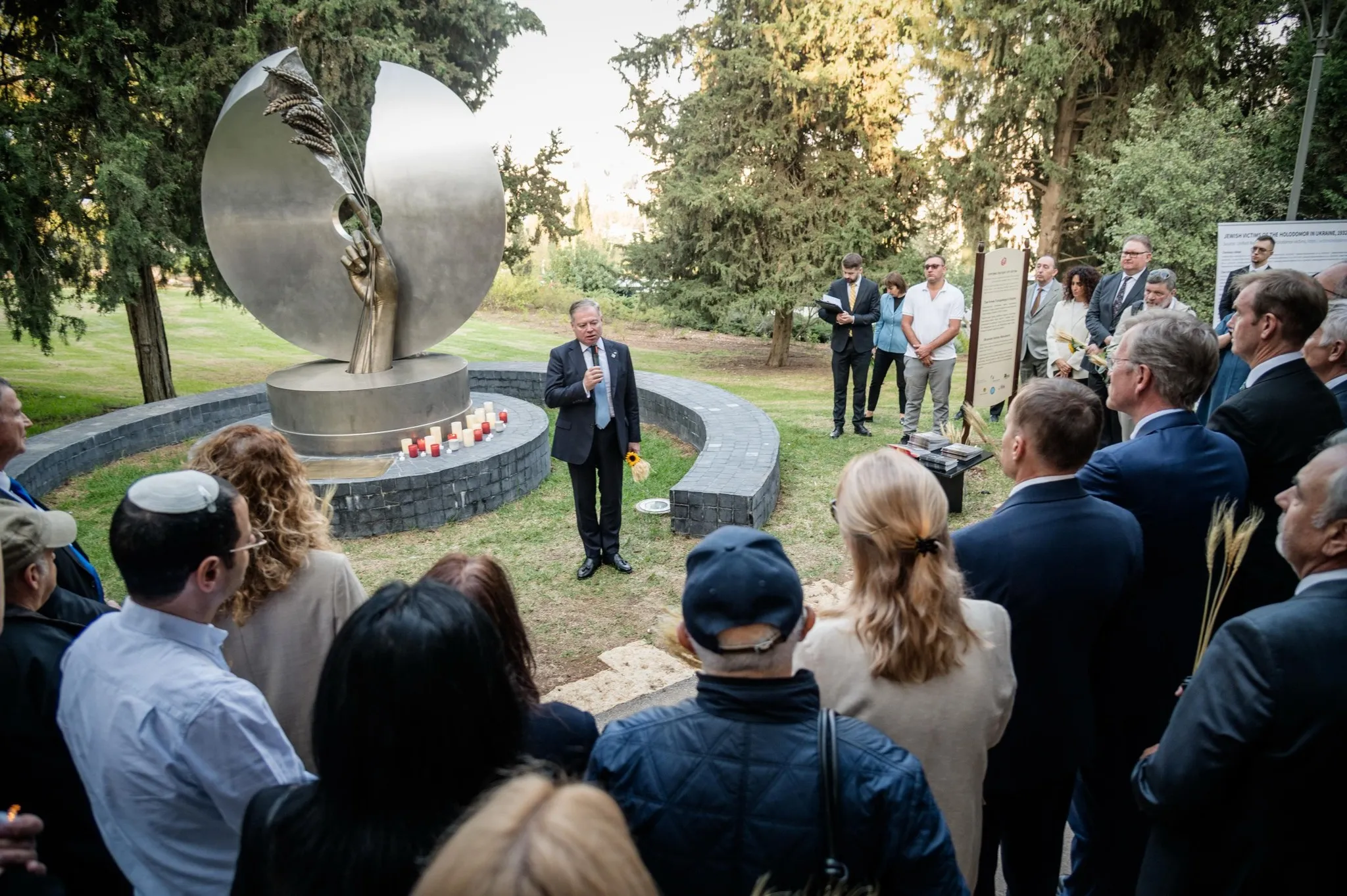
Ambassador Yevhen Korniichuk at the unveiling ceremony on December 3 / Photo: “Ukrainian Jewish Encounter”
Now I am proposing to the mayor of Tel Aviv to allocate a square, a park, or a street to name after Taras Shevchenko. We found an article by Vladimir Jabotinsky (a Jewish writer and publicist, one of the founders of the State of Israel and its armed forces — Ed.) describing what a great friend of the Jewish people Shevchenko was. I showed this article to the mayor of Tel Aviv, and he agreed to forward our proposal to the city’s park and square authority.
We contacted the authority. They offered us three squares to choose from—but on the condition that we finance the renovation of the chosen square. In Kyiv there are dozens of streets named after prominent representatives of the Jewish people, and here we are given such terms… We are even ready, in return, to consider naming a street in Ukraine in memory of the victims of October 7, 2023. But only after a Shevchenko Street appears in Israel without extra conditions.
There have already been similar successful initiatives. In Jerusalem, on the occasion of Olena Zelenska’s visit, a street was named after the Righteous Among the Nations—the Shchepaniuk family. At the event, a 90-year-old professor from the Hebrew University, who as a boy during World War II had been saved by this Ukrainian family, gave a speech. People had tears in their eyes as he spoke.
So, our nations have a lot in common, but Middle Eastern diplomacy is a complicated art.
Iryna Kovalchuk, UA.News
