
Rheinmetall and Destinus have agreed to jointly manufacture missiles
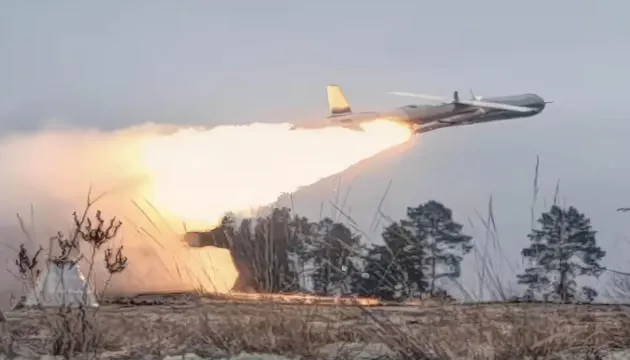
The German defense company Rheinmetall and the Dutch firm Destinus, which specializes in strike and interceptor systems, have announced the formation of a joint venture. The aim of the partnership is to launch joint production of missile systems.
The German company announced this on its website.
The two partners aim to establish a joint venture called Rheinmetall Destinus Strike Systems during the second half of 2026. It will manufacture, sell, and supply advanced missile systems. These will include cruise missiles and ballistic missile artillery. Rheinmetall will hold a 51% stake, while Destinus will hold the remaining 49%. The agreement is subject to regulatory approval.
Rheinmetall and Destinus intend to offer innovative solutions for cruise missiles and ballistic missile artillery, as well as strengthen their existing product portfolios.
“We must expand the industrial base for modern defense systems in Europe. This joint venture reflects that need. We are combining Rheinmetall’s production capabilities and experience in managing large-scale programs with Destinus’s specific technology and system design. By doing so, we are laying the foundation for scalable, operational missiles that are adapted to the modern requirements of European and allied armed forces,” said Armin Papperger, CEO of Rheinmetall.
“Europe is entering a new phase of scaling up missile production,” added Mihail Kokoric, co-founder and CEO of Destinus. According to him, “modern conflict is defined by volume and the cost-to-effect ratio. Missile systems are evolving from limited-production assets to industrial products. The real constraint in Europe today is not demand, but industrial capacity.”
The report notes that armed conflicts, particularly in Ukraine and the Middle East, have demonstrated that demand for scalable strike systems is no longer measured in limited batches. Instead, demand is growing to thousands of systems per year, which could eventually rise to tens of thousands as European and allied procurement adapts. This leads to a market opportunity of hundreds of millions of euros annually in the near term, with the potential to reach a few billion over time.
This partnership combines Destinus’s battle-proven system architecture, product design, and development of a scalable platform—including systems that have already been operationally tested and are in use in Ukraine—with the industrial scale, qualification capabilities, and manufacturing execution of Rheinmetall as a leading German defense company. Destinus develops and manufactures cruise missile systems and turbojet engines, with an established serial production program in Europe, currently producing over 2,000 cruise missile systems per year.
Rheinmetall has many years of experience in the development and production of complex defense systems, an industrial presence in Germany, and significant ongoing investments in independent, scalable defense production. Together, the partners will contribute German industrial capabilities for serial production and qualification, supporting the goals of European sovereignty and the requirements of allies.
The joint venture will focus on the production, assembly, testing, and delivery of advanced cruise missile systems to accelerate the delivery of a missile system specifically designed for this purpose, meeting the requirements of national and international customers.
The joint venture will target a broad international market in Europe, as well as individual partner countries within the NATO alliance. The participation of local industrial partners may be considered for specific key markets. Both companies will contribute their regional experience and market knowledge to define appropriate sales structures and promote sustainable growth in relevant market segments.
This initiative reflects a broader shift in modern warfare, where long-range strike capabilities are evolving from predominantly unmanned approaches to faster, more resilient, and industrially scalable cruise missile systems. Through this joint venture, Rheinmetall and Destinus aim to bridge the gap between what Europe and Ukraine need and what the European defense industry can deliver, in terms of volume and industrial pace.
The German company Rheinmetall is one of Ukraine’s key partners in the supply, repair, and production of weapons.
The head of Rheinmetallwarned that air defense stocks in the U.S. and Europe are nearly depleted.
Rheinmetall’s CEO does not foresee peace in Ukraine by 2026.
NATO purchased €200 million worth of tank ammunition from Rheinmetall, which Ukraine may receive.
Construction of the Rheinmetall plant in Ukraine has been postponed again due to regulatory issues.
Earlier reports indicated that construction of a munitions plant by the German company Rheinmetall in Ukraine had resumed. A location for the project has already been selected.


