
The Ukrainian Armed Forces have put the new NEO-1 sapper robot into service
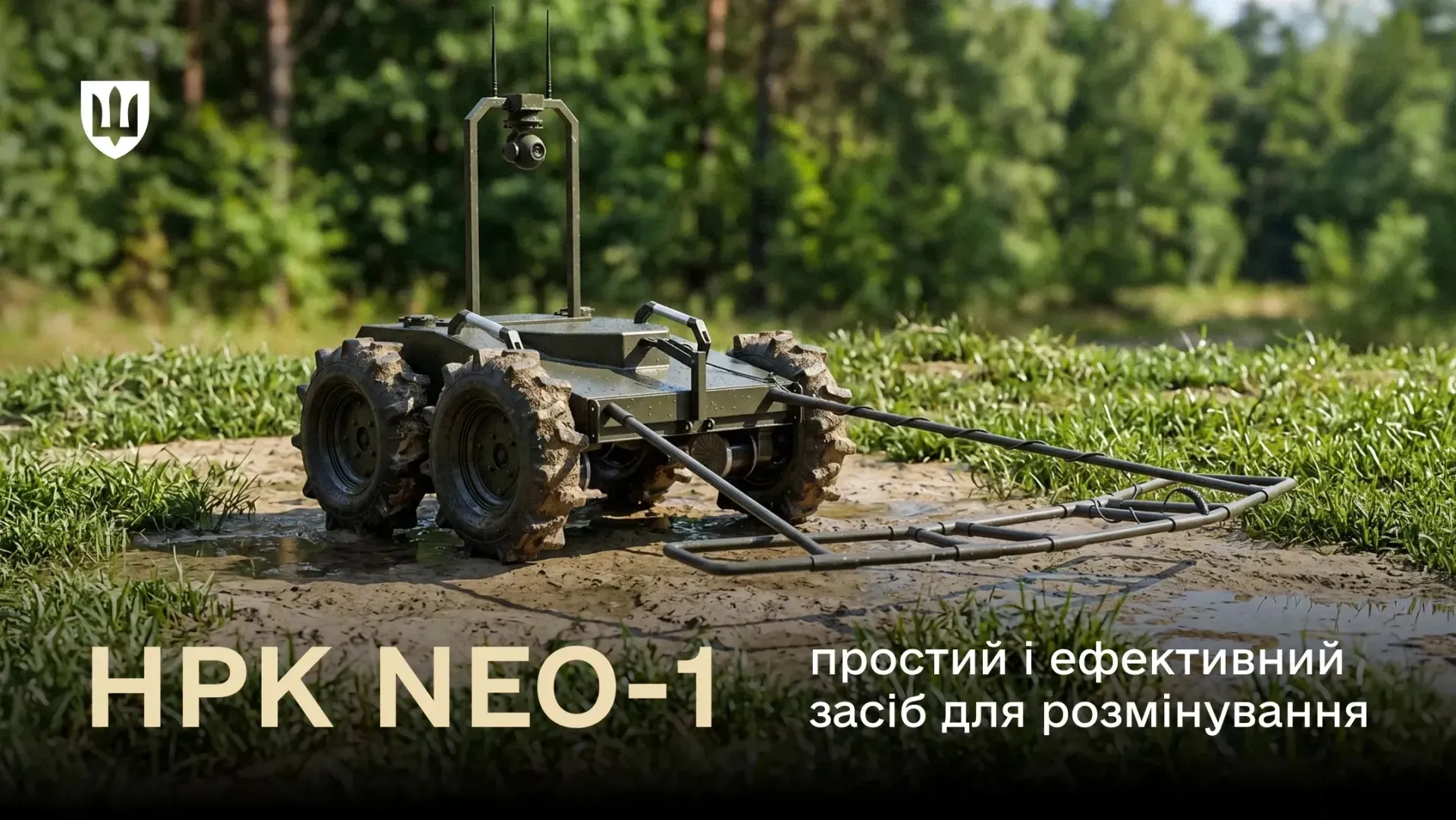
The Ministry of Defense of Ukraine has standardized and officially approved the NEO-1 robotic hardware-software system for remote detection of explosive objects for use by the Armed Forces. The system is designed for reconnaissance and detection of hazardous objects, thereby reducing risks to personnel during demining operations.
As noted, the NEO-1 is a unique development by Ukrainian weapons engineers, designed for demining territories with minimal risk to the operator.
The new platform was manufactured specifically at the request of military personnel on the front lines, taking into account the conditions of modern warfare.
The NEO-1 has a number of advantages over other engineering systems, including a simple and intuitive operating algorithm, automatic and manual control modes, built-in video cameras, low operating costs, compact size, relatively light weight, modular architecture, and the ability to perform logistical missions. It can be used not only by Army engineering units but also by other military personnel who need to clear an area of mines.
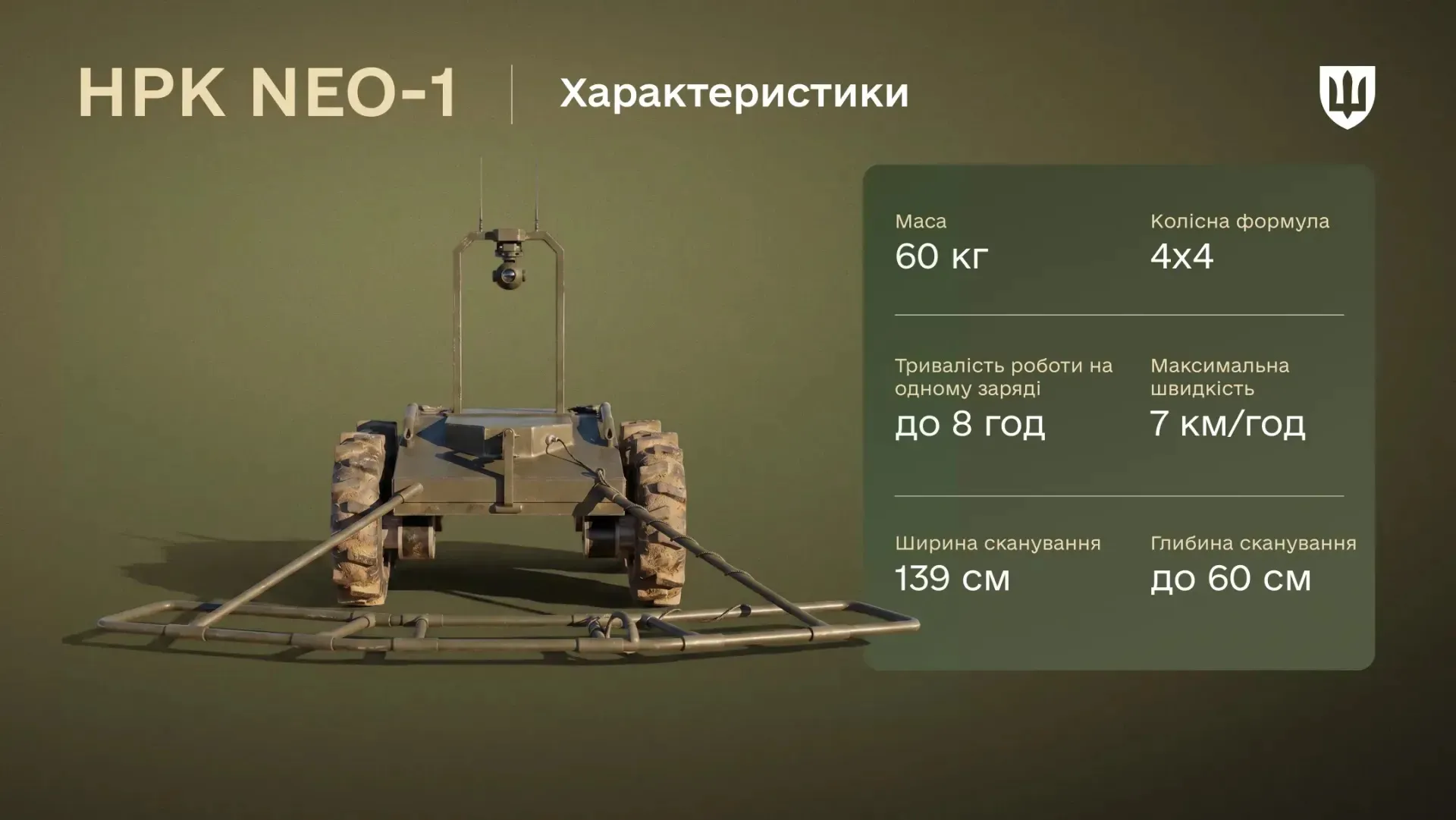
This ground platform measures 85 by 81 cm, is 41 cm tall, and weighs about 60 kg. Two service members can easily remove it from the bed of a pickup truck or pull it out of a car trunk.
The NEO-1 can reach speeds of up to 7 km/h. The battery capacity is sufficient for eight hours of autonomous operation.
In addition to demining, this robotic system can carry up to 70 kg of cargo or tow a loaded cart weighing up to 120 kg.
The NEO-1’s control range reaches up to 500 meters; it can be optionally extended to three kilometers. The platform is equipped with a video camera that provides 10x optical zoom or 3x digital zoom. It also features a three-axis stabilizer and a night vision camera. Video is transmitted in real time to the operator’s monitor.
The NEO-1 features a pulse-type wide-range multi-channel metal detector with remote calibration and control of search channels, as well as automatic adjustment to soil type. It detects ferrous metals, gold, silver, OZM-72 mines, TM-series anti-tank mines in metal casings, anti-personnel grenades, shells, MON anti-personnel metal mines, and others. The metal detector features a mode for filtering out small objects (shavings, screws, small debris) and adjustable volume settings. The scanning width is 139 cm, and the depth is up to 60 cm.
The ministry emphasizes that technological superiority over the enemy is one of the priorities of Ukraine’s defense plan. In total, in the first half of this year, the agency plans to contract for over 25,000 ground-based robotic systems—twice as many as in all of last year. The key goal is to transition up to 100% of frontline logistics to unmanned robotic platforms.
On the evening of June 9, Russian troops launched a drone attack on Kharkiv. Several explosions were heard in the city, with strikes recorded in various districts.
Mykolaiv came under attack again by Russian drones, which struck the city and the region. An administrative building was damaged in the shelling, but there were no casualties. The enemy also repeatedly attacked communities in the region with FPV drones and artillery.
The Zaporizhzhia region endured one of the most intense attacks in recent times, as Russian troops launched hundreds of strikes on dozens of settlements. One man was killed and two others were wounded as a result of the shelling. Both frontline communities and areas further inland came under fire.


