
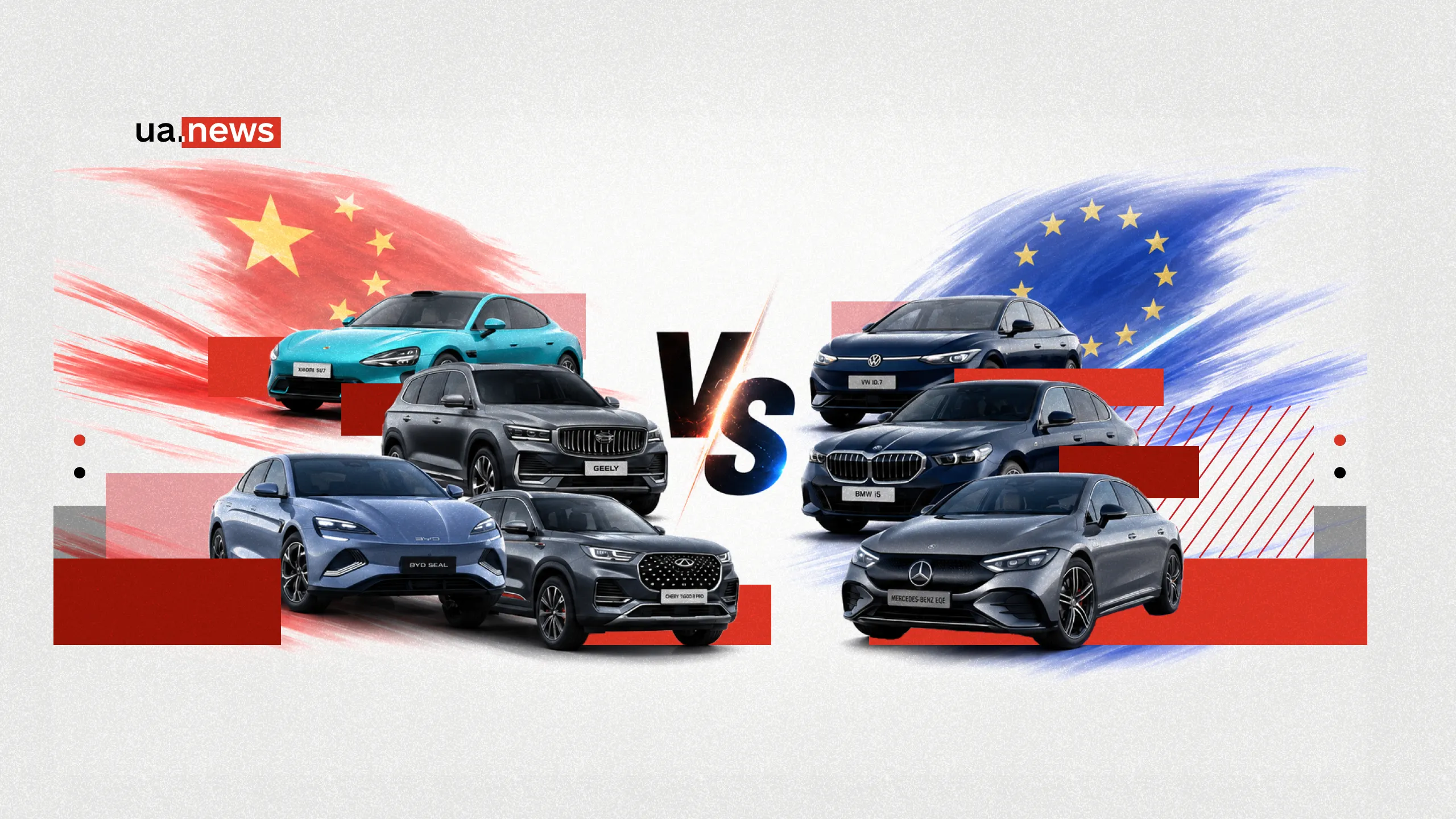
The global auto industry is changing rapidly, and the situation with Honda is yet another sign of this. On September 2, Reuters reported that the Japanese automaker plans to cut costs by more than $9 billion by 2030 and is already demanding that suppliers significantly lower prices for components. One of the main reasons is the increasingly fierce competition from Chinese electric vehicle manufacturers, primarily BYD.
At the same time, Chinese manufacturers continue their push into the global market. In August, BYD sold over 440,000 vehicles, and the company’s overseas shipments rose by 134.5% year-over-year—to nearly 190,000 vehicles. In the first half of 2026, BYD’s international business generated more revenue for the company than its domestic sales in China for the first time.
Chinese cars are no longer just a cheap alternative to European, Japanese, or American brands. They are gradually changing the rules of the entire industry, forcing Honda to cut costs, Volkswagen to reevaluate its factory operations, and Tesla to defend its position in the world’s largest automotive market.
UA.News explains how China became a hub for electric vehicle production, why BYD, Geely, and Chery can sell cars cheaper than their competitors, and whether traditional automotive giants are capable of halting their global expansion.
How China Evolved from a Manufacturer of Cheap Cars to the Center of the Global Automotive Industry
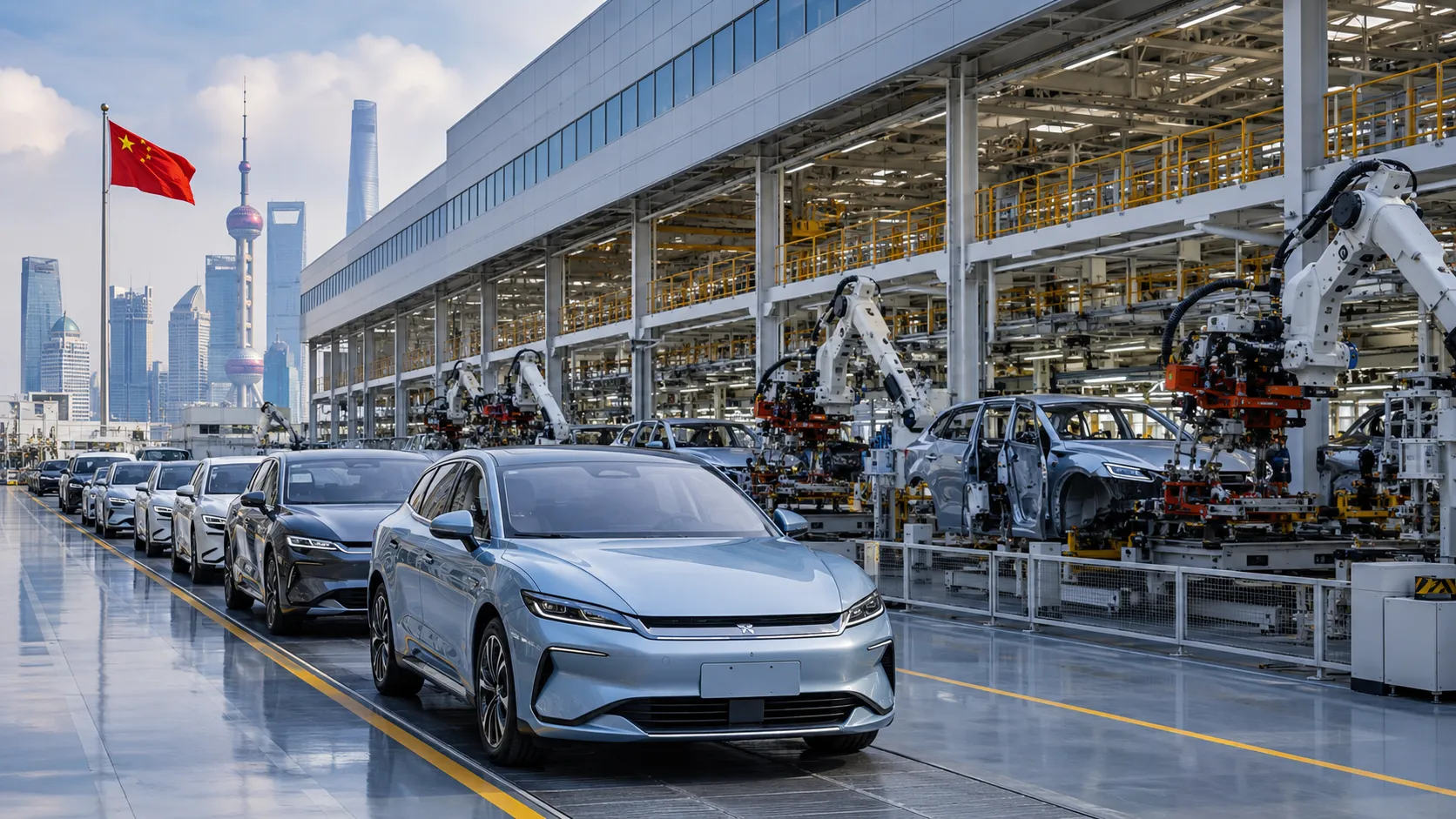
Just two decades ago, Chinese cars were primarily associated with cheaper copies of European or Japanese vehicles. Local manufacturers lagged significantly behind global automakers in terms of technology, design, safety, and quality, while Volkswagen, General Motors, Toyota, and other foreign companies dominated the Chinese market itself.
For many years, Chinese authorities required global automakers to establish joint ventures with local partners. For Volkswagen, GM, and other automakers, this was the price of access to a massive market, but at the same time, China gained manufacturing expertise, trained engineers, suppliers, and technology.
However, the real turning point came when the world began shifting from internal combustion engines to electric vehicles.
European and Japanese companies had been accumulating decades of experience in the production of gasoline and diesel engines. Toyota, Honda, Mercedes-Benz, BMW, and Volkswagen possessed technologies, patents, manufacturing processes, and vast supplier networks that were extremely difficult to catch up with.
The electric vehicle has partially nullified this advantage.
It no longer contains a complex gasoline engine, a traditional transmission, or a large number of mechanical components. Instead, the battery, electric motor, power electronics, software, and vehicle control system have become the key components.
It is on these technologies that China has begun to build a new automotive industry.
According to the International Energy Agency, China accounted for over 80% of global production of battery cells for electric vehicles in 2025. Approximately 85% of global production of cathode active material and over 90% of anode material also came from China.
Chinese battery manufacturers have become global giants. Today, CATL supplies batteries not only to local brands but also to foreign manufacturers. BYD actually started out not as an automotive company, but as a battery manufacturer, which is why the company can develop and produce one of the most expensive and technologically critical components of an electric vehicle on its own.
As a result, a vast ecosystem has emerged around the Chinese auto industry.
Car, battery, display, electronics, sensor, electric motor, metal component, and software factories all operate within the same manufacturing environment. An automaker can quickly find a supplier for virtually any component within the country, and often even within the same industrial region.
This not only saves money but also allows for the much faster development of new models.
In 2025, nearly 22 million electric vehicles were manufactured worldwide. According to IEA estimates, about three-quarters of them were produced in China. Chinese factories produced approximately 16 million electric vehicles, with production exceeding domestic demand by about 20%.
Why BYD, Geely, and other Chinese cars can cost less than European and Japanese ones
It is no longer accurate to attribute the advantage of Chinese cars solely to cheap labor.
Wages in China’s industrial regions have risen significantly, and the production of modern electric vehicles has long since ceased to rely on large numbers of low-wage manual laborers. The scale of production, access to components, and the structure of the business itself have become far more important.
One of the main advantages is the battery.
It can account for a significant portion of an electric vehicle’s cost. China controls not only battery assembly but also a significant portion of the entire supply chain—from the processing of critical materials to the production of cathodes, anodes, and finished battery cells.
According to the IEA, Chinese manufacturers accounted for nearly 75% of global battery use in electric vehicles in 2025. Even in the European Union market, Chinese companies already account for more than half of the battery market—nearly twice as much as in 2023.
The second advantage is vertical integration.
BYD manufactures its own batteries, electric motors, power electronics, and a significant portion of other components. This reduces dependence on third-party suppliers and allows for faster changes to vehicle designs.
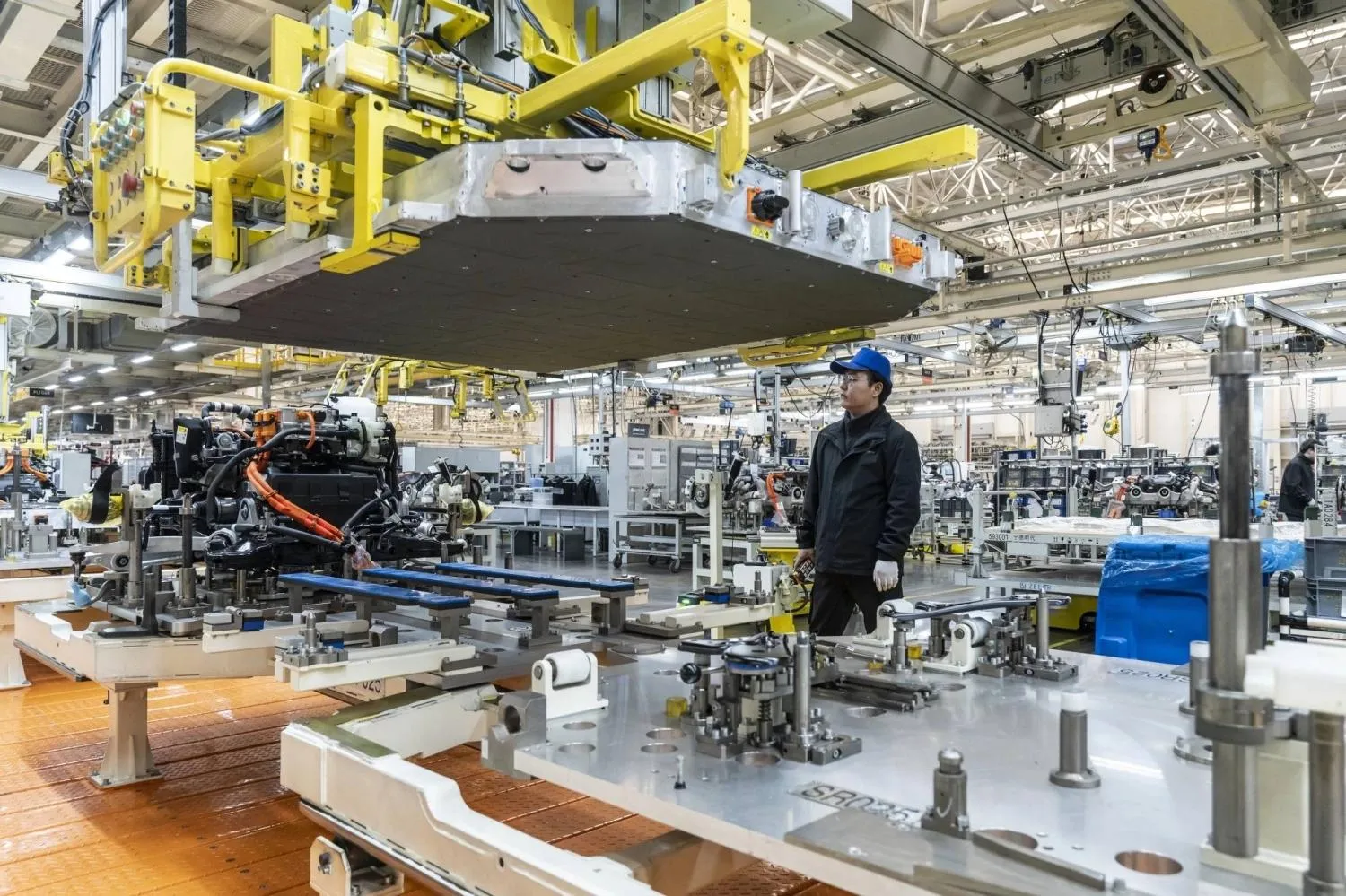
For a traditional automaker, the supply chain is often much more complex.
Volkswagen, Honda, or Mercedes-Benz may work with hundreds of major suppliers in dozens of countries. Added to this are aging factories built for internal combustion engines, large dealer networks, pension programs, high salaries, and the need to simultaneously support both old and new technologies.
Chinese companies have built many of their production systems specifically for electric vehicles.
That is precisely why Honda’s story is so telling.
The Japanese company now aims to cut costs by 1.5 trillion yen, or more than $9 billion, by 2030. According to Reuters, in some categories, Honda is asking suppliers to reduce costs by about 30%. The company is also recommending that suppliers give greater consideration to Chinese parts manufacturers.
In fact, one of Japan’s best-known automakers is being forced to partially adopt the business model of its Chinese competitors.
Another advantage China has is extremely high domestic competition. BYD competes not only with Tesla, Toyota, or Volkswagen. Within the country, there are Geely, Chery, SAIC, XPeng, Nio, Leapmotor, Li Auto, Xiaomi, and dozens of other manufacturers.
Companies are constantly releasing new models, lowering prices, adding more electronics, and updating software. As a result, the product development cycle for new cars is getting shorter and shorter.
A traditional automaker might have spent years developing a new generation of a model and then sold it without significant changes for several more years. The Chinese market is increasingly resembling the smartphone market, where users constantly expect new features.
The car itself is also changing.
For buyers, features such as a large display, a multimedia system, a voice assistant, autopilot, apps, the ability to update the car via the internet, and integrate it with other devices are becoming increasingly important.
The car is gradually transforming from a mechanical product into a digital one. This creates yet another challenge for traditional automakers: they must simultaneously operate as both manufacturing and technology companies.
Chinese companies are no longer satisfied with just their domestic market: BYD, Geely, and Chery have begun global expansion
For a long time, the Chinese automotive market was so large that local manufacturers did not necessarily need to actively expand abroad.
Now the situation has changed.
The domestic market is experiencing a fierce price war. Sales within China are slowing, production capacity is abundant, and the margin on each car is shrinking.
As a result, overseas markets are becoming increasingly important for Chinese companies.
According to the IEA, in 2025 China exported more than 2.5 million electric vehicles—roughly twice as many as the previous year. Electric models already accounted for more than 35% of all Chinese automotive exports.
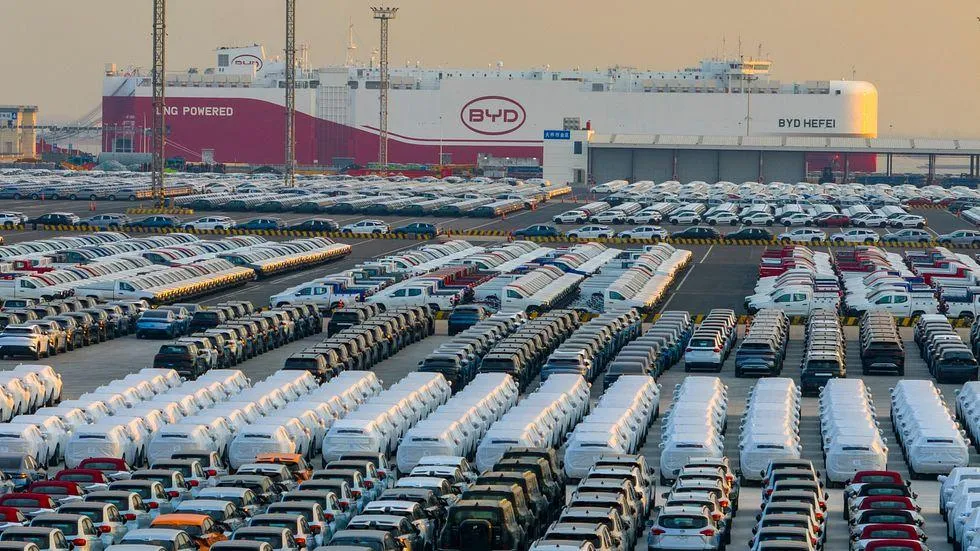
In 2026, the trend continued. In August, BYD sold 440,293 vehicles, a 17.8% increase from the previous year. But it was the foreign markets that served as the main driver: the company’s overseas shipments grew by 134.5% to reach 189,466 vehicles.
Another result was particularly telling.
In the first half of 2026, international operations accounted for more than half of BYD’s revenue for the first time. Europe, Southeast Asia, and Brazil became key areas of expansion.
The reason is simple: overseas, Chinese cars can often be sold at significantly higher prices than at home. In the domestic market, companies are engaged in an almost constant price war. Outside China, competition is lower, and consumers are willing to pay more.
In the first half of 2026, domestic car sales in China fell by approximately 2.3 million vehicles, while exports continued to grow rapidly. Chinese automakers are compensating for weaker domestic demand by expanding into Europe, Southeast Asia, Latin America, Africa, and the Middle East.
Europe is changing particularly rapidly.
According to Reuters estimates, over the past four years, the share of Chinese brands in the European auto market has grown from about 3% to 16%. Their position is even stronger in the electric vehicle segment.
At the same time, Chinese companies are no longer limiting themselves to exporting finished vehicles. They are building factories abroad. This allows them to avoid some tariffs, reduce logistics costs, create local jobs, and position the car not as a Chinese import, but as a product manufactured specifically for a particular market.
Southeast Asia has already become the largest region for Chinese automakers’ overseas plants. According to the IEA, in 2025, this region accounted for more than half of all Chinese automotive production capacity outside the country.
And this is just the beginning. The ten largest Chinese automakers have announced targets to sell more than 7 million cars overseas in 2026—nearly double their plans from the previous year.
The global auto industry is gradually gaining a new export giant.
Volkswagen is cutting costs, Honda is saving billions, and Tesla is losing market share
For traditional automakers, Chinese expansion poses a problem that cannot be solved simply by launching yet another electric vehicle. They are forced to change the very structure of their businesses.
The most telling example is Volkswagen. For years, the German automaker was one of the main foreign beneficiaries of China’s economic boom. China brought Volkswagen millions of cars sold and huge profits.
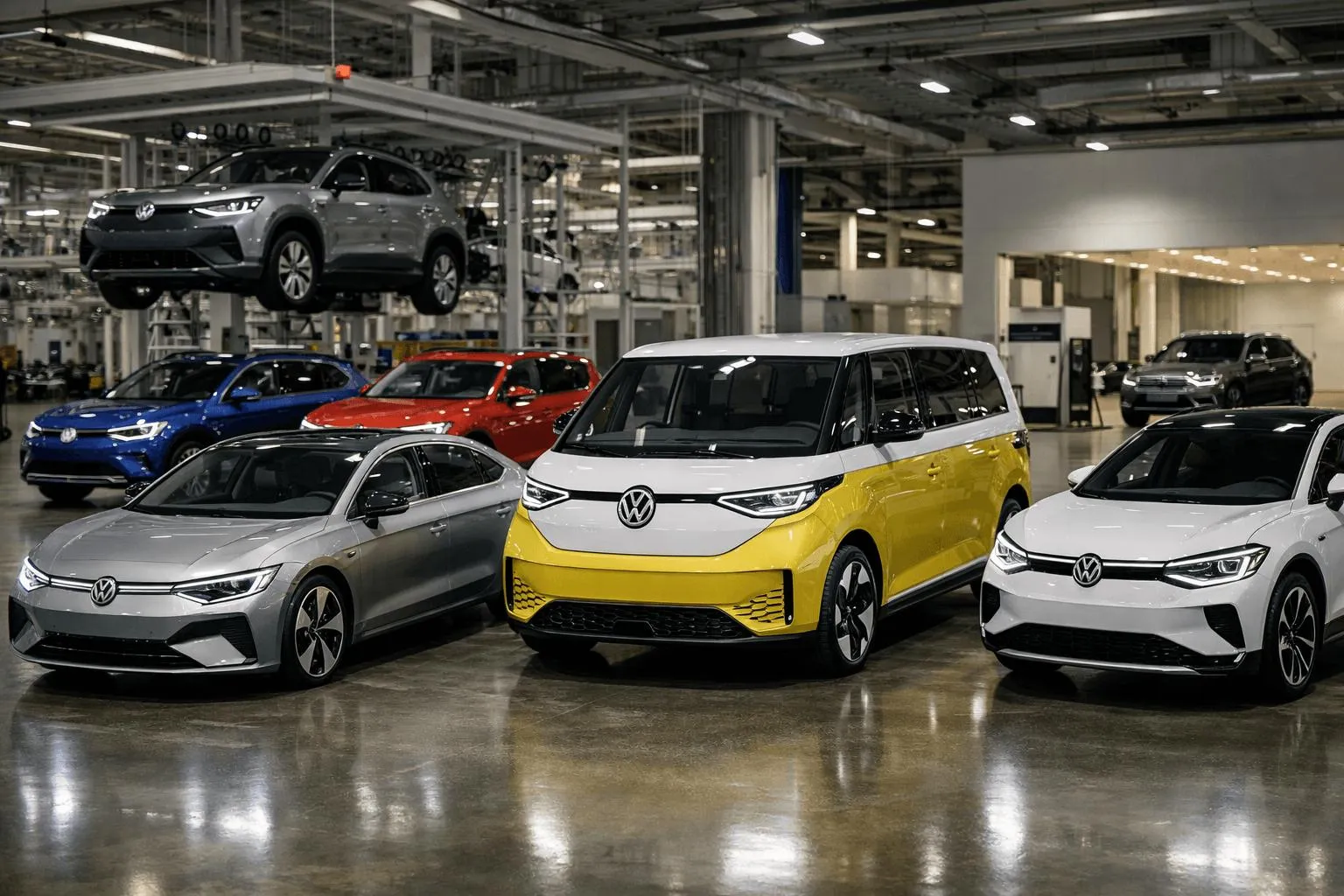
Now the situation has reversed.
Local brands are gradually displacing foreign companies, especially in the electric vehicle market. At the same time, Chinese manufacturers are now entering Volkswagen’s home market—Europe.
In September, the company’s management once again turned to a large-scale restructuring.
Volkswagen’s management is considering radical cuts to costs, jobs, and production in Germany. Among the proposals is the possible shutdown of production at four German plants between 2031 and 2034.
The main problem is that manufacturing cars in Germany is expensive.
High wages, energy costs, social benefits, and aging factories drive up production costs, making it increasingly difficult to compete with Chinese manufacturers.
Therefore, the issue of Chinese competition for Europe has long extended beyond the automotive market. The auto industry is one of the EU’s largest employers and export sectors. Thousands of suppliers and hundreds of thousands of workers are employed by companies such as Volkswagen, Mercedes-Benz, BMW, Stellantis, and Renault.
If European companies begin to systematically lose market share, entire industrial regions will feel the consequences. Japan has faced a similar challenge.
Honda is now cutting costs by more than $9 billion and revising its plans for electric vehicles. Toyota is also facing weaker results in the Chinese market. Even Tesla, which just a few years ago was itself the main disruptor of the traditional auto industry, now finds itself under pressure from Chinese competitors.
In the second quarter of 2026, Tesla’s share of the Chinese battery-electric vehicle market fell to 6.6%. By comparison, in 2020 it exceeded 15%. In August, sales of Tesla vehicles manufactured in China grew by only 3.6% year-over-year, while BYD continued to ramp up overseas shipments at a much faster pace.
In fact, the Chinese auto industry is simultaneously taking on two generations of competitors.
The first includes Volkswagen, Toyota, Honda, Mercedes-Benz, BMW, and other companies that shaped the global automotive market of the 20th century. The second is Tesla, which was poised to become the leading automaker of the new electric era.
Why Europe Is Imposing Tariffs on Chinese Electric Vehicles and Whether This Can Halt Their Expansion
Governments have also begun to respond. Following an anti-subsidy investigation, the European Union imposed additional tariffs on Chinese electric vehicles. Brussels’ reasoning is that Chinese companies have received state support, allowing them to sell cars at prices with which European manufacturers cannot compete fairly.
But even high tariffs do not fully solve the problem. First, Chinese companies have such low production costs that they can simply factor part of the tariffs into the price and still remain competitive.
Second, they can move production overseas. If BYD or another manufacturer assembles a car directly in the EU, some of the trade barriers lose their meaning.
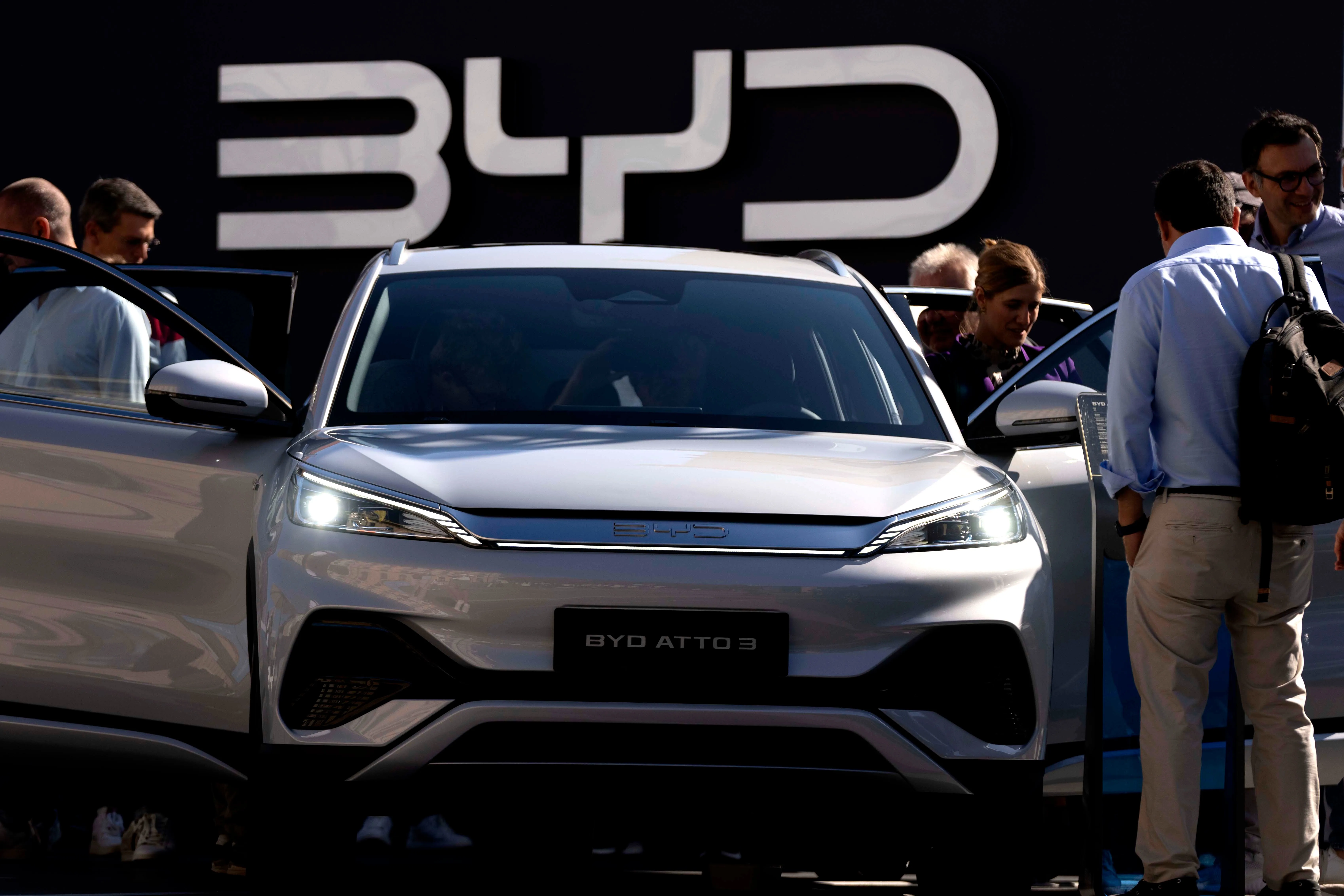
Third, Europe itself is heavily dependent on the Chinese automotive ecosystem. Even if a car bears a European badge, its battery, battery components, electronics, or critical materials may come from China.
According to the IEA, Chinese manufacturers already control more than half of the European Union’s electric vehicle battery market.
Therefore, Europe faces a difficult choice. If it completely closes its market to China, the transition to electric vehicles could become more expensive. If it does nothing, European manufacturers risk losing a significant portion of their own market.
Moreover, the Chinese automotive industry is vital to China itself as a strategic sector.
Beijing has even begun to rein in the most aggressive foreign competition faced by its companies. On September 1, Chinese regulators issued new guidelines for automakers, urging them to maintain quality standards, avoid chaotic dumping, and comply with competition rules while expanding overseas.
The reason is clear: overly aggressive price cuts could trigger a new wave of tariffs and trade restrictions. Therefore, China is now trying to balance two objectives—helping its companies conquer the global market while at the same time avoiding a full-blown global trade war.
Can Chinese brands repeat the smartphone story and displace the old automotive giants?
Today’s situation is often compared to the smartphone revolution.
In the early 2000s, Nokia seemed practically unbeatable. The company had a huge share of the global market, a strong brand, manufacturing capabilities, a dealer network, and dozens of models.
Then the product itself changed. The phone ceased to be primarily a device for making calls and became a software platform. Nokia’s old advantages lost their significance extremely quickly.
Something similar could theoretically happen with cars as well. If a car becomes an electric digital device, the main competitive advantages may no longer be the engine and transmission, but rather the battery, software, sensors, computing system, and development speed.
It is precisely in these areas that Chinese companies appear particularly strong today. But a direct repeat of Nokia’s history is not yet guaranteed. A car is a much more complex and expensive product than a smartphone.
Buyers expect to use their cars for ten years or more. They need service centers, replacement parts, warranties, insurance, and the assurance that the brand won’t disappear in a few years.
This is precisely where traditional companies have a huge advantage. Toyota, Volkswagen, BMW, Mercedes-Benz, and Honda have spent decades building service and dealer networks around the world.
Chinese brands still need to build all of this. There are also internal problems within China itself. The price war has forced many companies to operate at very low profit margins. There are too many brands on the market, and it is almost certain that some of them will not survive the next decade.
Therefore, not every Chinese company will become the next BYD. But the main shift has already taken place. China is no longer trying to catch up with the global auto industry.
It already produces about three-quarters of the world’s electric vehicles, over 80% of battery cells, and dominates the market for key battery components. Its manufacturers are selling more and more vehicles in Europe, Latin America, Asia, and Africa. And competitors are already responding.
Honda is cutting costs by more than $9 billion. Volkswagen is struggling to reduce expenses and secure the future of its plants. Tesla is losing market share in the world’s largest electric vehicle market. Meanwhile, BYD, Geely, Chery, and dozens of other Chinese companies are shifting from competing for domestic buyers to competing for the entire global automotive market.


