
British archaeologists have discovered an artificial island that is over 5,000 years old
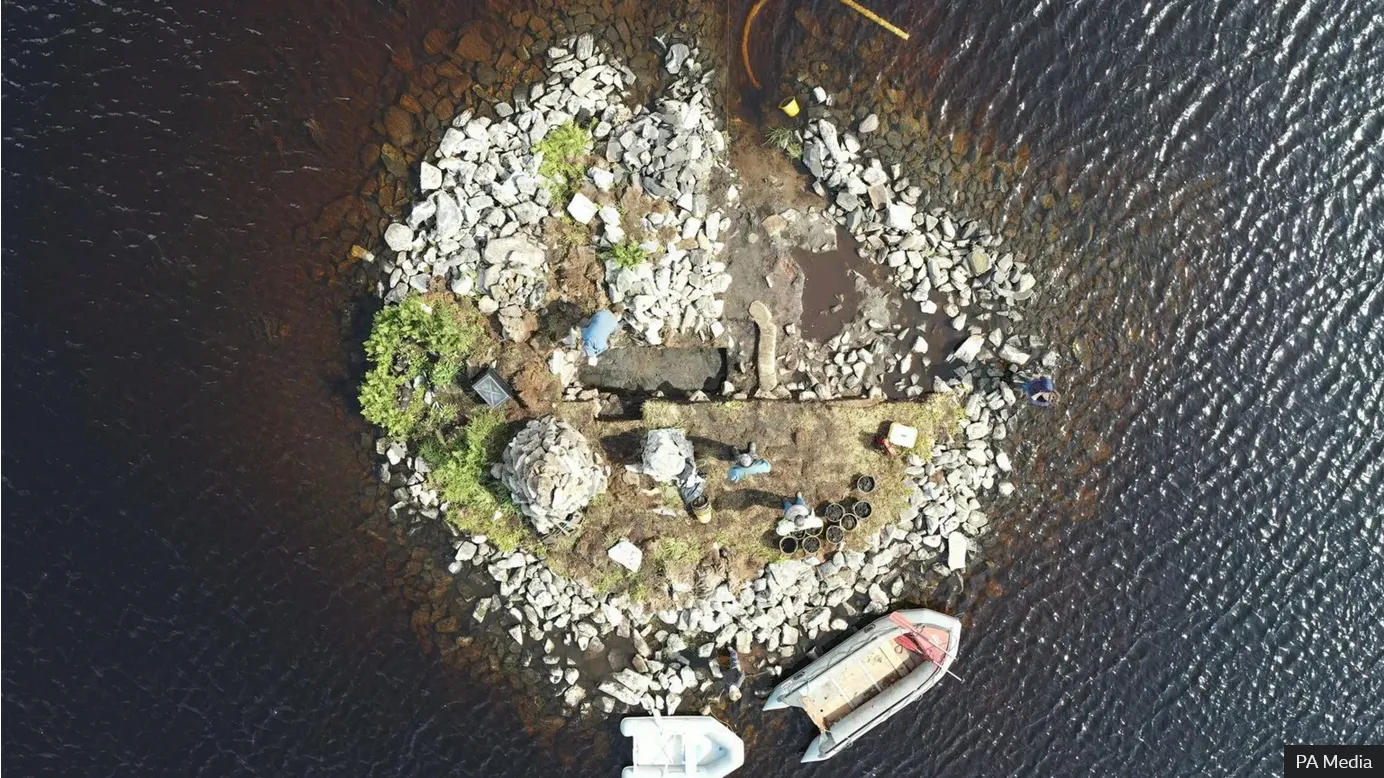
An island in Loch Borgastail in the Outer Hebrides, which appears to be an ordinary rock formation, is in fact a man-made structure and rests entirely on a massive wooden platform. Researchers from the University of Southampton have determined that it was created over 5,000 years ago as a circular structure made of brushwood with a diameter of 23 meters.
This was reported by the BBC.
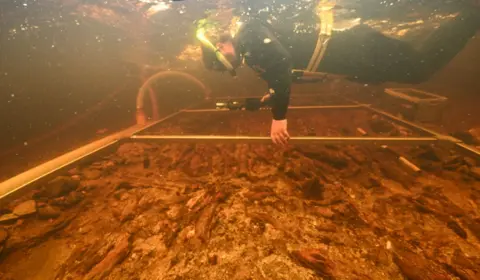
Scientists have determined that construction took place in stages: the first wooden level appeared between 3500 and 3300 BCE, and two millennia later, a layer of stone was added to the structure. Active development of the island occurred during the Iron Age, indicating that this site was used for many generations. According to Dr. Stephanie Blankshine, this technique for building foundations was common for many artificial islands in this region.
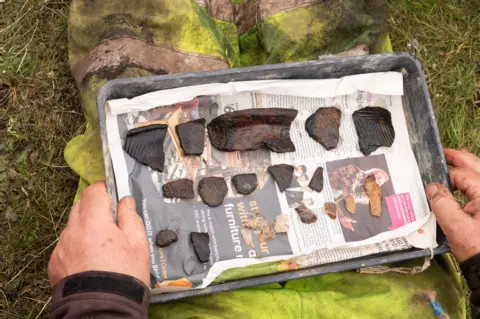
During underwater excavations, archaeologists also found hundreds of fragments of Neolithic pottery, indicating a high level of organization and significant labor investment by ancient communities. Cranogues are typical of Scottish lochs, where there are hundreds of similar structures; however, the discovery of an intact wooden foundation allows for a new appreciation of the engineering skills of Bronze Age people. The discovered artifacts will help provide a deeper understanding of the daily life and social structure of the communities that inhabited the territories of modern-day Great Britain long before our era.
We previously reported that the recent discovery of two skeletons mutilated in the same manner suggests that limb amputation was used as a punishment during the Eastern Zhou Dynasty in China, over 2,000 years ago.
We would also like to remind you that during excavations in the ancient city of Laodicea in the Turkish province of Denizli, which is included on UNESCO’s tentative list of World Heritage Sites, a statue of Asclepius, the god of medicine in Greek and Roman mythology, and the head of a statue of his daughter Hygieia were discovered.


