
Paris Haute Couture Week 2026: The Season's Top Haute Couture Trends (Photos)
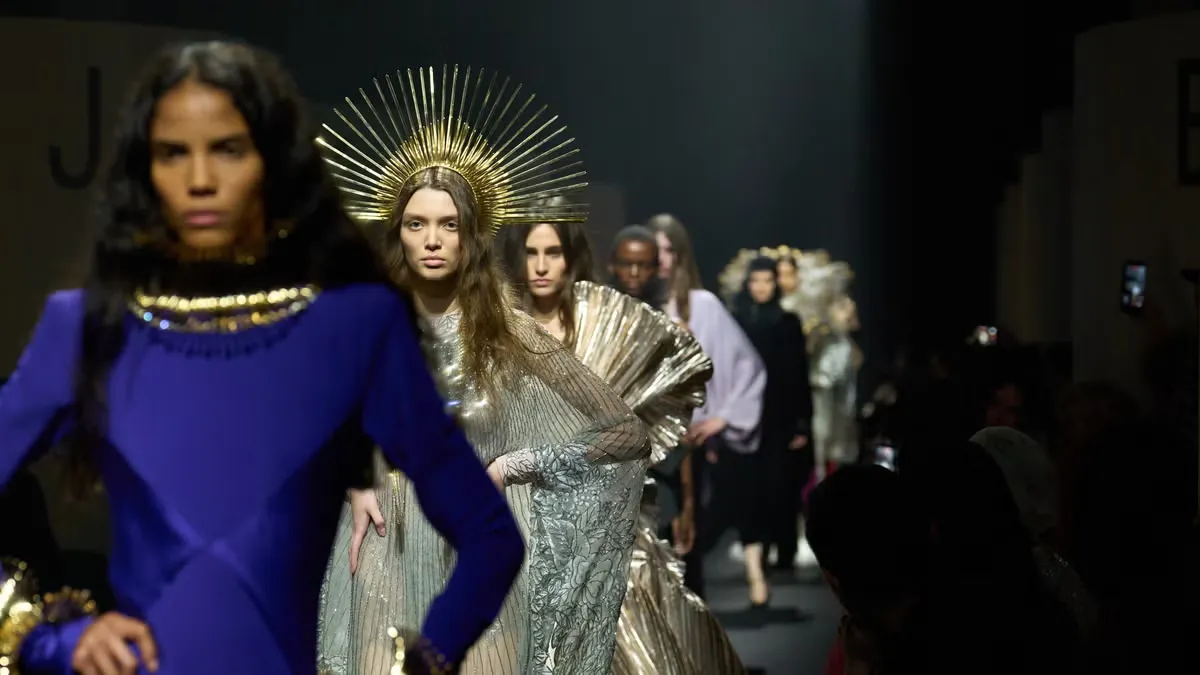
This season’s Paris Haute Couture Week showed that couture is no longer limited to just expensive fabrics and elaborate dresses. Designers have moved away from the usual display of luxury and transformed their collections into true works of art, where clothing becomes a way to tell a story.
The runways featured architectural forms, theatrical silhouettes, references to myths, and, at the same time, understated elegance. The main idea of the season is not simply to impress the audience, but to create an image that will be remembered as a distinct painting or sculpture.
Sculptural Silhouettes: Clothing as Architecture
One of the season’s main trends was sculptural forms that literally transform the perception of the human body. Designers experimented with broad shoulders, exaggerated volumes, and unusual proportions, creating looks that resemble architectural structures. Dresses no longer simply follow the contours of the body—they create their own shape and space around it.
This trend was particularly noticeable in Schiaparelli’s collections, where the garments often looked like art objects with a character of their own. The brand continued to play with exaggerated details, sculptural elements, and shapes reminiscent of fantastical creatures or works of contemporary art. A similar approach could be seen in Balenciaga’s designs, where minimalism was combined with dramatic silhouettes and an unusual play with volume.
This trend shows that contemporary haute couture is increasingly converging with design and art. Clothing is becoming not just something to wear, but a way to make an impression and highlight a person’s individuality.
The return of theatricality: feathers, wings, and looks straight from the runway to the stage
Another important trend of the season is the return of theatricality. After several years of understated minimalism, designers have once again allowed fashion to be bold, emotional, and even a little fantastical. Feathers, large decorative elements, unusual textures, and details reminiscent of theatrical costumes have appeared on the runways.
Designers paid particular attention to natural motifs—bird wings, feathers, fur, and shapes inspired by the animal kingdom. These looks created a sense of movement even when the model was simply standing on the runway. Some dresses and jackets looked as if they were created not for everyday life, but for the big stage or the silver screen.

This trend was also reflected in celebrities’ red-carpet appearances. Stars are increasingly choosing pieces that become the highlight of the evening, rather than simply an accessory to their look. Haute couture is returning to its original purpose—to create a dream and allow a person to transform into a different character for a few hours.
Understated luxury: perfect tailoring over excessive embellishment
Despite the bold and dramatic looks, there was still room for understated elegance at Paris Haute Couture Week. The “quiet luxury” trend continues to gain popularity—designers are focusing not on the quantity of details, but on the quality of materials, precision of cut, and impeccable fit.
These looks don’t feature a lot of sparkle or elaborate embellishments, but every detail is thought out down to the smallest detail. Expensive fabrics, clean lines, muted colors, and refined silhouettes create a sense of true luxury without being overly ostentatious. This approach is particularly evident in the work of Dior and Chanel, which traditionally emphasize classic femininity and masterful craftsmanship.
This trend showcases another side of high fashion—not flashy, but confident. These looks don’t try to grab attention at any cost, but remain relevant thanks to their quality and elegance.
Fashion with a History: Antiquity, Myths, and Nature
This season, designers actively drew inspiration from the past, incorporating motifs from antiquity, mythology, and natural forms. Many looks resembled ancient Greek sculptures, statues of goddesses, or legendary figures. This approach allowed designers to blend modern fashion with history and demonstrate that haute couture is always connected to culture.
White fabrics, draping, flowing lines, and bare shoulders evoked a sense of classical beauty. The designers seemed to reinterpret museum pieces and bring them into the modern world. The clothing looked not just like a seasonal trend, but like a part of the grand history of art.
Interest in natural motifs—flowers, animals, water, and celestial imagery—became particularly noticeable. This season’s fashion seems to blur the line between humans, nature, and fantasy.
Accessories are no longer just an addition, but the main focal point
Accessories have emerged as a distinct trend, ceasing to be a secondary detail this season. Shoes, bags, and jewelry are increasingly becoming the central elements of an outfit, around which the entire look is built. Designers are creating pieces that can draw attention on their own, even when paired with the simplest of outfits.
On the runways and among show guests, you could see unusual shoes with unconventional heels, large pieces of jewelry, and bags that more closely resemble art objects. Such accessories don’t just complete an outfit—they transform its character.

In modern fashion, details have taken on a new role—they’ve become a way to express individuality. That’s why even a small element, like the shape of a heel or the design of a bag, can become the focal point of an entire outfit.
This season’s Paris Haute Couture Week demonstrated one key point: couture no longer seeks merely to display wealth. It speaks to imagination, art, and personal style. Fashion is becoming a language through which designers tell stories, and celebrities create their own memorable looks.




