
What holiday is on May 28: name days, traditions, and superstitions
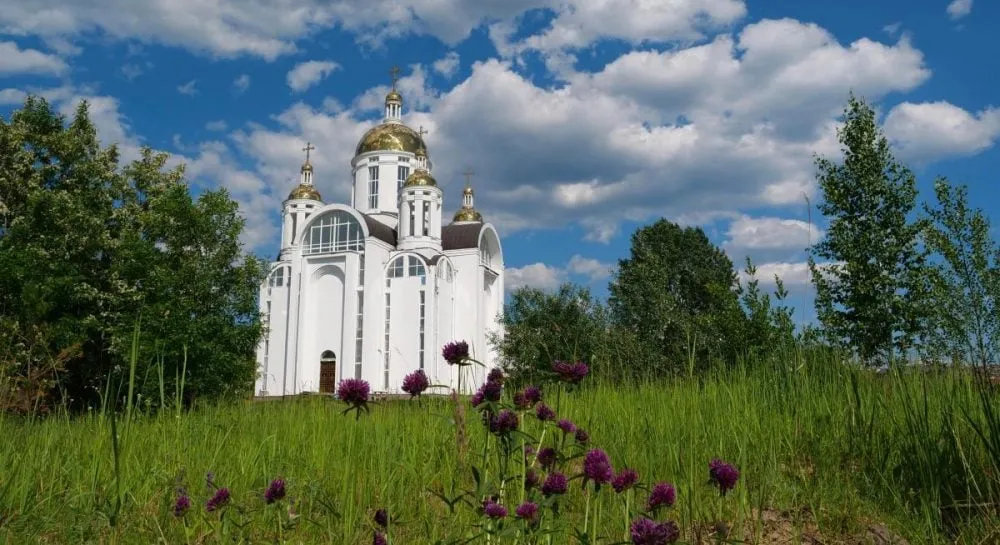
On May 28, Orthodox believers honor church traditions and commemorate the deceased. Among the people, this day is also known as Mykyta’s Day and Semyk. During the period leading up to Trinity Sunday, it is customary to remember the deceased and observe the appropriate memorial customs.
May 28 is a day when ancient folk traditions and church remembrance are particularly closely intertwined.
According to the new church calendar, Orthodox Christians honor the memory of St. Nikita of Chalcedon—the patron saint of the wronged, orphans, and the poor. This year, the holiday coincides with Semik and the Green Holidays—a time when nature is in full bloom, and the boundary between worlds, according to belief, becomes very thin.
On May 28, according to the new church calendar in Ukraine, the Venerable Nikita of Chalcedon is honored—a confessor and bishop who lived in Greece in the 8th century.
Nicholas was renowned for his righteous life and charity: he helped the poor, orphans, and widows, and welcomed travelers. For his pious deeds, he was appointed Bishop of Chalcedon, a position he held for nearly half a century.
When the iconoclastic Emperor Leo the Armenian ascended the throne, Nikita was not afraid to oppose him—and for this he was sent into exile. According to tradition, after the saint’s death, people were healed at his relics.
According to the Old Church Calendar, on this day Orthodox Christians commemorate Saint Isaiah of Kiev-St. Michael’s, Bishop of Rostov and Wonderworker—we have previously discussed which church holiday falls on this date according to the Old Style, as well as the customs and traditions associated with it.
The Venerable Nikita is considered the patron of the wronged, orphans, and the poor. People pray to the saint for healing, help with family matters, and finding work, and ask for protection for those who have been unjustly wronged.
Among the people, the holiday has several names—Nikita the Goose Herder, Nikita’s Day. The saint is considered the patron of goslings and ducklings: it is believed that he protects the young birds from disease and predators, so people ask him for protection for their poultry.
May 28 of this year also marks Semyk and the Green Holidays—an ancient folk festival celebrated on the seventh Thursday after Easter. Even in pre-Christian times, Semik symbolized the transition from spring to summer, and the main symbols of the holiday were the birch tree and the first greenery. It is believed that during this period, nature reaches the peak of its power, and the boundary between the world of the living and the dead becomes thinner.
Semik is closely linked to Trinity Week—people believe that during Green Holidays, the souls of the dead can enter the world of the living, so on these days, they commemorate those who died an unnatural death or were not baptized. It was believed that their souls could wander the earth, so the day was dedicated to their remembrance.
The holiday is also called the Navskaya Trinity or the Trinity of the Dead. On this day, it is customary to visit cemeteries, tend to graves, and hold memorial meals. It is worth noting that in the church, such a memorial day—Trinity Saturday—falls on the Saturday before Trinity Sunday.
On this day, as on any other, the church does not approve of quarrels, rudeness, gossip, envy, and greed. It is also forbidden to refuse help to those in need or to be lazy without cause.
There are also folk prohibitions associated with St. Nikita the Goose-Killer. According to tradition, one must not scold children on St. Nikita’s Day—otherwise, there will be no peace or tranquility in the family. It is also not advisable to let strangers into the home: unexpected guests may bring misfortune and take away prosperity.
There are also special taboos associated with Semyk: according to ancient beliefs, mermaids leave the water and roam the earth at this time, so one should be wary of swimming in rivers and lakes. Also, during the Green Holidays, people try not to make noise near water or in the forest, not to clap their hands, and not to go to sleep without a prayer. One must not refuse alms or help, and the home must be tidied up before the holiday—disorder drives away prosperity and good fortune.
During Mykyta the Goose-Herder and the Green Holidays, people closely observed the weather, birds, and insects—it was believed that they could foretell what the summer and harvest would be like:
- calm and windless weather—a bountiful harvest in the fall;
- rain on Mykyta’s Day—the harvest will be average;
- lizards crawl out to bask in the sun—it will rain soon;
- dung beetles flying actively in the morning—sunny weather is coming;
- many ants near anthills—clear and warm days ahead;
- Many horseflies during Green Christmas—there will be a good cucumber harvest.
The most striking sign of the day is considered to be the behavior of geese: if the birds begin to actively preen their feathers, rain will start “any minute now.”
May 28 is the name day for Mykyta. People celebrating their name day on this day are considered to have strong character and great perseverance. They rarely give up on their goals and usually achieve what they desire. At the same time, such people know how to draw others to them—their charisma and confidence often inspire admiration and a desire to follow their example.
On May 27, Orthodox Christians in Ukraine honor the memory of the holy martyr Ferapont, Bishop of Sardis, who suffered for his faith in the 3rd century. On this day, people traditionally reflect on his life, pray for protection, and observe folk superstitions and traditions. The holiday combines church history with ancient folk beliefs about nature and human behavior.


