
Israeli artist Fainaru presents installation at Venice Biennale
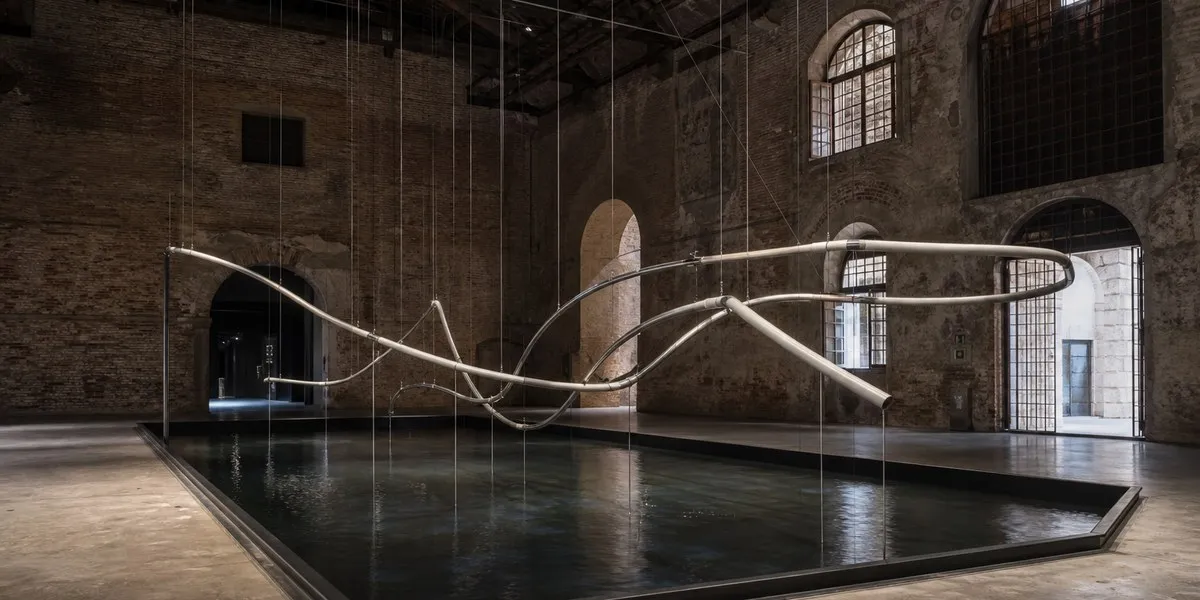
In Venice, Italy, Israeli artist Belu-Simion Fainaru is presenting the installation project “Rose of Nothingness” as part of the Venice Biennale. The exhibition at the Arsenale complex opened on May 9 and will run until November 22. As The Jerusalem Post reports, the artist said he faced protests, boycotts and critical reactions surrounding the Israeli exhibition.
An installation about memory and time
The central work of the “Rose of Nothingness” project draws on the work of poet Paul Celan, a Holocaust survivor. The installation consists of a system of tubes with droppers: black water rhythmically falls into a rectangular basin and circulates in a closed cycle. Fainaru links this image to memory, the passage of time, loss and environmental issues.
Another work, “In Search of Lost Time,” features a wall clock whose hands move in the opposite direction. According to the artist, the installation invites reflection on the passage of time, the impossibility of grasping it and the transformation of material things into memories.
More current news is available on the UA.News Telegram channel Telegram.
Reactions to the exhibition
Fainaru said that he gave more than 100 interviews during the biennale and answered, among other things, provocative questions from journalists. According to him, Israel’s Ministry of Foreign Affairs did not interfere with artistic decisions, but did not provide him with support in dealing with the media either.
The exhibition was visited by Germany’s State Minister for Culture and Media Wolfram Weimer, as well as Weimer’s Italian counterpart Alessandro Giuli. Weimer stated the importance of solidarity with Israel and Israeli artists at the biennale. Fainaru also spoke about support from a curator from Cuba and visitors from Lebanon and Iran.


