
In a world where the news cycle changes by the hour, art remains one of the few ways to address issues that remain relevant over time.
With each passing year, Ukrainian artists are increasingly appearing at the world’s largest art venues, and their works are finding their way into the collections of leading museums around the globe.
Voloshyn Gallery is currently one of the most prominent Ukrainian contemporary art galleries on the international scene. Founded in Kyiv in 2016 by Max and Yulia Voloshyn, the gallery has significantly expanded its global presence in recent years, opening a space in Miami and participating in leading international art fairs, including Art Basel, Frieze, and ARCOmadrid.
We spoke with gallery co-founder Max Voloshyn about how the perception of Ukrainian art is changing abroad, whether Ukraine has become a full-fledged part of the global art market, which artists are currently attracting the attention of international museums and collectors, and the future of Voloshyn Gallery, we spoke with the gallery’s co-founder, Max Voloshyn.
Tell us about yourself
Max Voloshyn: According to the international ArtFacts ranking, which analyzes the art market, we are the No. 1 gallery in Ukraine and No. 175 in the world. We represent Ukrainian and international artists and are the only gallery in the country to participate in leading international art fairs. Over the past three years, we have participated in 25 fairs, the most notable of which are Frieze New York 2025, Art Basel Paris 2025, Art Basel Miami Beach 2025, and ARCOmadrid. Voloshyn Gallery’s projects have been featured in The New York Times (USA), Forbes (USA), Financial Times (UK), Miami Herald (USA), The Art Newspaper (UK), ArtNet (USA), HyperAllergic (USA), Cultured Mag (USA), ArtNews (USA), Le Monde (FR), and others.
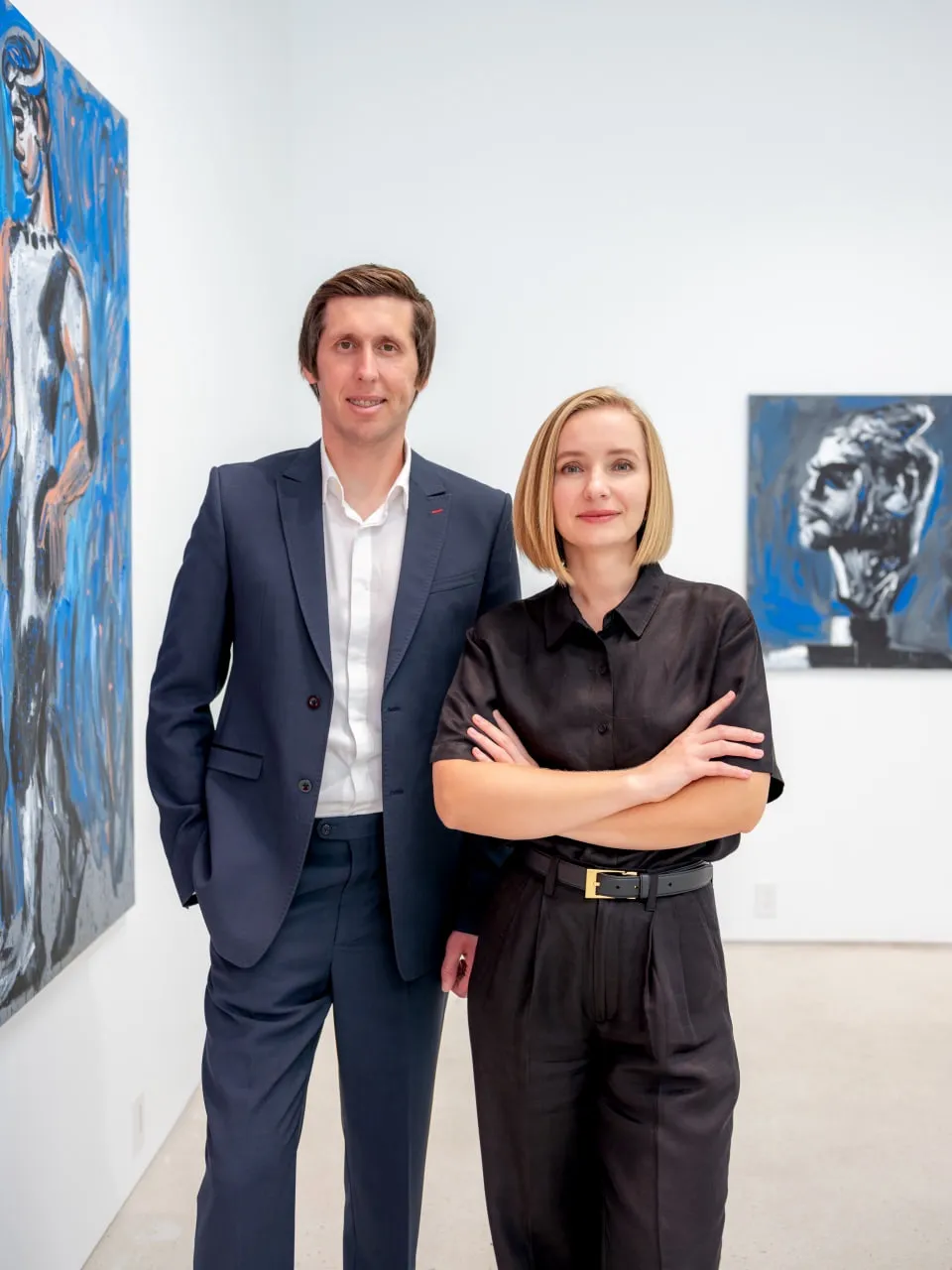
Together with your wife Yulia, you present contemporary Ukrainian art at prestigious international art events. How are Ukrainian artists and the messages they convey currently perceived around the world?
Max Voloshyn: We see that Ukrainian artists are generating significant interest at international art fairs, exhibitions, and biennales today. But it’s important to understand that the professional audience—curators, museum specialists, collectors—first and foremost evaluates the quality of the artistic expression, the strength of the project, and its relevance. It is the project itself that always comes first.
For example, last year at Frieze New York, we presented Nikita Kadan’s solo project, Kyiv Siren. In this series, the artist draws parallels between the ancient Greek image of sirens and the contemporary experience of life in Kyiv during air raid alerts. The project received a very strong international response and was included in Frieze’s highlights as one of the nine art projects that defined the fair that year. This was particularly important to us, as it was not about a separate Ukrainian section or a special program, but rather an evaluation among all the galleries and artists participating in Frieze New York. Such examples show that today, Ukrainian artists are of interest to the world primarily because of the power of their work.
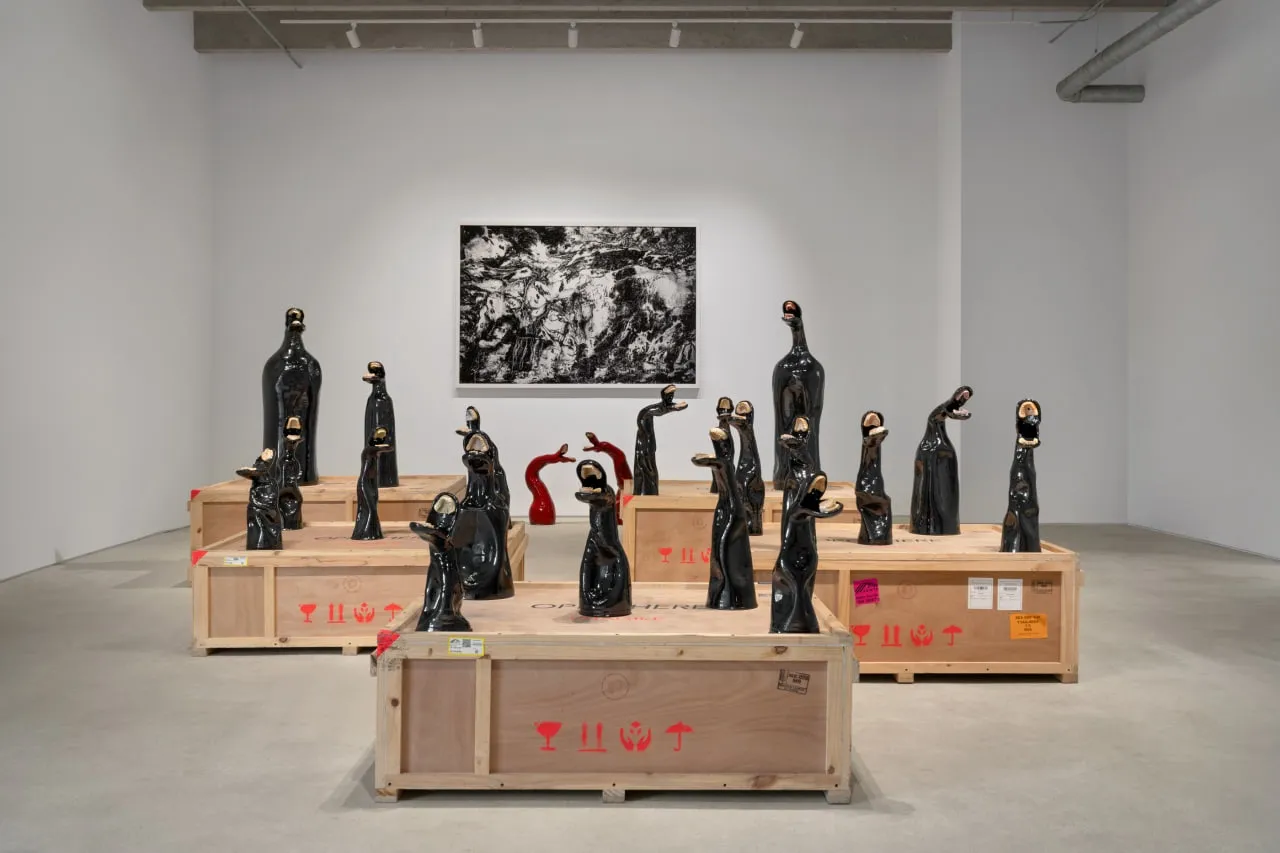
Another important sign of this process is that this year, for the first time, Ukraine will be represented in the Unlimited section at Art Basel—the world’s most prestigious contemporary art fair. Voloshyn Gallery will present Nikita Kadan’s large-scale project “Anxiety” there.
This is a very significant moment for us, as getting into Art Basel is extremely difficult. The selection process involves not only the artists but also the galleries representing them. The organizers evaluate the quality of the gallery’s program, its international activities, previous exhibition projects, and participation in leading global fairs. The selection committee consists of an average of nine experts, and they must vote unanimously to approve a gallery.
Has Ukraine succeeded in becoming a full-fledged part of the global art market? How much has the value of our renowned artists’ works increased?
Max Voloshyn: As a gallery represented in both the Eastern European and North American contexts, we see some progress. Based on our long-standing collaboration with renowned Ukrainian artists, we can now draw many parallels with the path once taken by artists from Poland, Romania, and the Baltic states. First, their art gained international recognition due to the region’s political and social transformations, and this subsequently led to a significant increase in interest from institutions, collectors, and the market as a whole.
When a museum adds an artist to its collection, it effectively recognizes them as part of international art history. It is precisely this process of institutional recognition that historically becomes the foundation for the long-term growth of both the artist’s reputation and the market value of their works.
At the same time, we are already seeing concrete market results through our own example. We represent Ukrainian artists at international art fairs such as Frieze, Liste, Art Basel, Arco Madrid, Independent, EXPO Chicago, Art Brussels, Art Dubai, and others. Over the past two years, we have participated in seventeen international fairs. Currently, we are the only Ukrainian gallery exhibiting at events of this scale. Our gallery is actively working to ensure that Ukrainian artists are seen and recognized at international events that bring together experts from around the world. Last year’s Art Basel
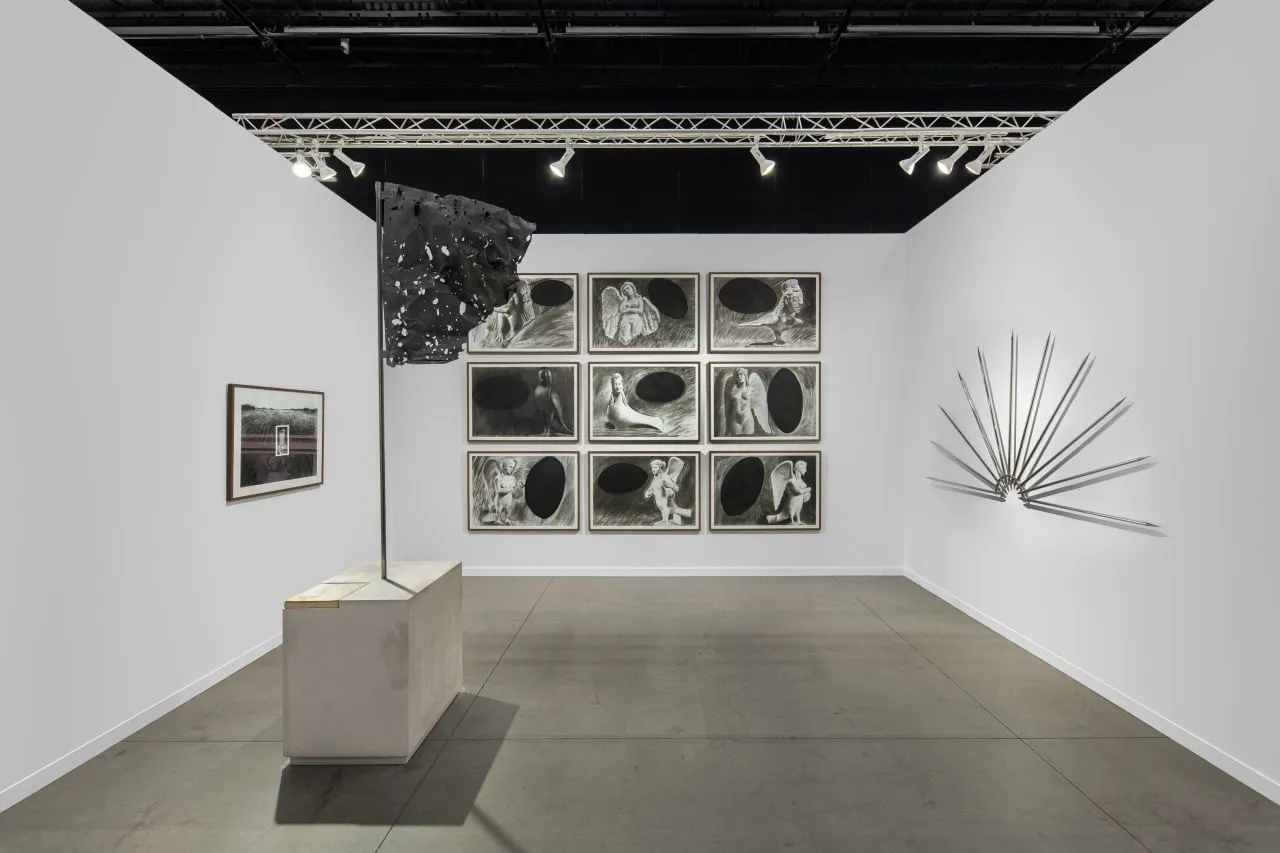
Paris was a significant milestone for Ukrainian contemporary art, as Voloshyn Gallery became the first Ukrainian gallery to be selected for an art event of this scale. Art Basel is one of the world’s largest and most prestigious art fairs, selecting only the finest galleries. We presented a solo exhibition of works by Nikita Kadan; “Shchekavytsia”—a monumental charcoal composition—drew particular attention, and our booth at Art Basel Paris was actively discussed and highlighted in the press.
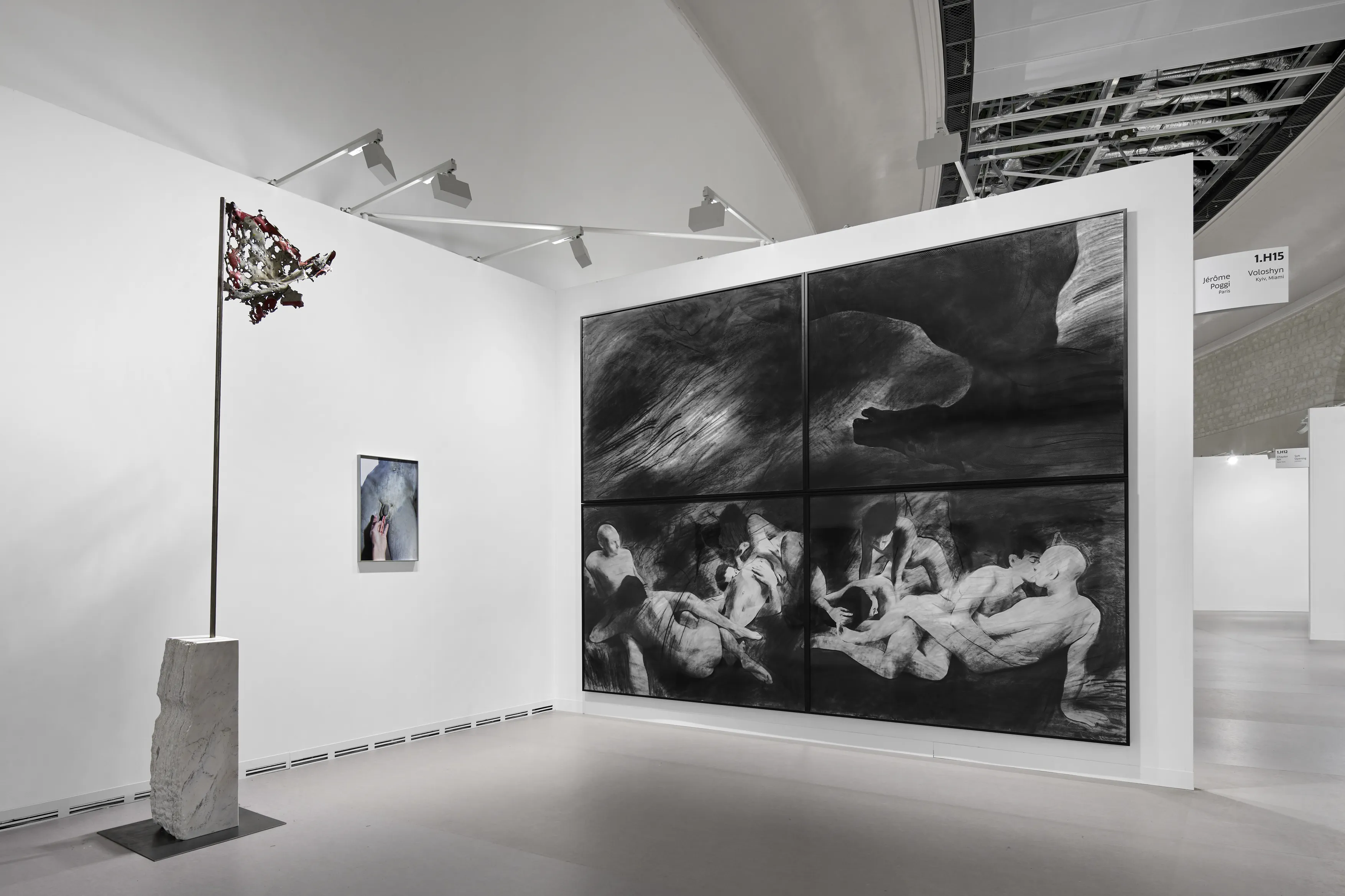
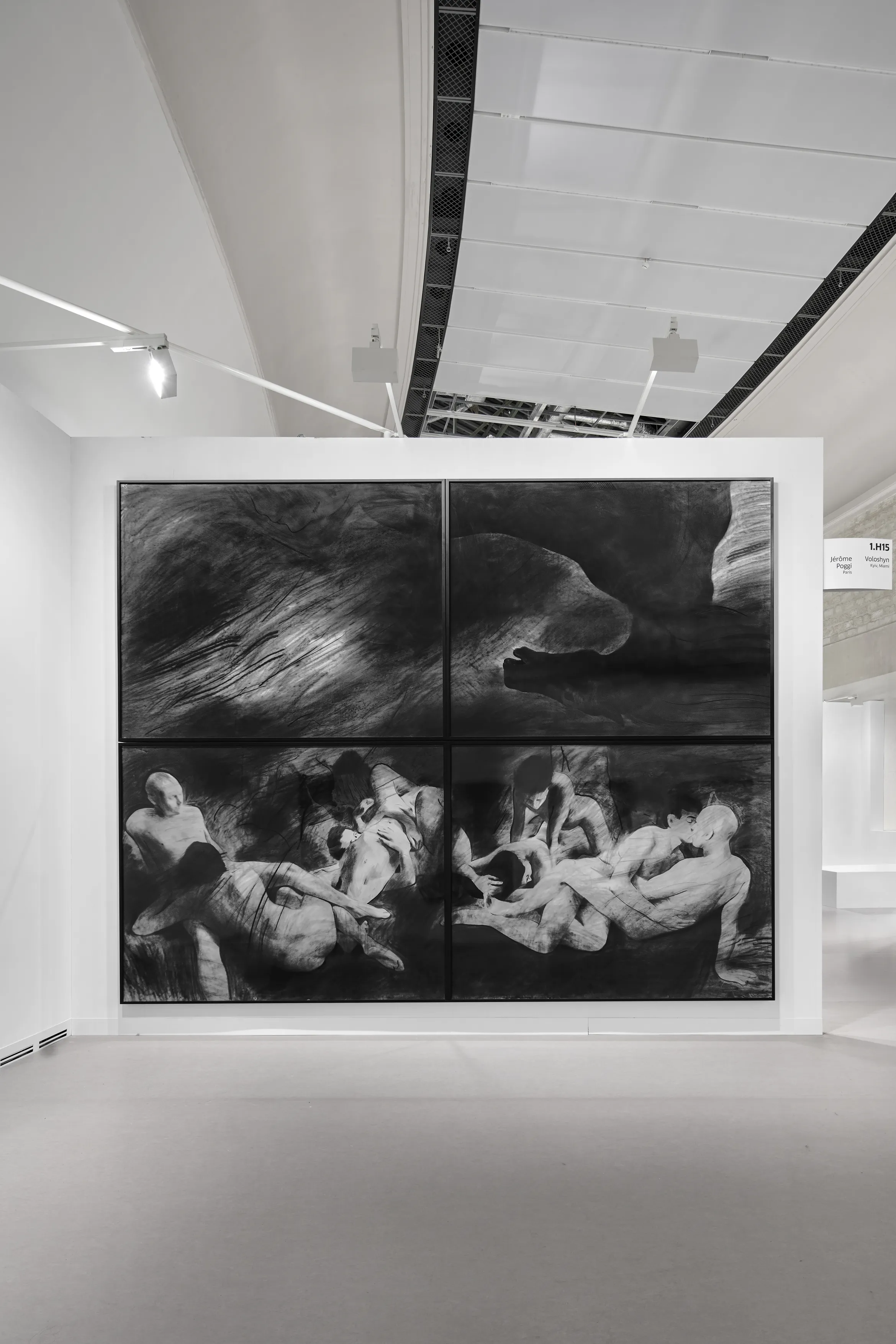
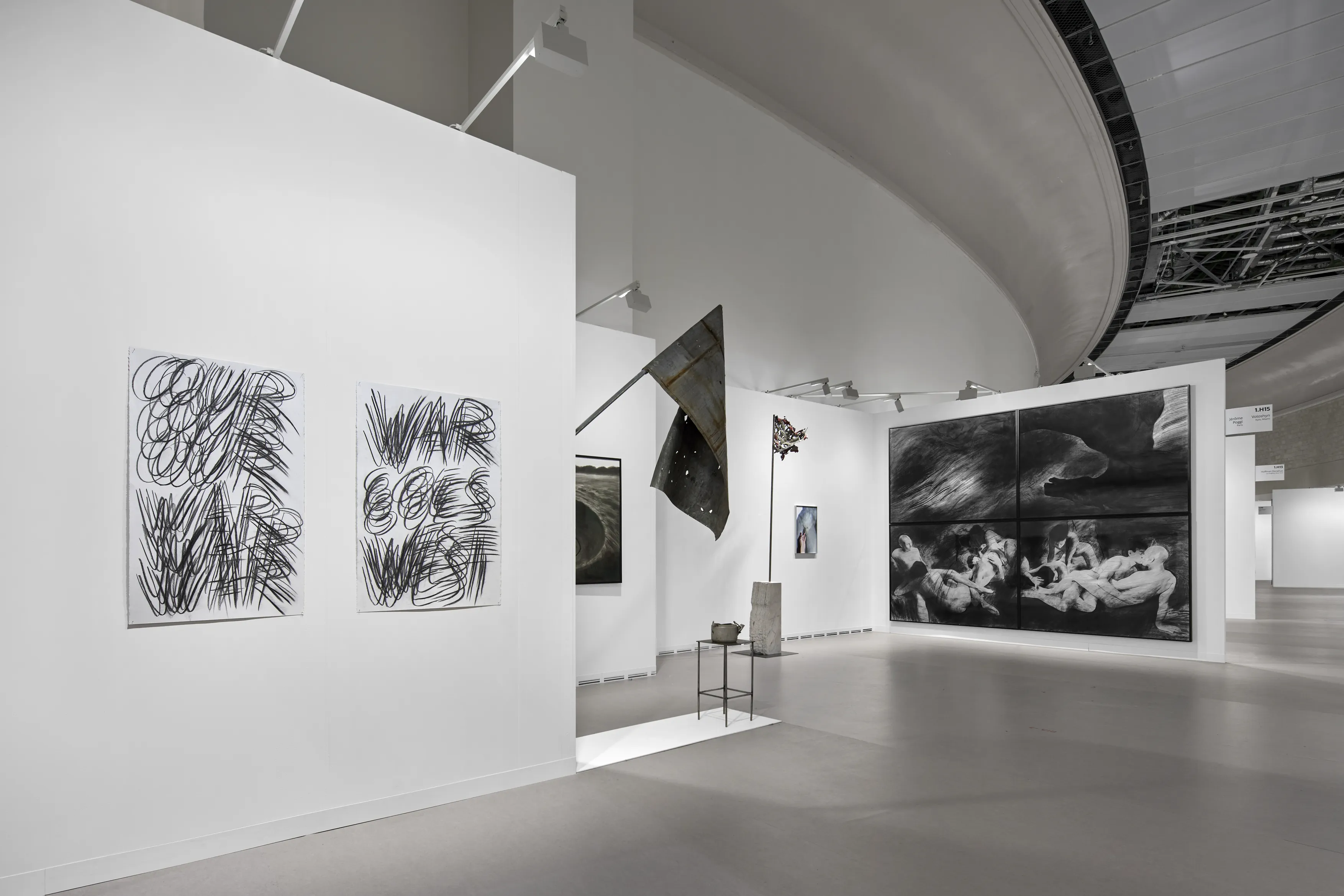
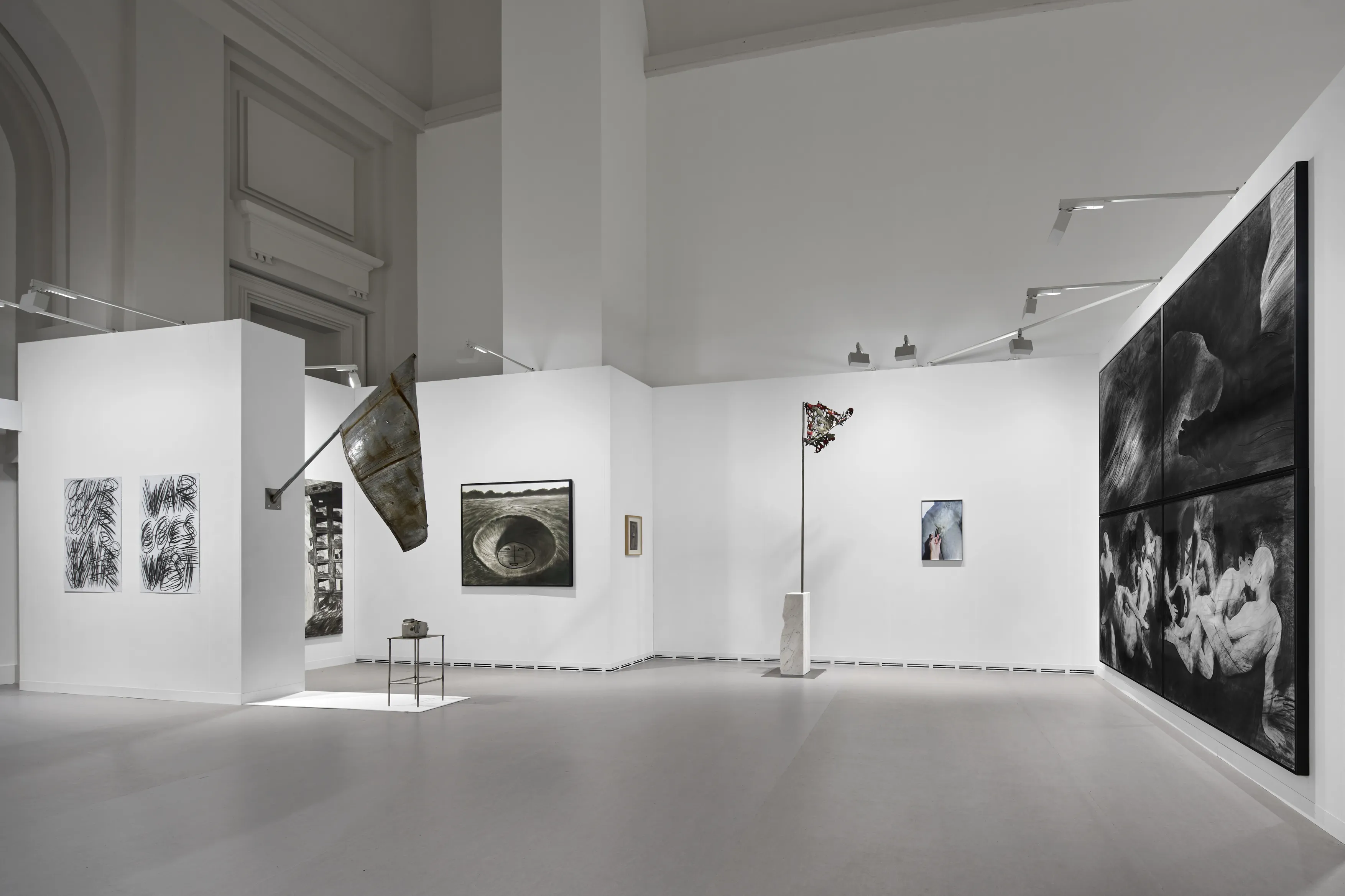
Photo: Art Basel Paris 2025 | Solo booth of Nikita Kadan
For us, one of the main principles of our work is the careful selection of artists. We see our role in identifying exceptionally talented artists and supporting their further development on the international stage, and we are already seeing this strategy yield results.
In my opinion, Ukrainian art today has not merely become part of the global art market, but is one of the most dynamic and interesting trends in its development. We are still at the beginning of this process, and the potential for further growth of Ukrainian artists’ international presence remains extremely high.
Voloshyn Gallery operates simultaneously in Kyiv and Miami. Do you have plans to expand into markets in other regions of the world?
Max Voloshyn: From the very beginning, we built Voloshyn Gallery as an international project. Today, the gallery operates simultaneously in Kyiv and Miami, which allows us to combine different cultural contexts and engage with audiences on both sides of the Atlantic. In addition, we are constantly present at international art fairs, exhibitions, and collaborations. The geography of our projects is quite broad—from Warsaw to Mexico City and Guadalajara, from Dubai to New York, Los Angeles, and Miami, from Copenhagen and Milan to Vienna.
In the coming years, we plan to continue expanding the gallery’s international presence through participation in leading global art fairs, collaboration with museums and institutions, as well as through new partnerships in Europe, Latin America, and other regions of the world. Our goal is not simply to open new spaces. For us, it is more important to build sustainable international connections between artists, curators, museums, and collectors. At the same time, Kyiv remains an extremely important part of our identity. We are convinced that Ukrainian art should be represented in the global context not as a regional phenomenon, but as a full-fledged part of the global cultural conversation. That is why we continue to develop the gallery both in Ukraine and beyond its borders.
Like many leading international galleries, in addition to our geographic expansion, we are also gradually broadening our activities from the traditional gallery model to include art dealing and consulting services. After many years of building a reputation and trust among collectors and colleagues, I can say that our gallery provides access to important works, collections, and private transactions.
Based on your observations, how do the preferences of collectors in the U.S., Europe, or the East differ when it comes to Ukrainian art?
Max Voloshyn: Overall, I see that attitudes toward Ukrainian art have changed significantly in recent years. Whereas previously many viewed it as a little-known regional phenomenon, today Ukrainian artists are increasingly becoming part of international museum collections, biennales, and major exhibition projects.
For example, Art Review included Nikita Kadan in its list of the 100 most influential figures in art for 2025. His works were also recently acquired by London’s Tate Modern. Lesya Khomenko currently has a solo exhibition at the Arsenal Gallery in Białystok; her works are on display at the Museum of Modern Art in Warsaw, as well as at the Ludwig Museum in Budapest.
The names of our artists are becoming increasingly recognizable among curators, gallery owners, and art dealers, and we, in turn, are actively working to ensure that these professionals discover a new generation of Ukrainian artists. I am proud that we have played a part in this.
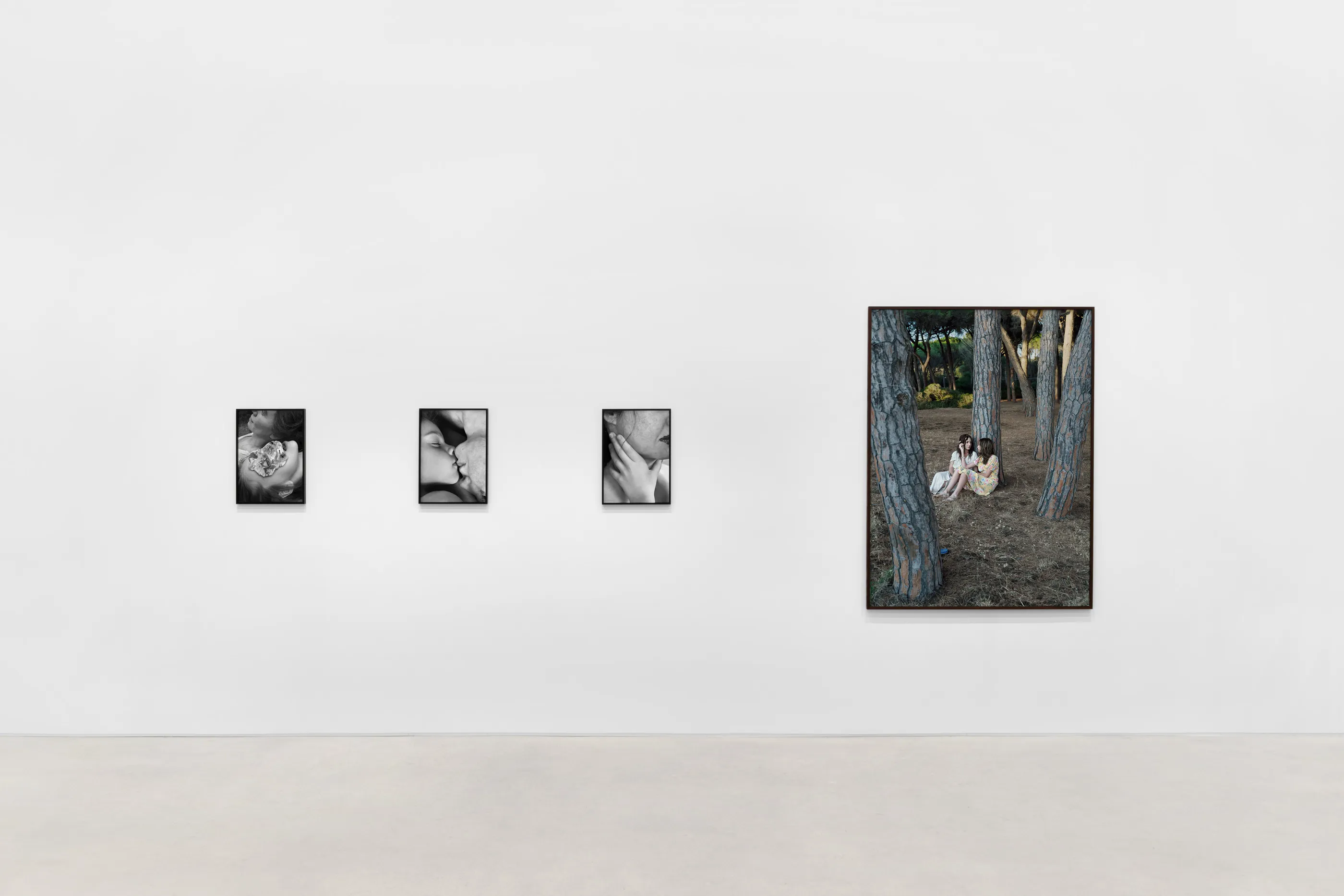
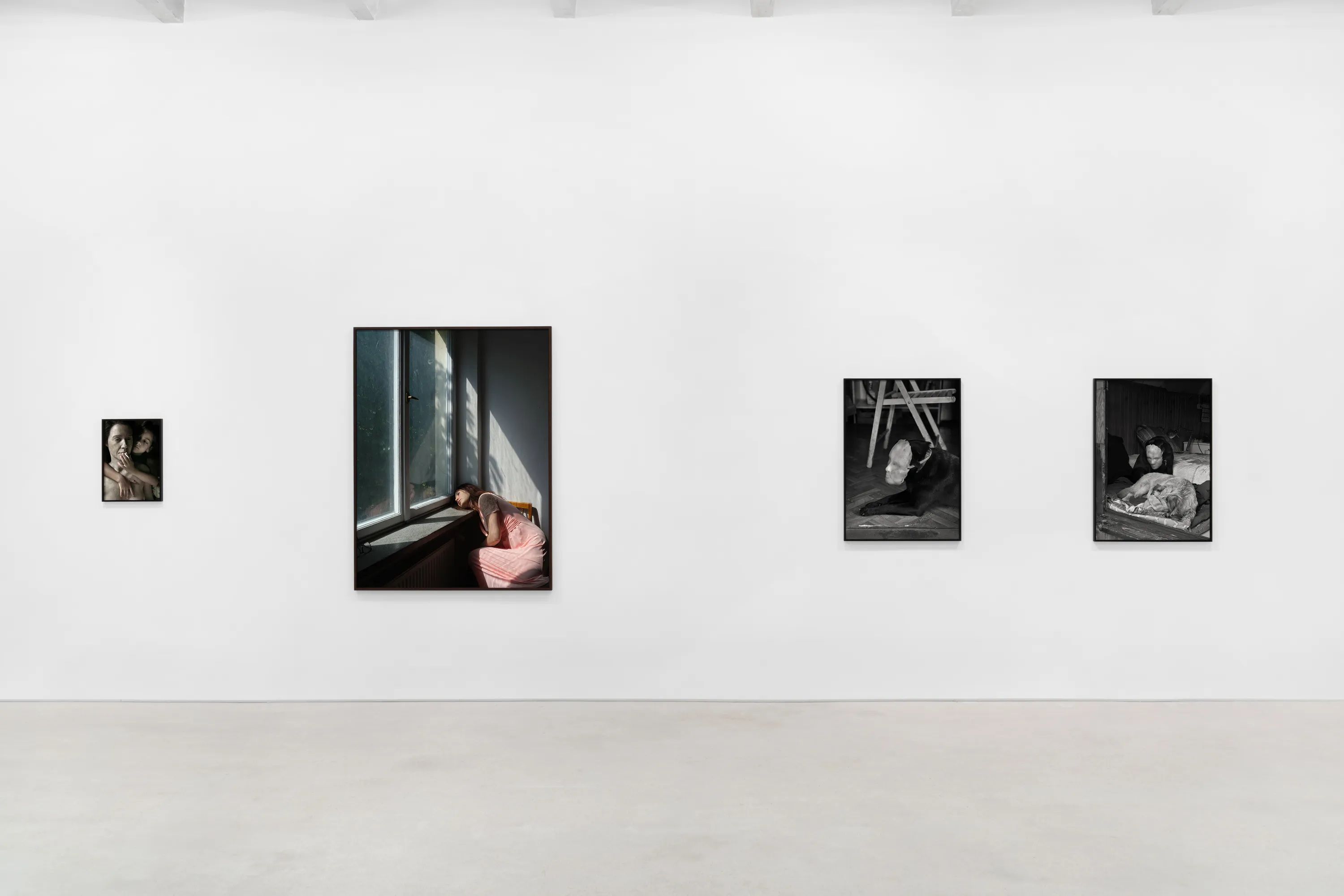
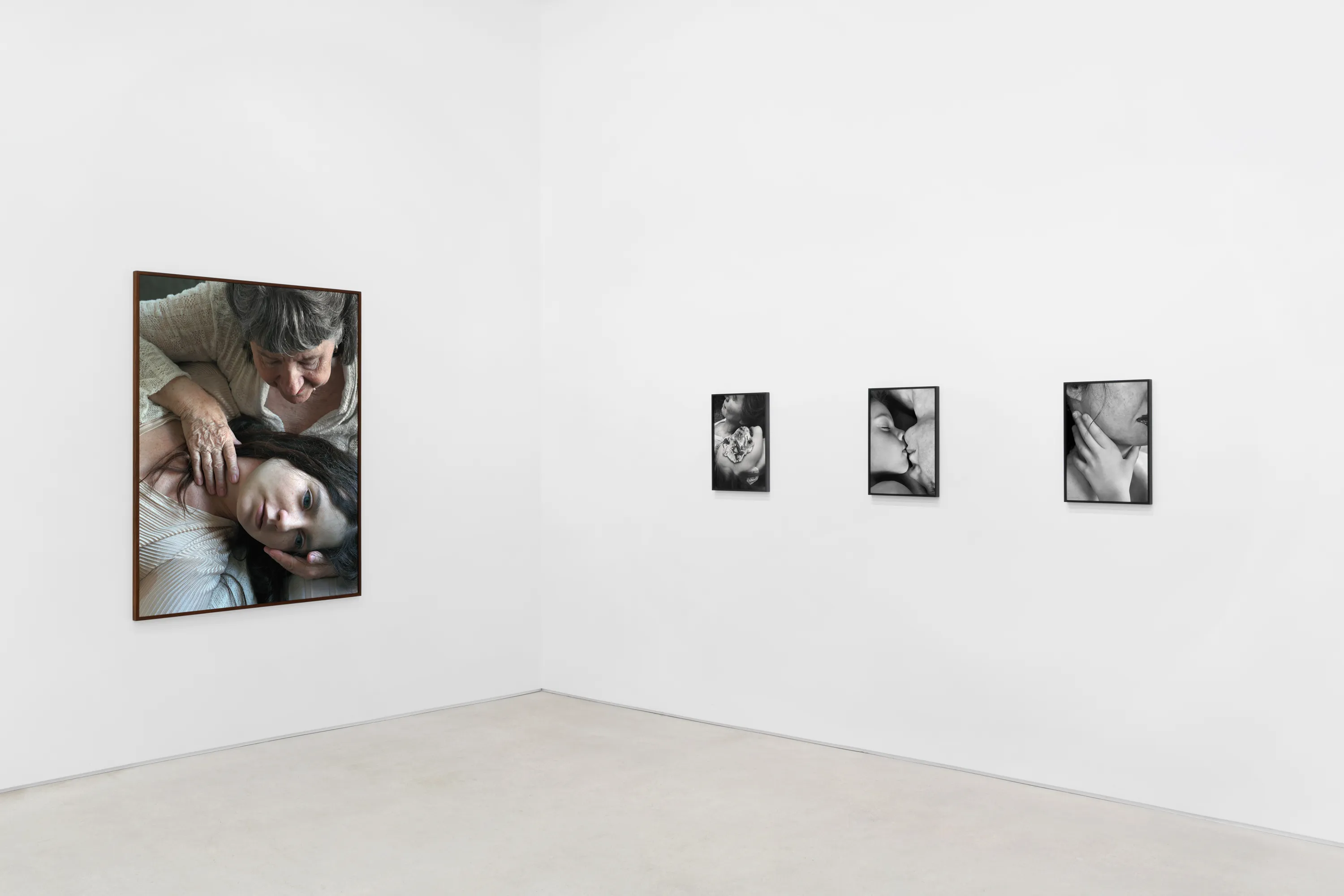
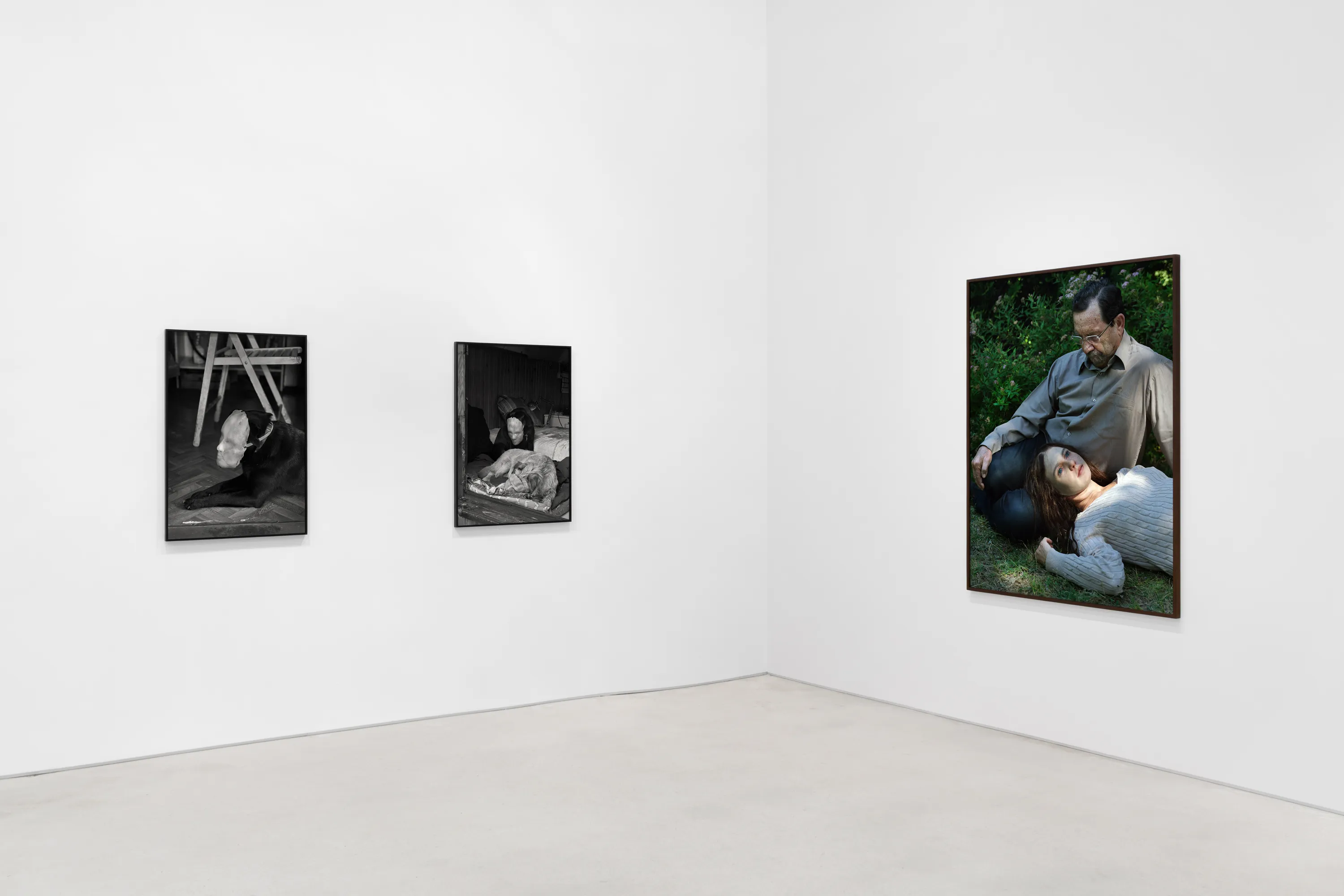
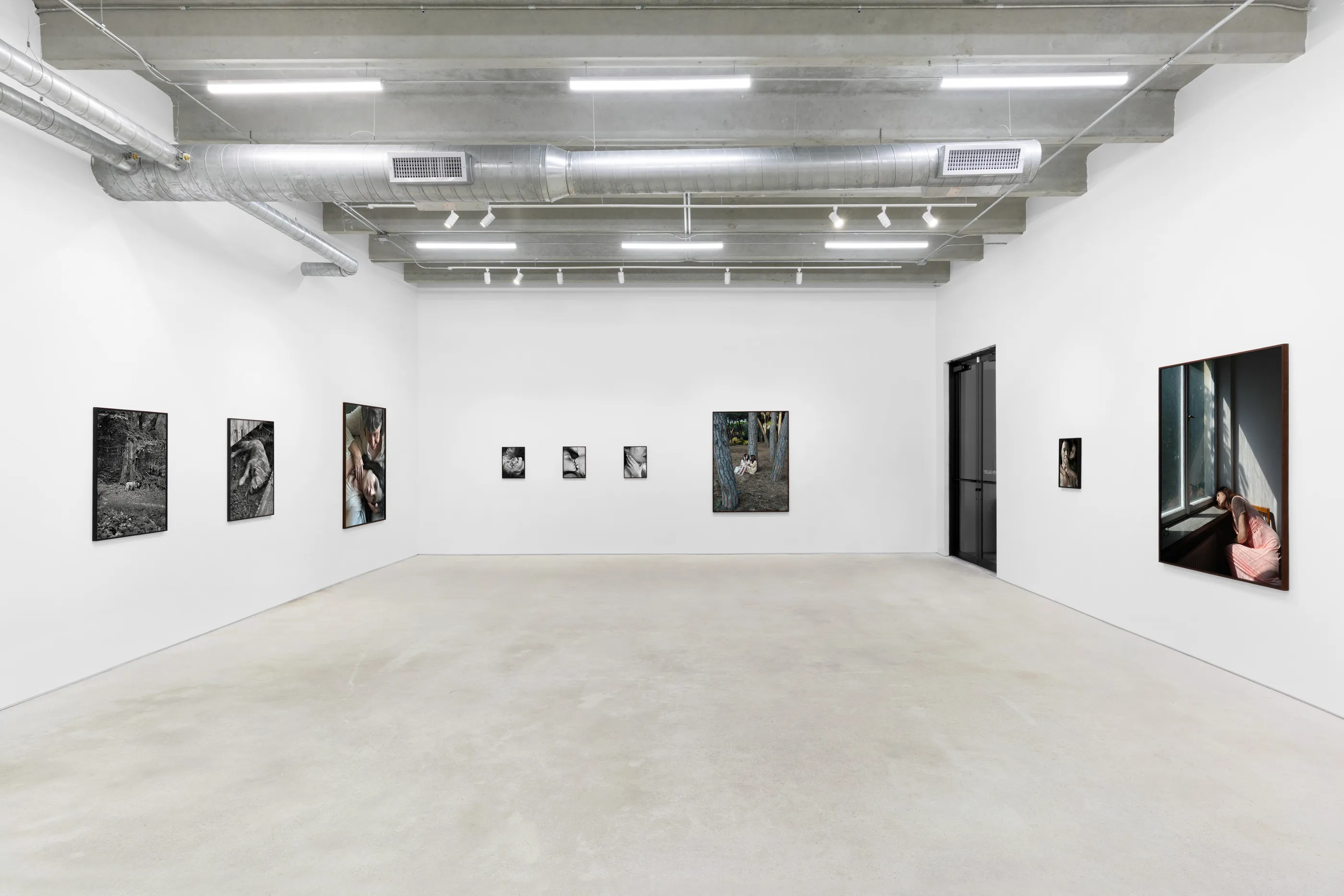
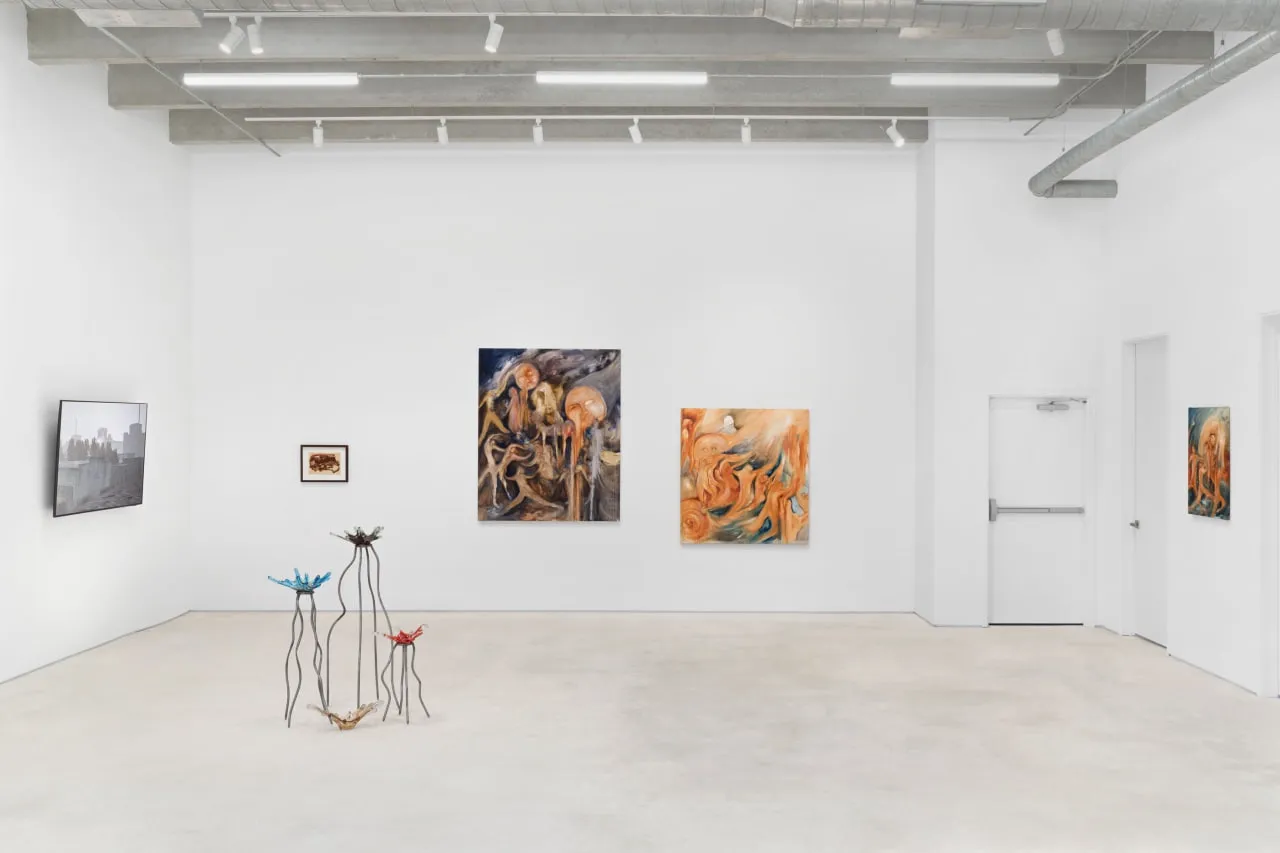
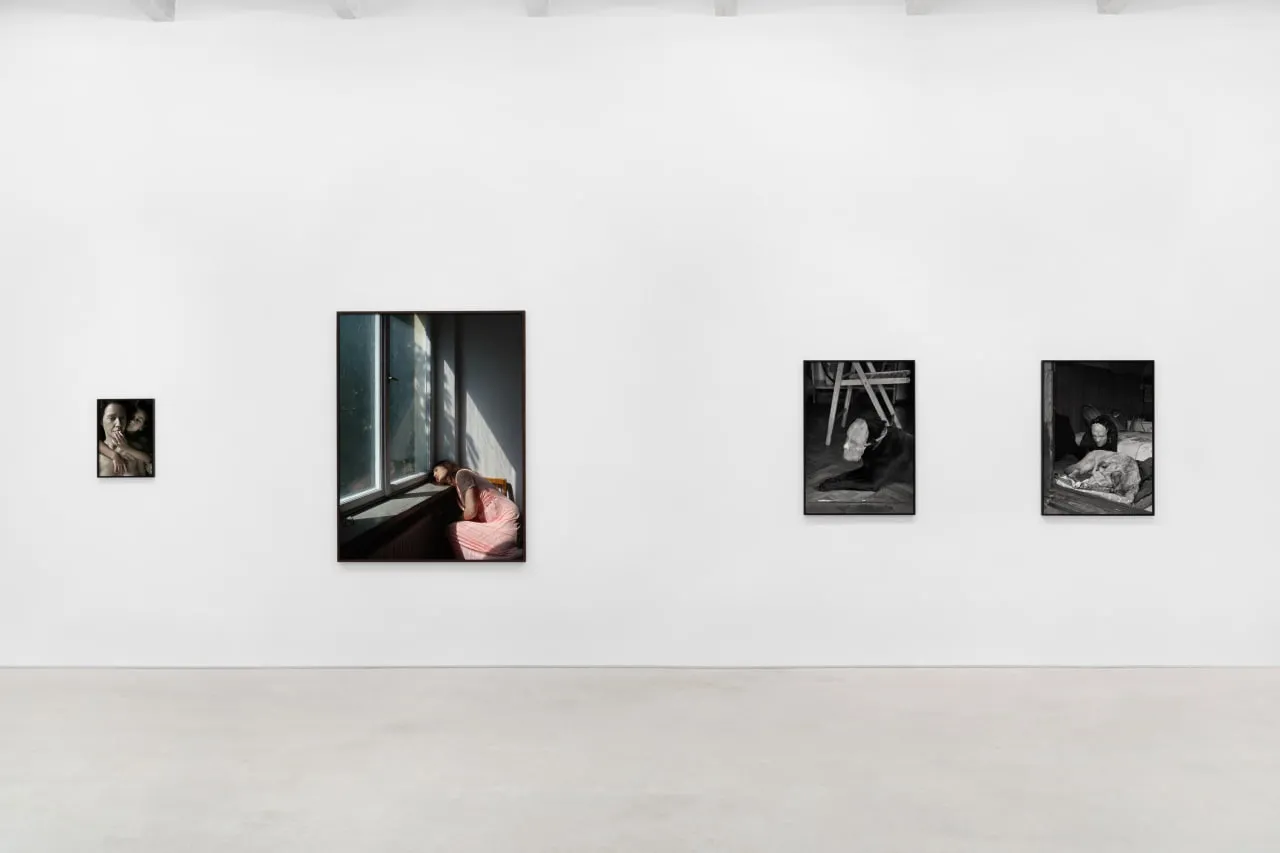
Photo: Exhibition of Aneta Grzeszykowska at Voloshyn Gallery Miami
In the U.S., collectors typically view Ukrainian artists within a broader international context. For them, it is very important which museums feature the artist’s work, which biennales and exhibition projects they participate in, which institutions support them, and at which international art fairs the gallery representing them participates. In other words, for most serious collectors, the quality of the artist’s practice and their international recognition are far more important than their origin from a particular country.
In the Middle East and Asia, this interest is just beginning to take shape, but we are already seeing increasing openness to new artistic voices and regions that were previously underrepresented on the international scene.
Which Ukrainian artists are international museums, curators, or collectors currently “on the hunt” for? Can you name a few artists who, in your opinion, will define Ukrainian art over the next decade?
Max Voloshyn: When it comes to Ukrainian artists who are currently attracting particular attention from international museums, curators, and collectors, based on my experience, I would first and foremost name Nikita Kadan, Zhanna Kadyrova, Lesya Khomenko, Open Group, Mykola Ridny, Oleksii Say, as well as the duo of Yarema Malashchuk and Roman Khimey. These artists already have a significant international presence. We actively collaborate with some of them on an ongoing basis, representing them at art fairs and exhibitions. Their works are included in the collections and programs of leading institutions, including the Centre Pompidou in Paris, Tate Modern in London, the Stedelijk Museum in Amsterdam, the Museo Nacional Thyssen-Bornemisza in Madrid, ICA Miami, and other museums. They regularly participate in international biennials, museum exhibitions, and major curatorial projects, and interest in their work from museums, curators, and collectors continues to grow.
Looking ahead to the next decade, I am convinced that these very artists will largely shape the international perception of Ukrainian art. At the same time, we are already seeing the emergence of a new generation of artists. Among the artists whose development is particularly interesting to observe today, I would highlight Sana Shahmuradova-Tanska.
Ukrainian art is currently experiencing a very interesting moment. For the first time in many decades, it has become part of the global cultural conversation, and I think the coming years will bring many more new names and important international projects.
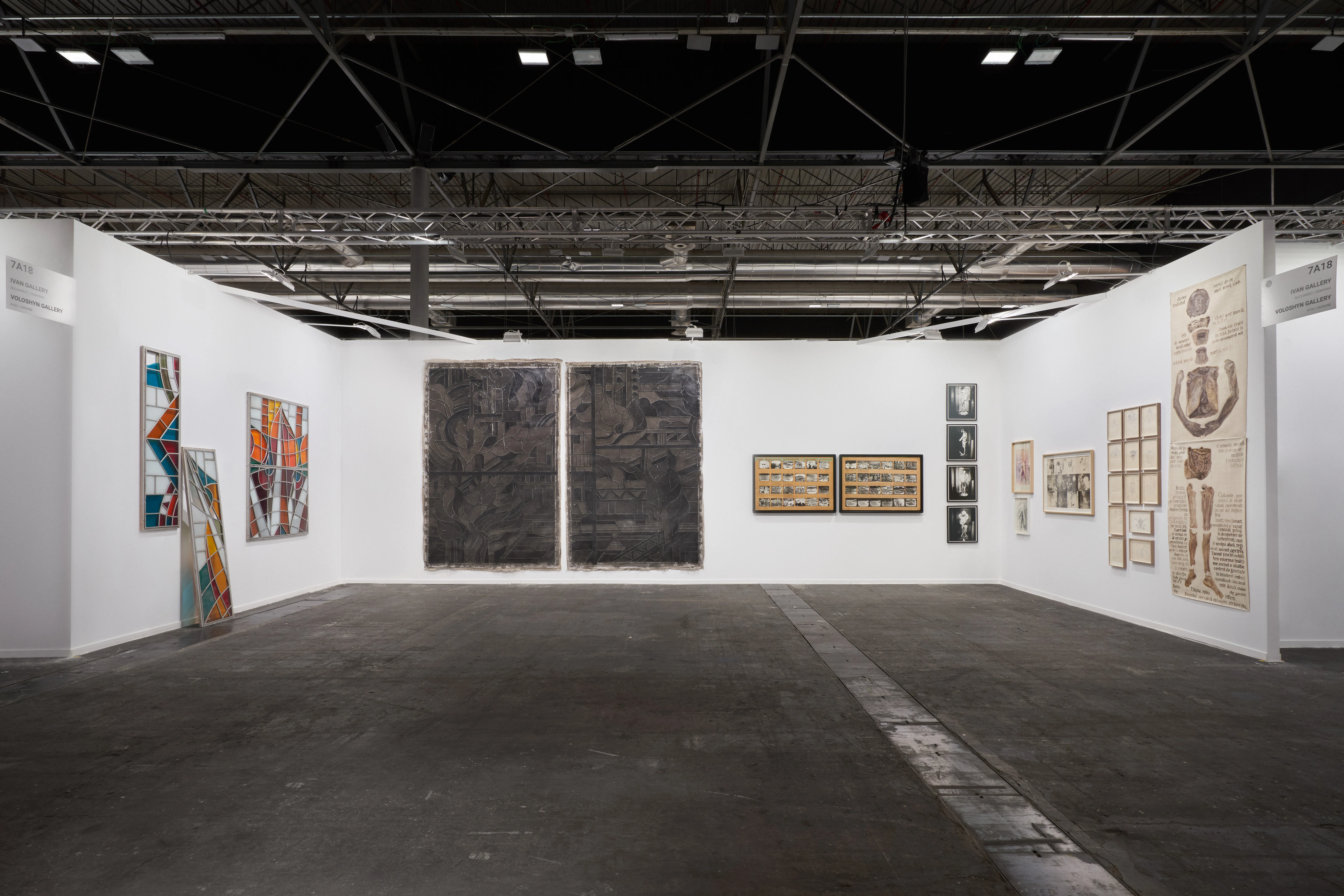
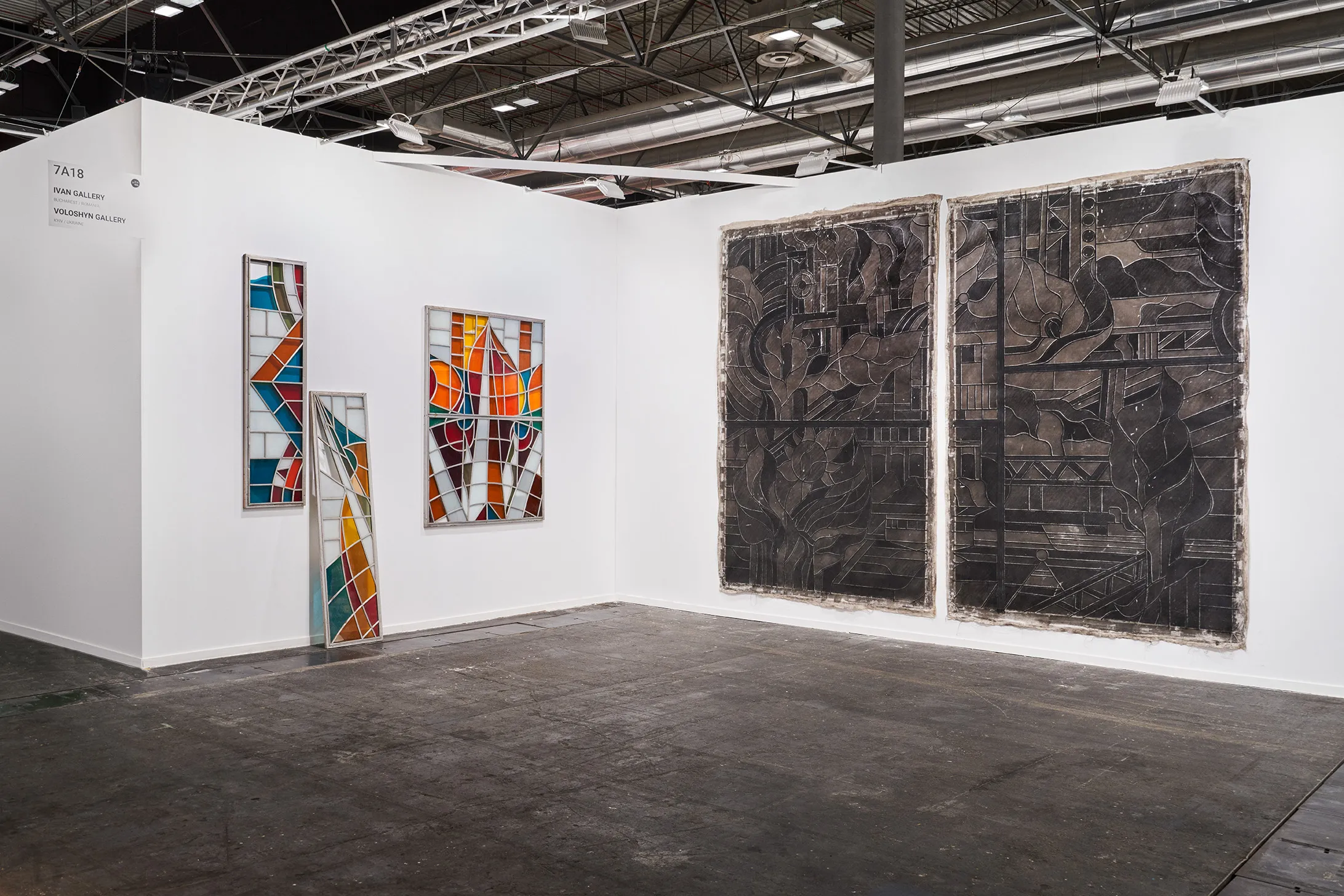
Photo: Arco Madrid 2024 | Solo Booth of Danylo Halkin
Can we say that the potential of many contemporary Ukrainian artists has been realized primarily through the theme of war? And how difficult will it be to sustain interest in Ukrainian art beyond the war?
Max Voloshyn: With the start of the full-scale invasion, interest in Ukrainian contemporary art has indeed grown significantly. Ukraine found itself in the spotlight of the international community, and along with that, the world discovered many of our artists. But did the war unlock their potential? No. This potential existed long before 2022—it’s just that now it has become much more visible to an international audience.
Ukrainian artists were already creating powerful, relevant, and conceptually profound works. To say that the war itself created this talent is simply incorrect. But it has indeed become a tragic circumstance that has drawn more attention to us. Many artists have gained the opportunity to be seen on platforms to which access was previously much more limited.
For example, at last year’s Art Basel Miami Beach, Voloshyn Gallery presented a solo project by Janet Sobel—an American artist of Ukrainian descent who was born in Dnipro and is considered one of the pioneers of abstract expressionism. Her experiments with the “drip painting” technique preceded the works of Jackson Pollock and made a significant contribution to the development of American postwar art, although her role remained underappreciated for a long time. In Los Angeles, during the Felix Art Fair in 2025, we visited LACMA, where it was particularly delightful to see works by Sobel and Pollock side by side on the same wall. For us, this underscored her importance and the growing interest in her legacy. At one time, both Pollock and Sobel were represented by the same gallerist—Peggy Guggenheim.
The interest in this project from curators, collectors, and the international press has shown that today the world is increasingly interested not only in contemporary Ukraine but also in the contribution of Ukrainians to world cultural history. In my opinion, it is precisely such projects that prove that long-term interest in Ukrainian art will be based not on war, but on its artistic quality, historical significance, and ability to be part of the global cultural conversation.
Which international artists does Voloshyn Gallery collaborate with? Which of your recent projects do you consider the most significant and successful?
Max Voloshyn: First and foremost, Voloshyn Gallery is known for its work with Ukrainian artists. Today we work with such important artists as Nikita Kadan, Lesya Khomenko, Mykola Ridnyi, Oleksii Sai, Open Group, Yarema Malashchuk, and Roman Khimei, Sana Shahmuradova-Tanska, Daniil Galkin, Pavlo Kerestei, and other representatives of the contemporary Ukrainian art scene. At the same time, we are actively developing our international program. In recent years, the gallery has realized projects featuring artists such as Ugo Rondinone (Switzerland), Mario García Torres, José Dávila, and José de Jesús Rodríguez (Mexico), Manuel Chavajay (Guatemala), Jonathan Sanchez Noa (Cuba), Ronny Quevedo (Ecuador), Harold Mendez (USA), Aneta Grzeszykowska and Karol Radziszewski (Poland), André Komatsu (Brazil), Brilliant Milazimi (Kosovo), Bojan Stojčić (Bosnia and Herzegovina), Adam Albert (Hungary), Mehdi-Georges Lahlou (Morocco), and Abi Shehu (Albania).
In your opinion, which trends and forms of contemporary art (both Western and Ukrainian) are currently underappreciated but have the potential for recognition and value in the future? How is the “perspective” generally shaped regarding trends in the art business, which is extremely difficult to analyze or predict?
Max Voloshyn: In my opinion, the greatest potential lies with artists who receive support from leading museums, curators, and institutions. It is precisely museum exhibitions, biennales, international residencies, and participation in major art fairs that often serve as the best indicators of long-term cultural and market value. When it comes to Ukrainian art, I believe its international potential has not yet been fully realized. We are seeing growing interest from museums, curators, and collectors, but this process, in my opinion, is only just beginning.




