
Gold jewelry dating from before the Bronze Age Catastrophe has been discovered in Cyprus
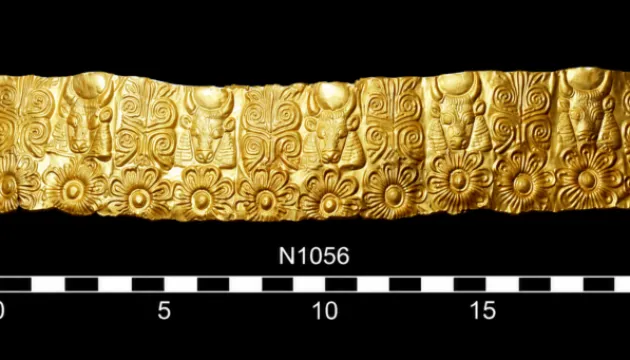
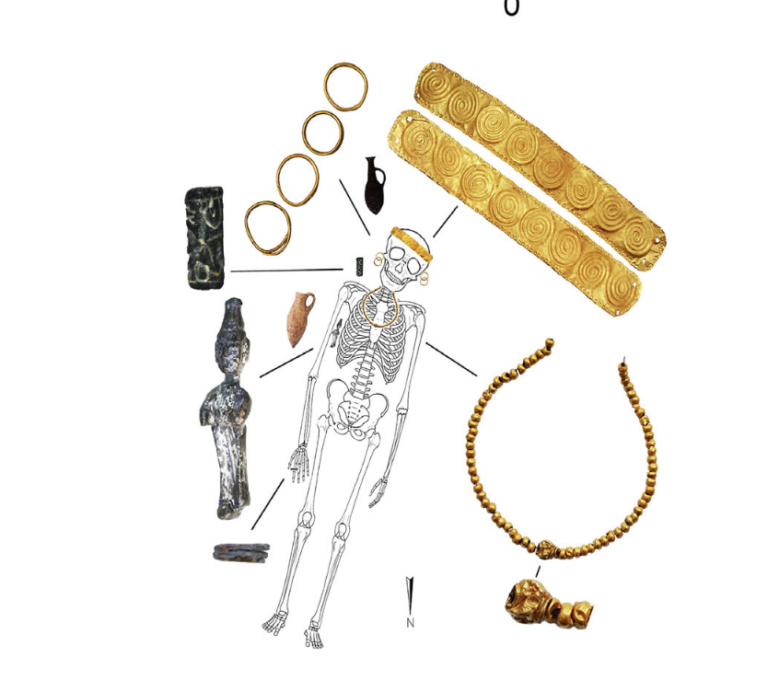
During archaeological excavations at a Late Bronze Age cemetery in Hala Sultan Tekke near Larnaca, rare gold diadems dating back about 3,400 years were discovered. The finds include nine gold diadems and two smaller gold mouthpieces, discovered in seven chamber tombs and one shaft tomb dating to the period between the 15th and 13th centuries B.C.
The discovered jewelry combines artistic traditions from Egypt, the lost civilizations of Minoan Crete, Mycenaean Greece, and the Near East. Despite these international influences, the study’s authors concluded that the artifacts were crafted by Cypriot artisans who developed their own regional style.
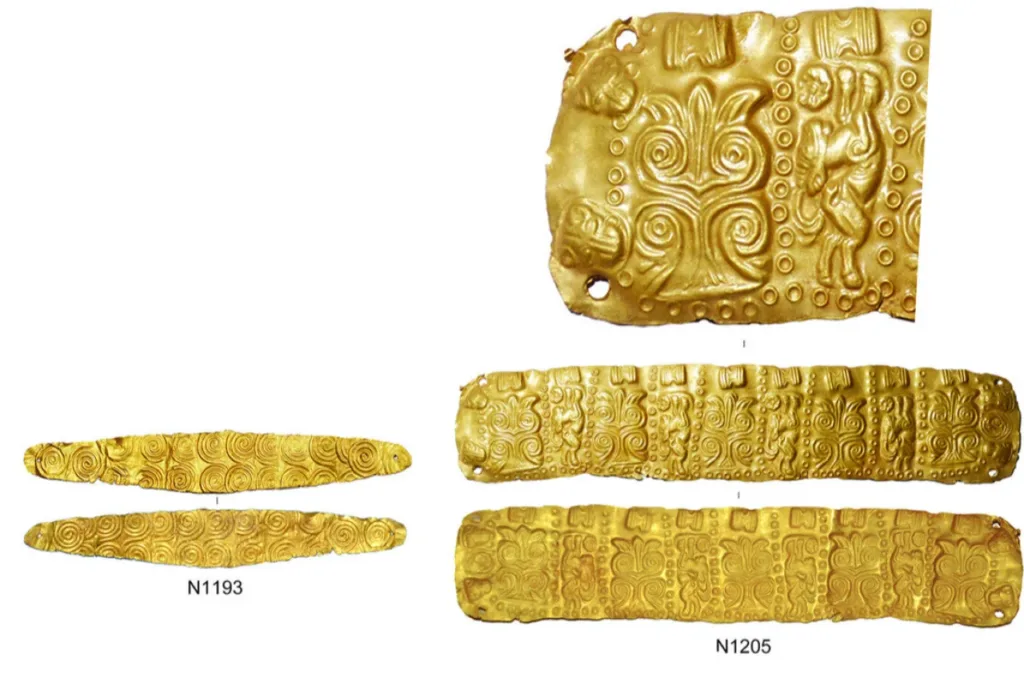
The largest piece is a 34.2-centimeter-long diadem associated with the burial of a woman between the ages of 35 and 40. Its band is decorated with seven depictions of bull heads featuring figures resembling a sun disk and Egyptian-style hair elements, and is surrounded by Aegean floral ornaments and rosettes.
The heaviest piece in the collection turned out to be a diadem featuring a capricorn and cat heads, weighing 23.14 g. Its ornamentation includes four capricorns, plant motifs, rosettes, hourglass-shaped symbols, and lion heads at the ends. Since lions were not native to Cyprus, their presence further confirms the artistic influence of neighboring regions.
This was reported by Arkeonews.
Archaeologists have discovered unique medieval artifacts near Halych.
As a reminder, the sunken ship “Delta I,” discovered off the coast of Cádiz in Spain, continues to reveal new secrets. Archaeologists have determined that the ship was carrying Swedish cannons and silver ingots from the territory of modern-day Bolivia, which may indicate large-scale smuggling in the Atlantic more than 300 years ago.


