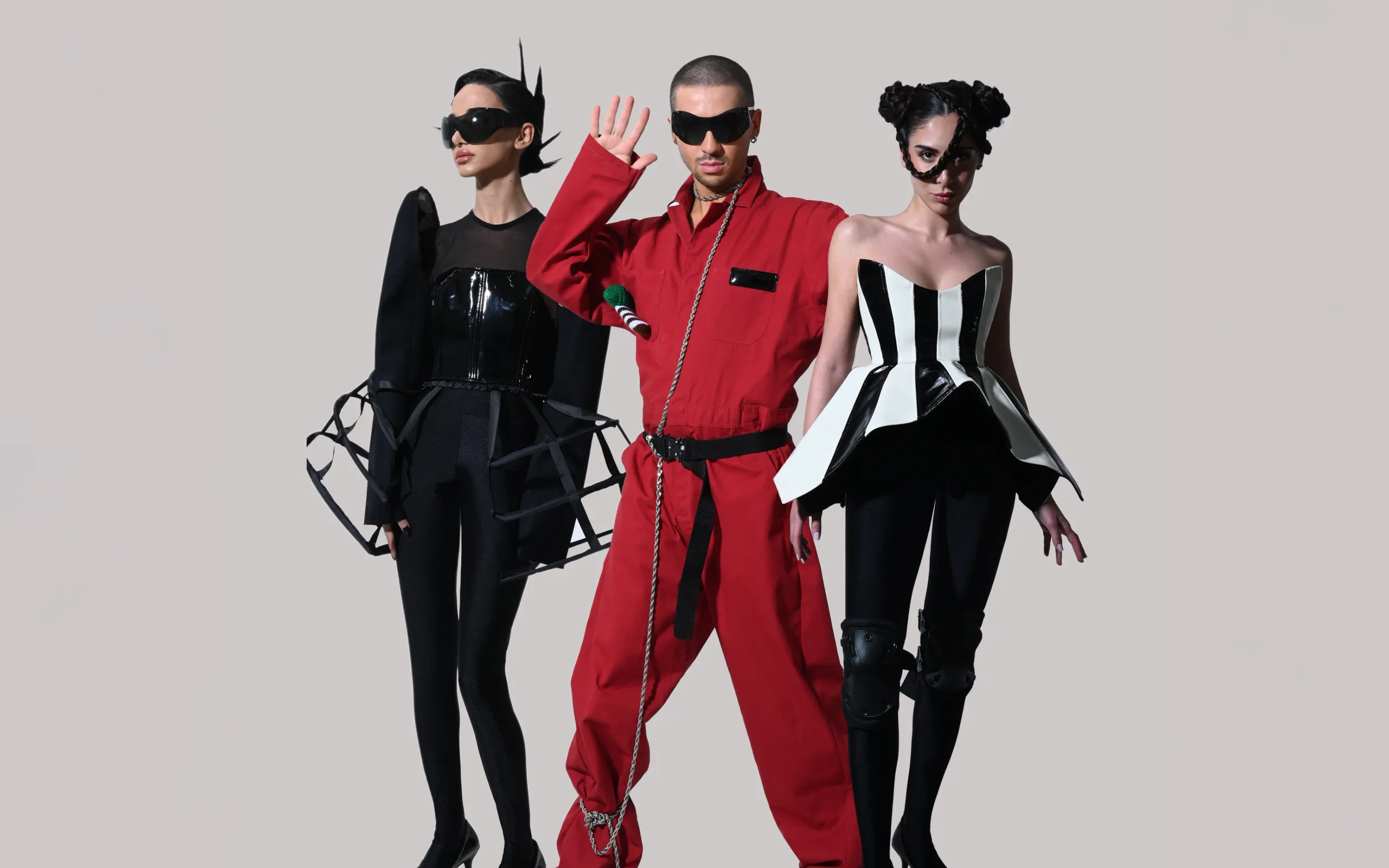
The Georgian band Bzikebi, which once won the Junior Eurovision Song Contest, has returned to the contest stage. The group, which many remember for their “bee” costumes and song in a made-up language, is now representing Georgia in the adult Eurovision contest. Today, Bzikebi will perform in the second semifinal of the contest as the sixth act, according totheofficial Eurovisionwebsite.
Bzikebi became a real sensation back in 2008 when they won the Junior Eurovision Song Contest for Georgia. At the time, the group members were only 10 years old. The group consisted of Giorgi Shioashvili, Mariam Tatulashvili, and Mariam Kikuashvili. Their performance was remembered by millions of viewers thanks to the strange but highly catchy song “Bzz…” The children performed in black-and-yellow bee costumes and sang in a made-up language, which became one of the most talked-about highlights of the contest at the time.
Despite the unusual format, the performance worked perfectly. Georgia won, and Bzikebi instantly became stars in their home country. After returning home, the group released the album Zabuzei, which became very popular among children and teenagers.
After the Junior Eurovision Song Contest, the members of Bzikebi all but disappeared from the big stage. Each went their separate ways, focusing on their own lives, studies, and creative pursuits. Because of this, many fans were convinced that the group would never return.
But in 2025, Bzikebi unexpectedly reappeared on the Junior Eurovision stage—this time as guest performers. They performed a new song, “We Don’t Sleep,” and this performance literally blew up social media. Fans immediately began speculating that the band was planning a major comeback. And, as it turned out, they were right.
There have been almost no major scandals surrounding Bzikebi over the years. But controversies about the band have arisen—ever since their victory in 2008. Back then, some Eurovision fans felt that a song in a made-up language was a “strange” choice for the contest. Some even called the performance “too childish” and “chaotic.” However, it was precisely this unconventionality that made Bzikebi a cult sensation.
There were also discussions when the band returned in 2025. People argued on social media about whether the artists, whom everyone remembers as children, could successfully transition to the adult stage. Some fans worried that Bzikebi risked becoming nothing more than a “nostalgic project.” But after the first rehearsals at Eurovision 2026, the mood shifted. Many acknowledged that the band had matured not only in appearance but also musically. “We want to be seen as more than just those kids in bee costumes,” one of the band members said in an interview with Georgian media.
Bzikebi is one of the most famous children’s groups in Eurovision history. Their performance is still regularly mentioned by fans of the contest, and videos of their old performance continue to rack up views. Now, interest in the group is even greater, as this is a rare case where the winners of the children’s contest return to the adult show many years later.
Organizers and fans are already calling Bzikebi one of the most emotional acts of this season. Many viewers want to see how those same “bees,” whom they remember from childhood, have changed.
Today, Bzikebi will perform in the second semi-final of Eurovision 2026 as the sixth act. In total, 15 participants will take the stage this evening to compete for a spot in the contest’s final.
The organizers of Eurovision 2026 have explained the contest’s voting rules.
Eurovision organizers issued a warning to Israel for violating the voting rules.
Moldovan artist Satoshi will be the first to take the stage in the Eurovision semi-final today. In just a few years, he has gone from a boy from a small town to one of Moldova’s most prominent young musicians, and his name has been the subject of heated discussions on more than one occasion.
Swedish singer FELICIA will be the second to take the stage in the Eurovision semi-final today. The artist has long been known in Sweden, but previously performed under a different stage name—Fröken Snusk—which has sparked controversy and heated debate on more than one occasion.
The Croatian band LELEK will perform in the Eurovision semi-final today with their song “Andromeda.” The group has become a real sensation in Croatia thanks to their blend of folk motifs, electronic music, and modern pop sounds.
Greek singer Akylas has become one of the youngest and most talked-about participants in Eurovision 2026. The artist rose to fame thanks to TikTok and is now representing Greece on Europe’s premier music stage. Today he will perform in the contest’s semifinals as the fourth act.
The Portuguese band Bandidos do Cante has become one of the most striking discoveries of Eurovision 2026. The group has combined traditional singing with modern pop music and quickly gained popularity in Portugal. Today, the band will perform in the second semifinal of the contest as the fifth act.