
Rublev’s Trinity icon removed from display in Russia after climate-control failure
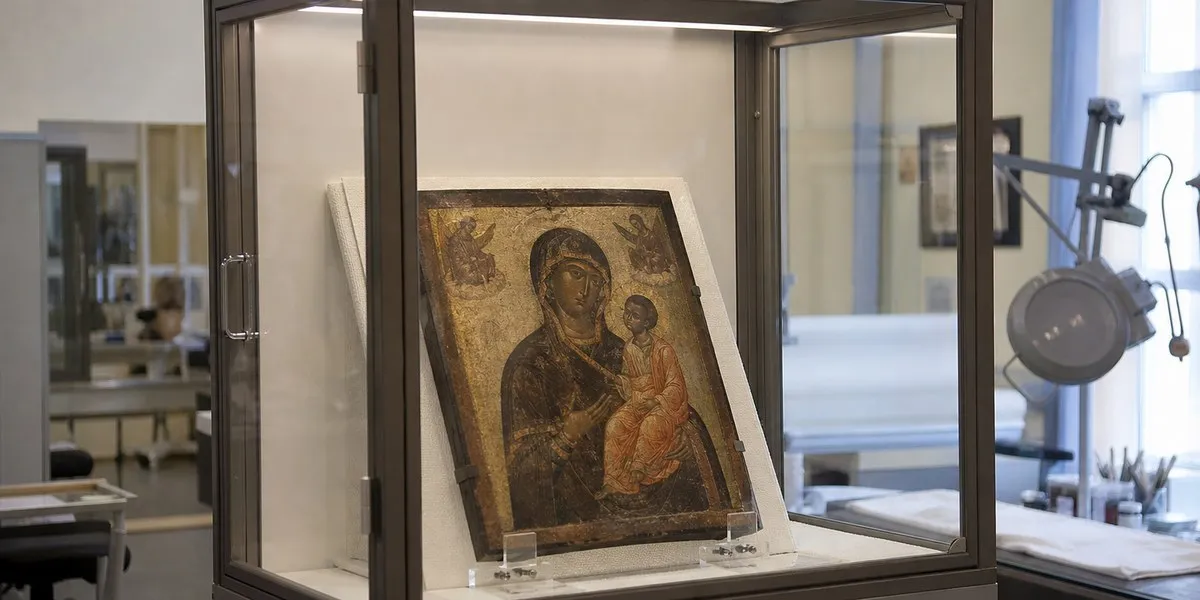
Andrei Rublev’s 15th-century Trinity icon was removed from public display at the Trinity Lavra of St. Sergius near Moscow, Russia, following a malfunction of the climate-control system. The Moscow Times reports, citing RBC, a source in the Russian Orthodox Church and a restorer.
The icon was moved to an inspection room
The Russian Orthodox Church confirmed on Sunday that the icon had been removed from a specialized climate-controlled display case and transferred to an inspection room on the monastery grounds that meets the requirements of the Tretyakov Gallery. The church described this as a routine check of the monument’s condition.
Art historian Ksenia Korobeynikova wrote that the icon would continue to be examined and restored in the lavra’s workshops, while the display case would be repaired.
More current news is available on the UA.News Telegram channel Telegram.
Reports of high humidity
The outlet Ekho, citing an anonymous source, reported that the sealed protective glass display case had broken down some time ago. According to this information, humidity inside was about 80%, compared with a safe range of 50–55%.
The source also claimed that a specialist invited from Germany repaired the display case, but it malfunctioned again shortly after his departure. Museum experts noted that high humidity causes swelling and deformation of the old wood on which the icon was painted.
In 2023, Vladimir Putin, president of the aggressor state Russia, ordered the Trinity to be transferred to the Russian Orthodox Church. Before that, it had been kept at the Tretyakov Gallery since 1929, whose experts warned that moving the fragile monument could lead to irreversible damage.


