
Williston, South Africa, reflects on the history of the Baster community’s migration
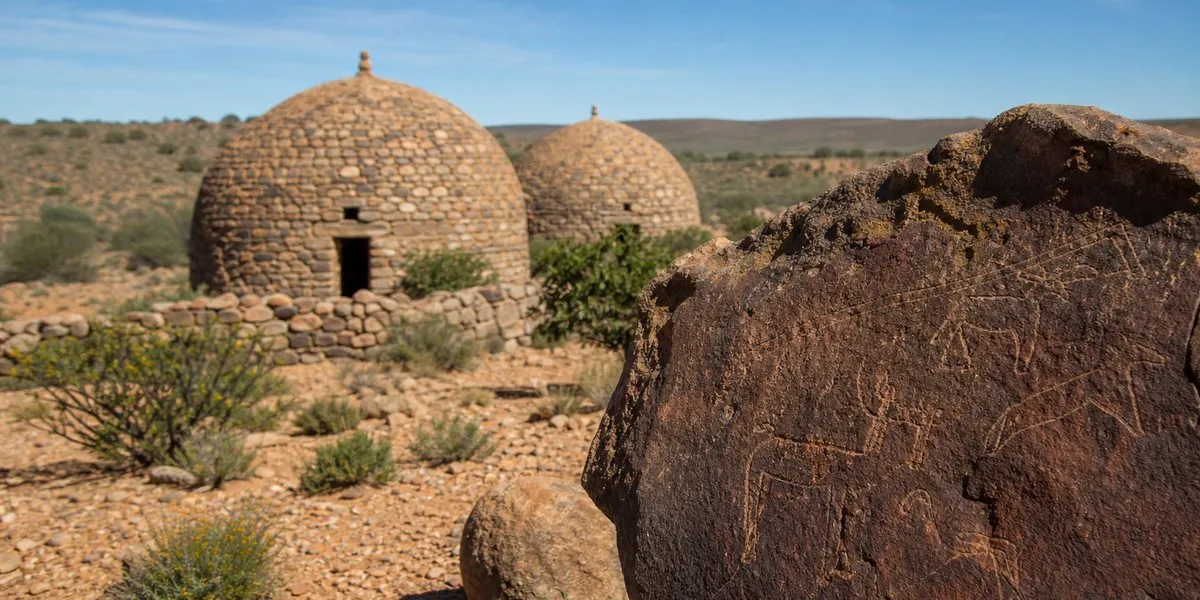
In Williston, South Africa, local community organization ROCS is turning to the little-known history of the Baster community from Amandelboom — a settlement renamed Williston in 1883 — during this year’s Heritage Day. As Daily Maverick reports, the program includes traditional games, food preparation and a viewing of 19th-century rock engravings on a nearby farm.
The Basters are described in the article as a community of mixed Khoikhoi and European descent that lived for much of the 19th century alongside the German Rhenish Mission in Amandelboom. It was a prosperous and independent community of livestock owners. In the late 1860s, it was displaced from its land, after which its members travelled more than 1,000 kilometres north to Rehoboth in present-day Namibia.
Land and colonial laws
In the first decades of the 19th century, droughts and overgrazing in the Cape Colony prompted Baster and Boer pastoralists to move beyond the colonial frontier. By the 1860s, the Amandelboom community’s access to common grazing land was increasingly restricted by trekboers and colonial land policy. Crown land laws required the Basters to pay for the surveying and registration of plots, which they could not afford.
More current news is available on the UA.News Telegram channel Telegram.
Rather than becoming landless wage labourers, the community left Amandelboom. In Rehoboth, in 1872, it established a Christian ethnic state with a representative Baster council and a constitution. The history of the mission, founded in 1845 and abandoned in 1868, was researched by Williston-born Herbst in an unpublished 2004 doctoral dissertation at Stellenbosch University.
A complex legacy
Stone domed houses and 19th-century rock images have survived on the Grootfontein farm, about 40 kilometres northeast of Williston. University of Cape Town archaeologists Vuyiswa Lupuwana and Simon Hall interpreted them as evidence of the combination of Victorian Christian and Khoikhoi identities among Baster pastoralists. The engravings include depictions of ox wagons, Victorian clothing, European residential architecture, Khoikhoi initiation rites and rain bulls.
ROCS founder Reggie Natt noted that knowledge of the community’s origins is important for the Amandelboom area, where, he said, unemployment, poverty, substance abuse and despair among some young people are widespread. The article’s author stresses that this history does not fit a simple pattern of victims and perpetrators: the Basters sought the protection of the British Crown and cooperated with Boer commandos that carried out mass killings of San people. Ultimately, the community did not gain recognition in colonial society and lost its land.


