
A unique mummy covered in gold has been discovered in Egypt
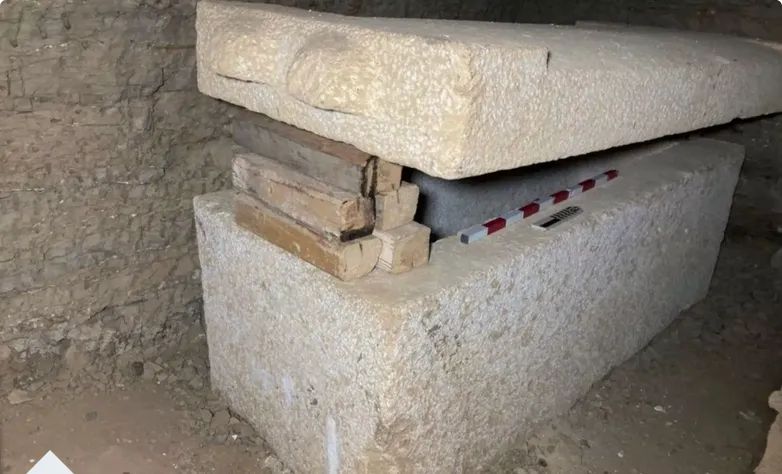
At the Saqqara necropolis near Cairo, archaeologists have uncovered a unique tomb dating back more than 4,300 years, where they found a mummy covered in gold.
The Daily Galaxy reports this, noting that the find dates back to the Old Kingdom period (the Fifth and Sixth Dynasties). The mummy of a man named Heka-shepes was preserved in a limestone sarcophagus at the bottom of a 15-meter shaft, which had remained sealed with ancient mortar for millennia.


According to renowned archaeologist Zahi Hawass, the mummy is perfectly preserved and completely covered in layers of gold, which is extremely rare for this region, where most tombs were looted long ago. In ancient Egyptian culture, gold was considered the “flesh of the gods,” so the use of the precious metal and the complex embalming process indicate the deceased’s high social status. In addition to the sarcophagus, researchers discovered numerous limestone and wooden statues, as well as amulets and pottery belonging to other members of the elite of that time.
This discovery is of great significance to science, as it allows for a more detailed study of the daily life and beliefs of those close to the pharaohs. The artifacts found will help reconstruct the connections between the rulers and the high officials of Ancient Egypt, revealing new chapters in the history of the Saqqara necropolis.
We previously reported that the recent discovery of two skeletons mutilated in the same manner suggests that limb amputation was used as a punishment during the Eastern Zhou Dynasty in China, over 2,000 years ago.
We would also like to remind you that during excavations in the ancient city of Laodicea in the Turkish province of Denizli, which is included on UNESCO’s tentative list of World Heritage Sites, a statue of Asclepius, the god of medicine in Greek and Roman mythology, and the head of a statue of his daughter Hygieia were discovered.
