
Vasyl Zinkevych Celebrates His Birthday: Interesting Facts from His Life
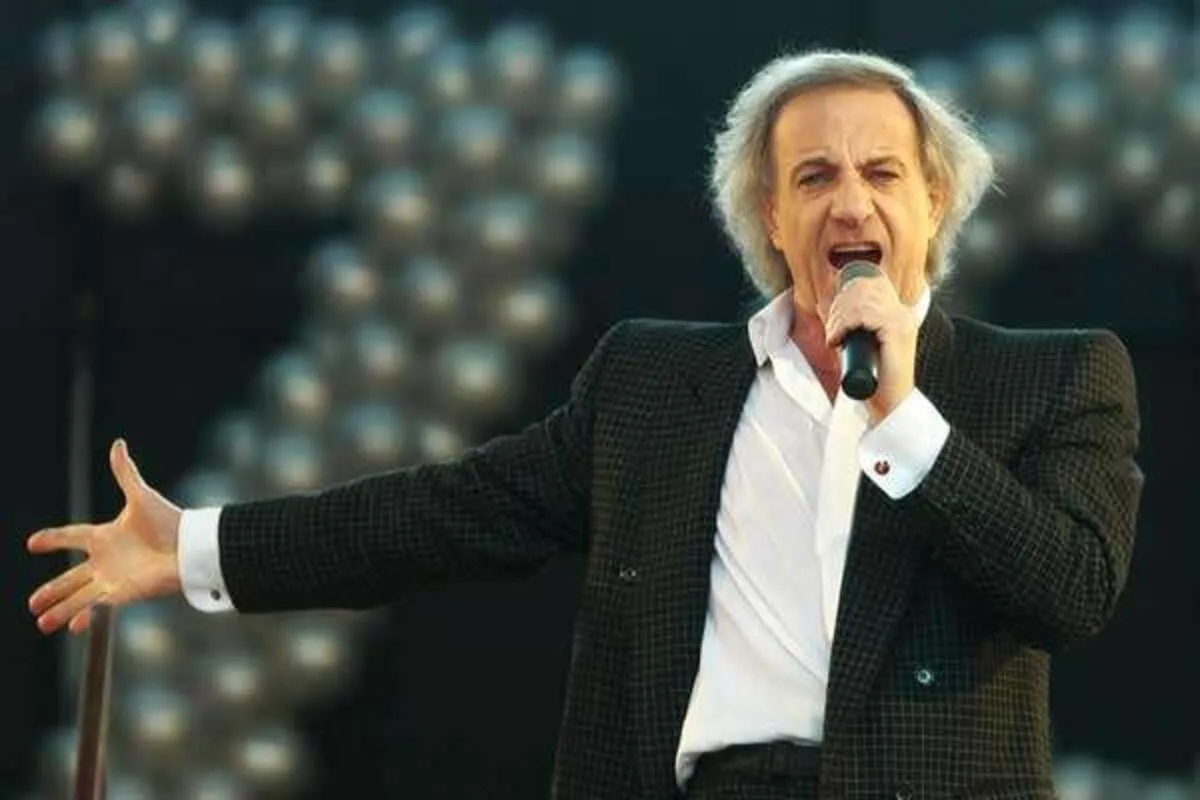
Today, May 1, Vasyl Zinkevych—one of the most famous figures in Ukrainian pop music, a People’s Artist, and a Hero of Ukraine—is celebrating his birthday. The legendary performer, who began his career as a dancer and stage designer, has turned 81.
“Glavkom” shares some interesting episodes from the legendary artist’s biography.
Vasyl Zinkevych was born in the village of Vaskivtsi in the Khmelnytskyi region. His mother, Hanna Prokopivna, worked on a collective farm but always found time for her favorite pastime—embroidery, in which she achieved great mastery. She also knew how to create flowers from materials at hand, and it was this creative atmosphere that later influenced Vasyl’s choice of his first profession.
His father, Ivan Kharitonovich, was a veterinarian and had a beautiful voice. He directed the church choir and, according to his mother, passed on his love for art and his talents to his son. Even as a child, Vasyl built an improvised stage at home where he danced, and later, during his school years, he actively participated in amateur artistic performances.
After school, Zinkevych studied at the V. Y. Shkriblyak School of Applied Arts in Vyzhnytsia, majoring in “artistic metalworking.” His studies were interrupted: in 1966, Zinkevych was drafted into the army.
Upon returning from military service, Zinkevych came to Vyzhnytsia to complete his studies at the School of Applied Arts. It was here that he became the artistic director of the “Smeretychyna” folk dance ensemble. In addition to choreographing dances, he personally designed stage costumes for the entire troupe.
Zinkevych’s creative works received widespread recognition: some of his choreographic compositions were included in the Golden Fund of Ukrainian Art, and the costumes he designed were showcased at exhibitions in Paris. One of his most famous productions was “Bukovinian Mosaic.”
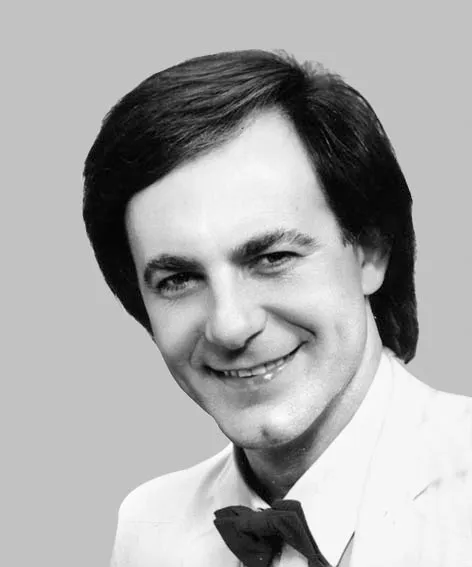
Even during his student years, Vasyl Zinkevych distinguished himself as an innovator in the field of fashion—he combined folk elements with modern silhouettes, creating unique stage costumes. Costumes for creative troupes, distinguished by their stylistic originality, were sewn based on his sketches.
In 1966, the young composer Levko Dutkovsky, seeking to break the mold of Soviet pop music, founded a new type of musical ensemble at the Vyzhnytsia District House of Culture. He named it “Smerichka”—after the evergreen fir tree, a symbol of Carpathian youth and beauty. The group had a sound that was unusual for the time: three electric guitars (lead, rhythm, bass), a drum set, and an electric organ. The ensemble began performing music in the beat style—a bold mix of folk melodies with elements of pop, rock, and Hutsul and Bukovinian folklore.
“Smerichka” quickly gained popularity among young people. People from the surrounding districts and from Chernivtsi would come to the Vyzhnytsia House of Culture for evenings of rock ’n’ roll, twist, shake, and blues dancing. Local authorities, particularly the Vyzhnytsia District Komsomol Committee led by Felix Karchevsky, supported the new movement. The atmosphere at the House of Culture was lively—young people felt free, took care of order themselves, and fostered a sense of community.
Vasyl Zinkevych became the first male soloist in the all-female vocal-instrumental ensemble “Smerichka.” Years later, in an interview, Dutkivsky would say: “Vasyl had absolutely no idea about singing. What Zinkevych achieved in his vocal career is a shining example of hard work for self-realization. For this, I bow my head low before him.”
A year after Zinkevych, the young singer Nazarii Yaremchuk joined “Smerichka,” and the ensemble’s golden age began. The trio of Zinkevych, Ivasyuk, and Yaremchuk became famous throughout the Soviet Union after performing “Chervona Ruta” in the finals of “Song of the Year 1971” in Moscow.
According to Levko Dutkovsky, the concert organizers unexpectedly canceled the entire ensemble’s performance at the last minute, allowing only the soloists to perform accompanied by the orchestra. The composer was concerned that for Nazariy and Vasyl, who had never sung on such a large stage before, this would be an overwhelmingly nerve-wracking experience. To support them, he asked the song’s author, Volodymyr Ivasyuk, to join them on stage.
That same year, following the song’s successful debut, the first Ukrainian musical film—the TV musical “Chervona Ruta,” directed by Roman Oleksiv—premiered on television. Filming took place in the picturesque Carpathian town of Yaremche, and the music for the film was composed by Volodymyr Ivasyuk.
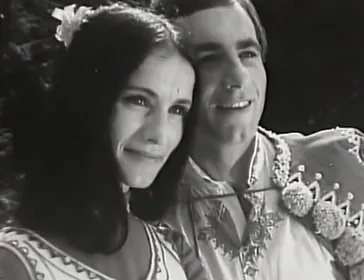
According to the plot, two young people—Oksana, a Hutsul girl, and Boris, a miner—meet by chance on a train heading to the Carpathians. Their love story unfolds through the songs the characters give to one another. Sofia Rotaru played the role of Oksana, while Vasyl Zinkevych portrayed Boris.
Vasyl Zinkevych, together with Alla Dutkovska, the wife of Levko Dutkovsky, created the “Goryanka” stage costume collection for the soloists of the “Smerichka” vocal-instrumental ensemble, which emphasized a combination of white and red colors. Zinkevych’s design portfolio also includes costumes for Sofia Rotaru, the Virsky Ensemble, the Kyiv Music Hall, and the bands “Smerichka” and “Svitiaz.”
Zinkevych, Ivasyuk, and Yaremchuk were united not only by the stage but also by a genuine friendship—they went hiking in the mountains together. After Ivasyuk’s death, Zinkevych and Yaremchuk defied the ban and attended his funeral, an act of defiance against Soviet authorities.
At the height of its popularity, “Smerichka” gave up to four concerts a day. Under Dutkovsky’s leadership, the ensemble was the first to introduce Western music to Ukraine, which drew the ire of the party nomenclature. They faced particular criticism following the release of the TV film “The ‘Smerichka’ Ensemble Performs,” filmed by Estonian television in 1975. After being subjected to harassment at a party meeting, Zinkevych left the group and moved to Lutsk.
In Lutsk, he became the lead singer of the vocal-instrumental ensemble “Svitiaz” under the direction of Valery Gromtsev. The group quickly gained popularity, and Zinkevych became one of the most famous Ukrainian singers. He was passionate about folklore, designed stage costumes, and appeared in concert films, including “Melodies of the Blue Lakes,” “Chervona Ruta,” and “Music of Spring.” His renditions of Ivasyuk’s songs (“Love Blooms Only Once,” “A World Without You”) and other hits that became classics of Ukrainian pop music—“Water Flows,” “I Call You,” “The Violin Plays,” “Forget Your Sorrow”—gained widespread fame.
In 1986, having already been awarded the titles of Honored Artist of Ukraine and People’s Artist of Ukraine, Vasyl Zinkevych decided to pursue a second degree and enrolled at the Rivne Institute of Culture to study directing.
Little is known about Vasyl Zinkevych’s personal life, as he did not share details with journalists. The singer has two sons, Bohdan and Vasyl, who also pursued careers in music, though in different genres. Vasyl Jr., together with Sashko Polozhynskyi, formed the band “Tartak,” while Bohdan, known by the stage name Zinchek, was the keyboardist for the band “Osnovnyi Pokaznik.”
Later, Vasyl Jr. chose a career as an artist and is now a military serviceman, while Bohdan became a television director.
Zinkevych’s work has received state recognition—he is an honorary citizen of Lutsk, a Hero of Ukraine, a laureate of the Shevchenko State Prize, has a star on the “Walk of Fame” in Kyiv, and has received many other awards.
Zinkevych last appeared in public in March. He took the stage to celebrate Volodymyr Ivasyuk’s birthday. During the concert, Vasyl Zinkevych performed his most famous hits, which have sold out venues time and again.
Zinkevych is a recluse, an artist who has always avoided media attention. The singer’s colleagues unanimously confirm: Vasyl Ivanovych has been shunning the public eye for decades, and the performer’s inner circle is extremely small. Nevertheless, “Glavkom” managed to speak with Vasyl Zinkevych on several occasions. The maestro always responded warmly, chatted, and shared his thoughts and creative plans; however, he always politely declined requests for a major interview—one that, without exaggeration, the entire country is eagerly awaiting. He would say, “It’s not time yet.”
In recent years, Vasyl Ivanovych has rarely delighted audiences with his stage performances. However, in the year leading up to his anniversary, the artist made an exception: he responded to an idea from his friend, People’s Artist Ivan Popovich, and toured with the “Two Legends” project. Despite their advanced age, the singers performed six joint concerts. Most of the performances took place at the Lviv Opera House; the project’s first concert in the capital was also announced, but ticket sales were suspended almost immediately after they began.
Read also: Yuri’s Name Day 2026: the best greetings and heartfelt wishes for Yuri’s Day.
Labor Day 2026 in Ukraine on May 1: history of the holiday and greeting ideas.
Ukrainian Border Guard Day: history of the holiday and greetings.


