
Cyprus Fiscal Council head warns of risks to public debt — Cyprus Mail
Andreas Charalambous, head of Cyprus’ Fiscal Council, said at the Cyprus Forum in Nicosia that the country’s slow response to climate change and delays in the energy transition could pose an increasing risk to the sustainability of public finances and public debt. As Cyprus Mail reports, the council devoted significant attention to the economic consequences of climate change in its 2026 interim report.
Problems with energy storage
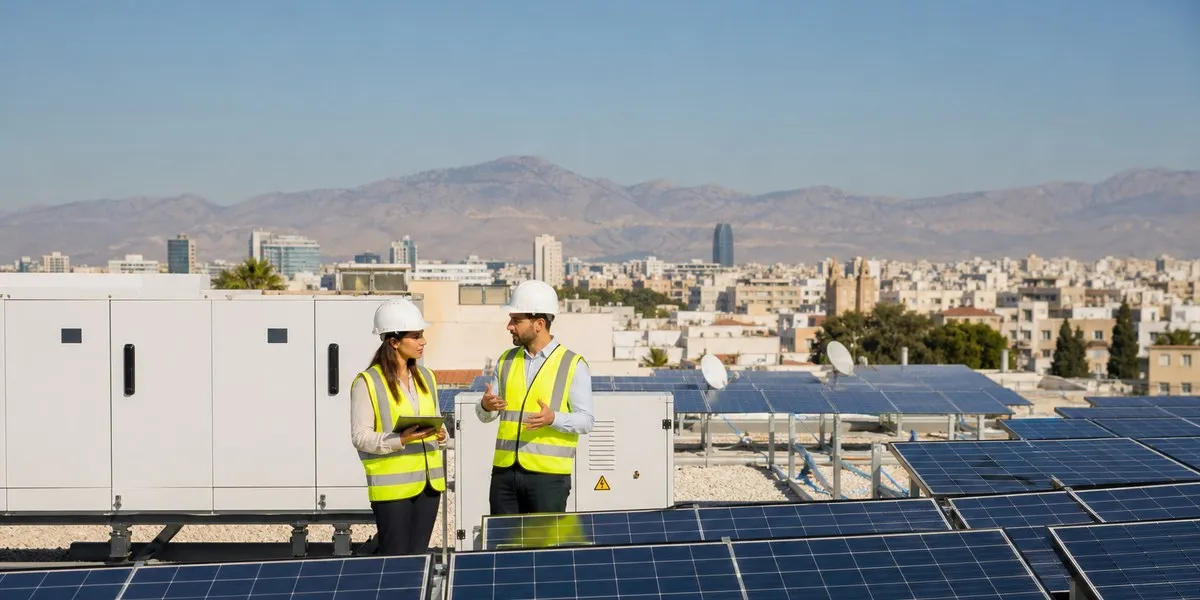
Charalambous pointed to Cyprus’ lag in developing energy storage systems needed to increase the share of renewable sources in electricity generation. He also named waste recycling, waste management and energy efficiency as weak points.
According to him, the country is falling behind even its own targets, which are less ambitious than the European Union’s overall targets. The official linked this to a lack of infrastructure and planning shortcomings, particularly in the energy sector and in moving away from traditional fuels.
Emissions and household costs
Theodoros Zachariadis, professor and acting director of the Energy, Environment and Water Research Centre at the Cyprus Institute, said that Cyprus is currently the only EU state where greenhouse gas emissions continue to rise. He linked this primarily to the country’s dependence on fossil fuels for electricity generation.
More current news is available on the UA.News Telegram channel Telegram.
According to the European Environment Agency, total greenhouse gas emissions in Cyprus, excluding land use and forestry, rose by 59.2% between 1990 and 2022. Energy remained the largest source of these emissions. Zachariadis noted that renewable sources currently provide around 25% of electricity generation and, in his assessment, have saved more than €500 million over the past decade.
Targeted assistance instead of tax breaks
Charalambous also believes that tax breaks are not the most effective way to support vulnerable households amid rising energy and living costs, as wealthier groups also benefit. In his view, direct targeted support through public spending is more effective. At the same time, Zachariadis stressed the difficulties of accurately identifying households that meet the criteria for energy poverty.
The head of the Fiscal Council warned that postponing the transition could shorten the economic lifespan of investments being made now: some of them would have to be adapted to new environmental and energy requirements before they have time to deliver the expected returns.




