
Helical Fusion plans fusion reactor tests in 2027 — Cyprus Mail
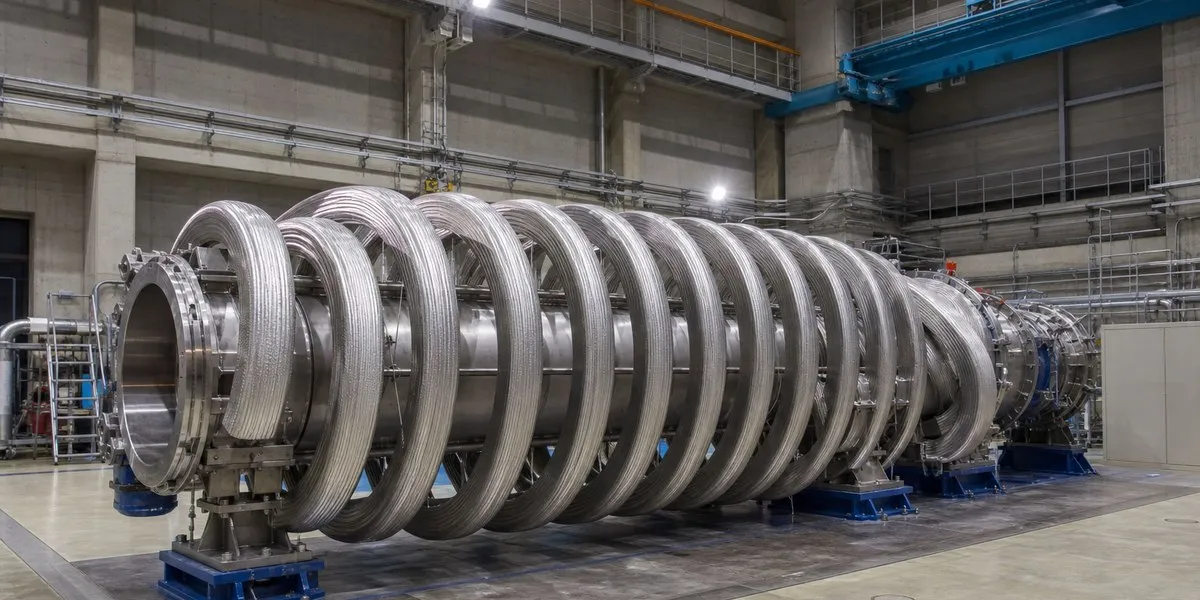
Japanese startup Helical Fusion plans to begin preliminary power-on tests of its Helix HARUKA demonstration fusion reactor in 2027. The company expects the project to become a step toward the commercial use of fusion energy, Cyprus Mail reports.
Pilot reactor in Toki
Helix HARUKA is being developed as Japan's first integrated pilot reactor using a helical approach to fusion. The facility is intended to demonstrate the possibility of a stable and continuous fusion reaction.
Fusion involves the merging of atoms at ultra-high temperatures with the release of heat, similar to processes occurring in the Sun. Unlike modern nuclear fission reactors, this technology could potentially produce significant amounts of clean energy with a small amount of radioactive waste. At the same time, no commercially viable fusion reactor has yet been created anywhere in the world over 70 years of research.
Next stages of the project
In 2025, Helical Fusion tested a high-temperature superconducting coil. The company said it simulated the magnetic environment inside a fusion facility and achieved stable current flow under superconducting conditions. In its assessment, this helped overcome a key obstacle to manufacturing and constructing an integrated demonstration reactor.
More current news is available on the UA.News Telegram channel Telegram.
Construction of the first helical coil at the site of the National Institute for Fusion Science in the city of Toki in central Japan began in early 2026. The work has already been largely completed. If the first stage of testing is successful, the startup plans to install a second coil and other key components, including a liquid-metal blanket, and then conduct tests of the fully assembled facility around 2030.
After HARUKA, the company plans to develop the larger HELIX KANATA reactor with a net capacity of 50 MW, intended to demonstrate stable continuous electricity generation. Helical Fusion CEO Takaya Taguchi said the company aims to build a commercial power plant as early as the 2040s, but technical issues, as well as issues of cost, safety and construction speed, must be resolved before it begins operating.
The Japanese government has included fusion energy among 17 strategic sectors and plans to invest 3.1 trillion yen, or $19.7 billion, by fiscal year 2040 through public and private funding.




