
Europe has called for the study of Ukraine's experience with energy resilience
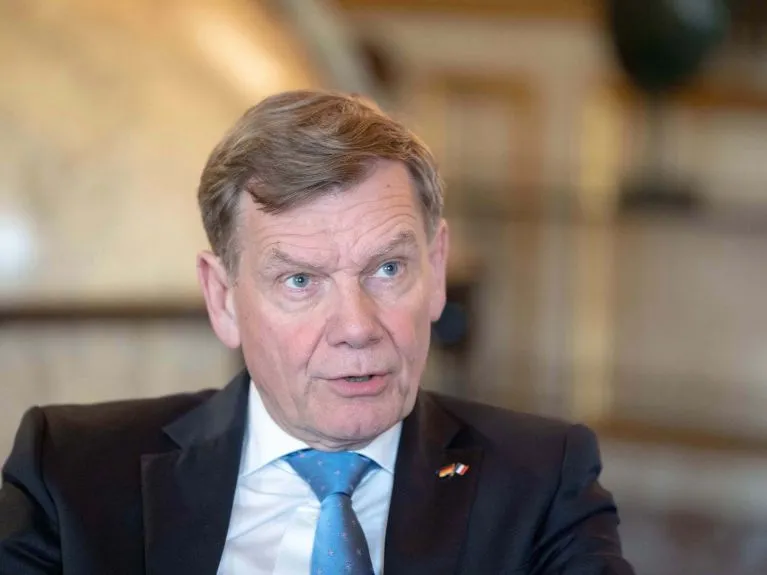
Europe must carefully analyze Ukraine’s experience in adapting to power outages, German Foreign Minister Wadepful said on May 19. According to him, attacks on energy infrastructure are not only a blow to physical facilities but also an attempt to paralyze the functioning of the state; therefore, Ukraine’s experience in ensuring energy resilience is important for European countries.
He made this statement during the international conference “Energy Security – Lessons from Ukraine” on Tuesday in Berlin, according to a Ukrinform correspondent.
“Today, the point is to listen to Ukrainian political and economic leaders, communities, civil society, and experts, and to learn from their experience, flexibility, perseverance, and innovation. Because Ukraine has accumulated hard-won expertise that the European Union urgently needs to strengthen its own resilience and energy security,” Wadepul emphasized.
According to him, Russia has turned energy infrastructure into one of the key tools of pressure in the war against Ukraine. “Putin views energy infrastructure as both a target and a means of exerting psychological pressure. He seeks to break the morale of the civilian population, and yet Ukraine has been resisting every day for over four years,” said the German Foreign Minister.
Wadeful emphasized that Ukrainian society has managed to adapt to constant attacks on the power grid: “Entire cities have adapted to planned power outages. Hospitals have installed backup systems powered by solar panels and batteries. The railway networks have adapted their operations to the unstable power supply,” he noted.
The minister also highlighted the work of Ukrainian energy workers during the war. “Technicians worked under constant danger to repair damaged substations, often just hours after shelling. The hum of generators became a constant background sound in Ukrainian cities. And energy workers became defenders of the home front to maintain the power supply, and far too many of them paid for it with their lives,” stated Wadephul.
According to the head of the German Foreign Ministry, Ukraine’s experience proves that resilience is impossible without constant adaptation. “When large centralized infrastructure becomes vulnerable, Ukraine accelerates decentralization. When substations become targets of attacks, protective measures are strengthened. When supply chains come under strain, improvisation and local innovation fill the gaps,” he said.
The minister noted that threats to energy security today affect more than just Ukraine. “Across Europe, we are already seeing an increase in the number of hybrid attacks on critical infrastructure. We are seeing cyberattacks on utility services. We are seeing unidentified drones over energy facilities. And we are seeing damage to undersea cables, pipelines, and communication networks,” he stated.
According to Wadful, critical infrastructure has now become “the front line of geopolitical confrontation,” and therefore Europe needs a new understanding of energy security as a comprehensive security issue.
As a reminder, Kallas and EU ministers visited Bucha, stating, “Europe’s security is being decided here.”
A double terrorist attack occurred near a residential building in Bucha this morning; police officers were injured.
The EU Council adopted a decision to impose sanctions against nine individuals involved in crimes against the civilian population in Bucha during the Russian occupation in 2022.
Police have identified 98% of those killed in Bucha and established the names of 2,500 occupiers.


