
AI boom fuels debate over bear market criteria on Wall Street
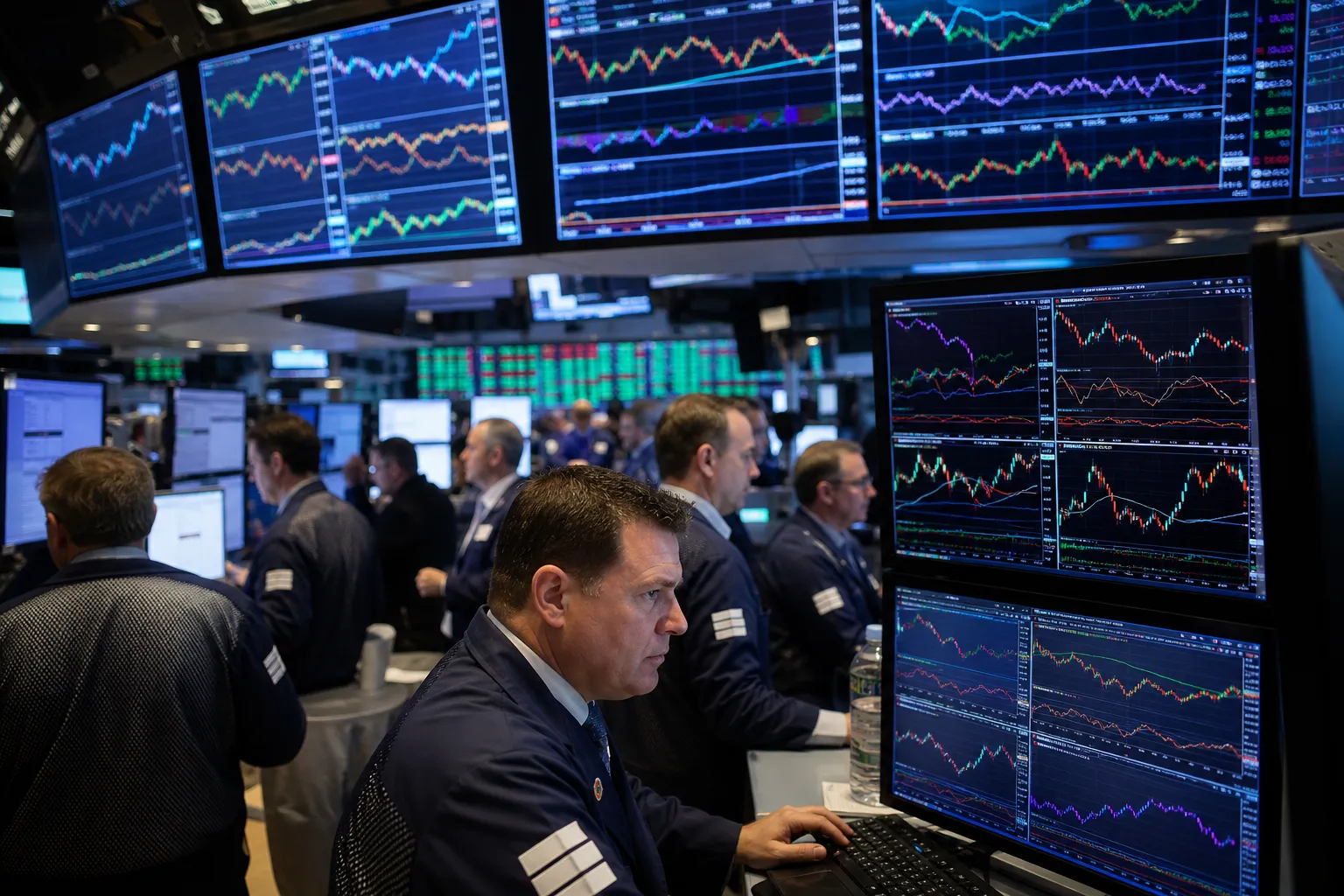
On Wall Street in the United States, the traditional definition of a bear market — a 20% decline in a major index — is increasingly poorly suited to describing the situation in the technology sector, where prices fluctuate sharply while indexes remain significantly higher than at the start of the year. Cyprus Mail reports on the debate among market strategists.
In July, the Philadelphia Semiconductor Index SOX and South Korea’s KOSPI technology index entered a bear market under the traditional criterion. At their lows, however, they were still 46% and 25% higher than at the start of the year, respectively. This followed gains of more than 100% in the indexes over the previous year.
Volatility of technology indexes
Art Hogan, chief market strategist at B. Riley Wealth, called applying established terminology to such volatile assets an overly simplistic approach. Steve Sosnick, chief strategist at Interactive Brokers, believes such labels may be more appropriate for broad markets than for SOX and KOSPI, which experienced rapid growth.
The definition affects how investors assess the scale of a sell-off and distinguish an ordinary correction from a prolonged change in fundamental conditions. According to Hartford Funds, since 1928, bear markets for the S&P 500 index have lasted an average of 289 days, or about 9.6 months.
More current news is available on the UA.News Telegram channel Telegram.
Proposals for new criteria
There is no single approach to replace the 20% rule. Analysts surveyed by Reuters propose taking into account the duration of the decline, underlying volatility, the overall state of the economy, and other factors. David Russell, global head of market strategy at TradeStation, believes that to confirm a bear market, a decline must last several weeks or months and be accompanied by negative structural factors, including high interest rates and the economy being at a peak.
Moving averages and Fibonacci correction levels are also cited among possible benchmarks. Sosnick proposes considering a market bearish only when its decline exceeds the index’s annual historical volatility on an annualized basis. Under this criterion, SOX would have had to fall by more than 44%. SOX and KOSPI have already recovered after their declines, so investors who sold assets at the lows did not benefit from the recent rise.
According to LSEG, earnings of the group of semiconductor and equipment manufacturers in the S&P 500 are estimated to grow by at least 114.7% this year.


