
IMF compares shock from war with Iran to 1974 oil crisis
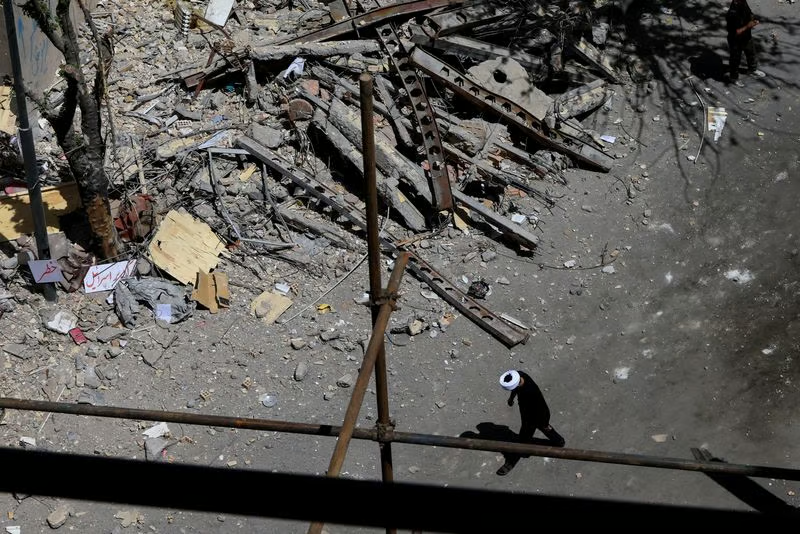
Pierre-Olivier Gourinchas, the IMF’s chief economist, stated that an immediate end to the conflict with Iran could lead to an annual oil deficit comparable to the shocks of the 1970s. This is crucial as the war directly impacts global resource supplies and the stability of the world economy.
At the same time, the economy today is less dependent on oil, using resources more efficiently to generate GDP, and central banks are focused on curbing inflation. Nevertheless, the war complicates transportation through the Strait of Hormuz, with only a few vessels daring to pass through the Persian Gulf.
Recently, sanctioned ships under Chinese, Madagascan, and Panamanian flags have sailed, circumventing US-imposed restrictions, highlighting the challenges of controlling oil flows in the region. The United States has ordered its navy to attack vessels attempting to transit the strait, further escalating tensions.
The International Monetary Fund, established in 1944, is a leading global organisation that supports financial stability by providing advice, financial assistance, and analysis of the world economy. Through its role, the IMF influences countries’ macroeconomic and financial policies.
Therefore, the conflict involving Iran could cause significant disruptions to the oil market with far-reaching consequences for the global economy and security. It is important to monitor developments closely as these effects may be felt worldwide.
Looking ahead, diplomatic efforts to de-escalate tensions are expected to intensify, given the threat the current situation poses to the global economy and energy market stability.


