
Study reveals an unexpected way BRD4 binds to chromosomes
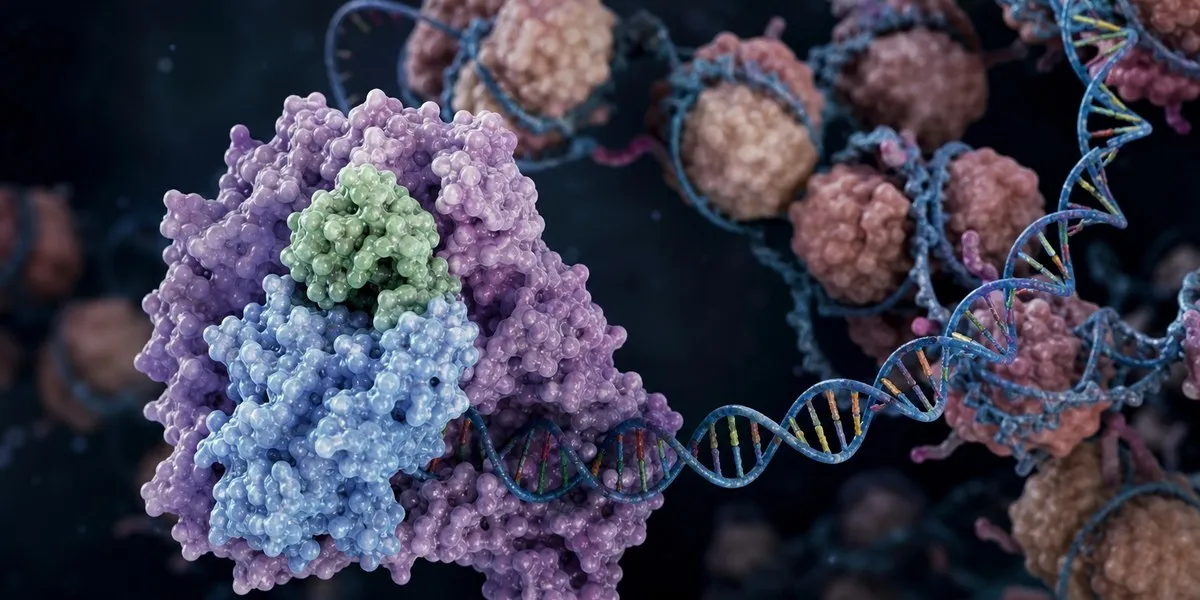
Penn State scientists have presented a three-dimensional structure of the cancer-linked protein BRD4 in a complex with its cellular partner. As reported by Phys.org, the study showed that BRD4 can attach to structures that package DNA in cells without the molecular signal previously considered necessary for this interaction.
Structure of the BRD4 complex
The work was published in the journal Molecular Cell. The new 3D structure provides a more detailed understanding of how BRD4 binds to chromosomes. It also describes the protein's interaction with its cellular partner.
More current news is available on the UA.News Telegram channel Telegram.
The protein's role in cells
BRD4 plays an important role in how cells read, copy, and repair DNA. The protein also helps determine how different cell types are formed.
BRD4 is linked to many types of cancer and is considered a promising target for future treatments. The study authors note that new data on its binding to DNA-packaging structures may be useful for further research into diseases and future therapeutic approaches.


