
Evvy raises $40 million for vaginal microbiome research — TechCrunch
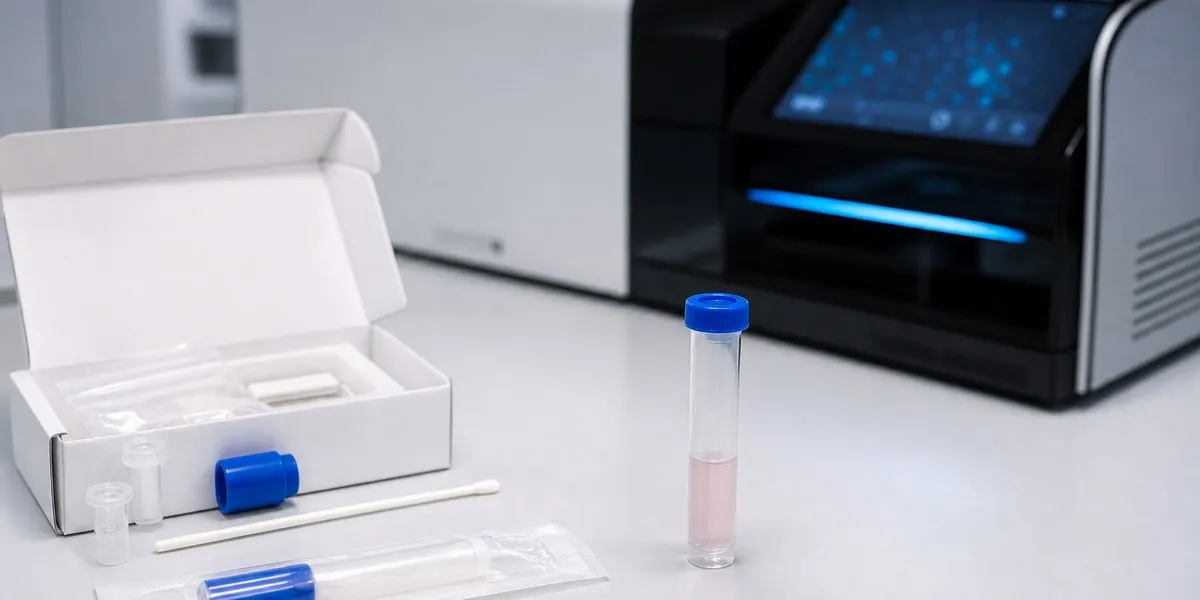
Women’s health company Evvy has raised $40 million in a Series B funding round led by Catalio Capital Management. TechCrunch reports this. The startup plans to advance women’s health research using vaginal microbiome data.
At-home test and clinical support
Evvy was founded in 2021 by Priyanka Jain, Lane Bruzek, and Pita Navarro. The company offers an at-home mNGS test for analyzing vaginal microorganisms, which it says is the world’s only at-home test of its kind with CLIA and CLEP certifications.
Users send swab samples to Evvy’s laboratory. There, they are analyzed using mNGS sequencing, after which the results are passed on to clinicians registered on the platform. In the medical portal, patients receive results, a diagnosis, a clinical interpretation, and further recommendations, including personalized prescription support where appropriate.
According to Evvy, more than 100,000 patients in the United States have used the service since its launch, and 3,000 healthcare professionals work with the platform. The company also reports 15 peer-reviewed publications and abstracts, the identification of new subtypes of bacterial vaginosis, and hundreds of previously uncatalogued vaginal microbiome genomes.
More current news is available on the UA.News Telegram channel Telegram.
Data for fertility research
The company aims to build a dataset that combines microbiome biology, symptoms, medical interventions, and health outcomes. Evvy believes such data could help identify new biomarkers and improve approaches to medical care.
In May, the startup launched the EvvyAI assistant, which uses collected data to provide users with recommendations on vaginal health and directs them to clinicians for issues requiring professional assessment.
The company is also entering the fertility sector. Evvy is currently collecting data on the possible link between the vaginal microbiome and infertility, gynecological cancers, preterm birth, IVF success rates, and recurrent pregnancy loss. Last year, it began a prospective study using its tests in IVF clinics.


