
14 of 30 untrained dogs first approached a sweat sample during a seizure — ScienceAlert
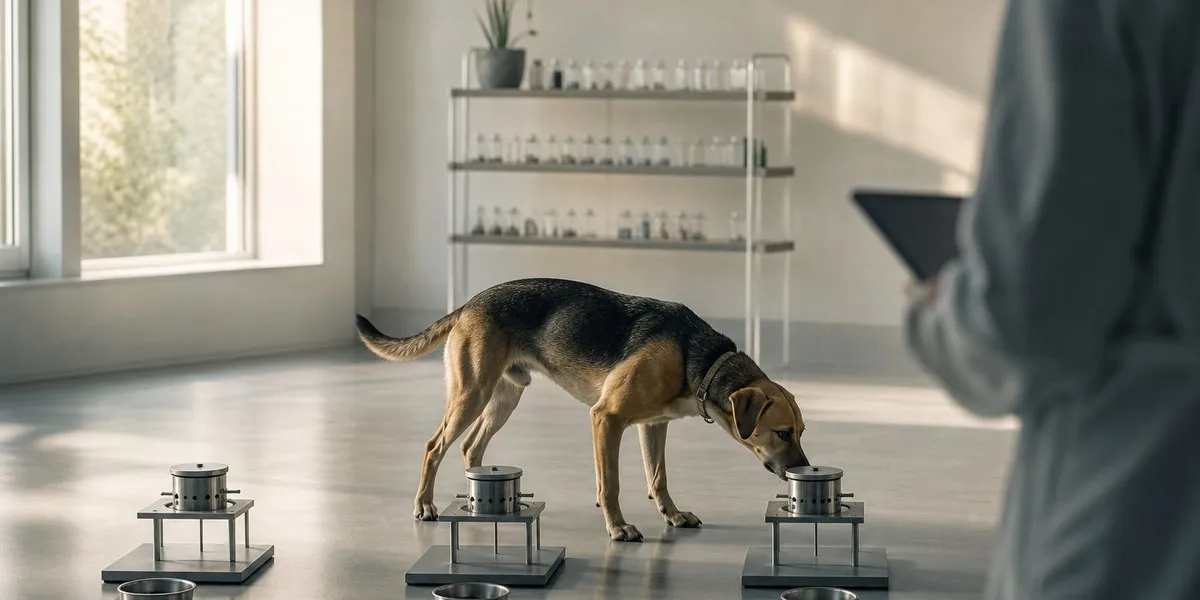
Researchers at the University of Milan suggested that untrained dogs may spontaneously respond to a smell associated with an epileptic seizure in a stranger. According to ScienceAlert, 14 of 30 dogs first approached a sweat sample collected during a seizure. This was 40% more often than would be expected by chance.
How the experiment was conducted
Scientists collected sweat samples from a six-year-old volunteer with epilepsy who was not in hospital. Sweat was collected during a seizure, as well as six hours before or after it.
The study involved 30 purebred and mixed-breed dogs. The animals were unfamiliar with both the volunteer and her scent, had no previous contact with epilepsy, and had no experience with medical detection tasks.
For two minutes, each dog could freely explore three stations: one with a sweat sample collected during a seizure, one with a sweat sample collected outside a seizure, and one with a sterile gauze pad as a control. The trials were monitored remotely via video feed. The dogs' guardians and the researcher did not know which station contained the seizure-related sample.
More current news is available on the UA.News Telegram channel Telegram.
What the results showed
To encourage more dogs to explore the stations, the scientists placed empty food bowls near the samples. Under these conditions, the dogs also more often investigated the sample collected during a seizure first.
At the same time, the animals did not spend more time sniffing such a sample and did not return to it more often than to other scents. The authors recorded no signs of fear, anxiety, or other discomfort in the dogs.
The researchers suggest that the samples may contain volatile organic compounds that a dog's sense of smell can quickly recognize. However, the experiment included materials from only one person, so it is not yet known whether the seizure scent signal is shared by different patients. The team plans to continue the research involving several sweat donors. The results were published in the journal Annals of the Italian National Institute of Health.




