
Scientists identify the BFT toxin receptor in colon cells — ScienceDaily
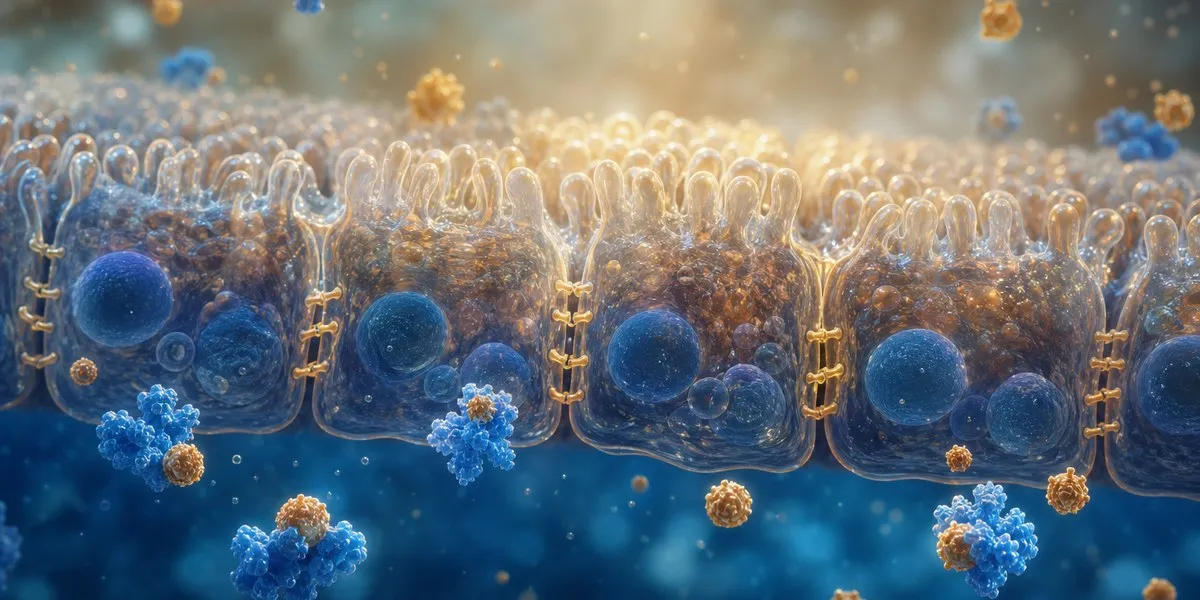
Researchers from the Johns Hopkins Kimmel Cancer Center, the Bloomberg Kimmel Institute for Cancer Immunotherapy, and the Johns Hopkins University School of Medicine found that the protein claudin-4 is the key receptor for the BFT toxin of the bacterium Bacteroides fragilis on colon cells. As ScienceDaily reports, the scientists also created a molecular decoy that captured the toxin and protected mice from the tissue damage it causes.
How the toxin attaches to cells
Bacteroides fragilis may be present in the intestines of up to 20% of healthy people, but this does not automatically mean cancer will develop. Some strains of the bacterium produce the BFT toxin, which disrupts the protective barrier of the colon, causes inflammation, and is associated with tumor growth.
Researchers previously found that BFT cleaves the E-cadherin protein, which is needed to connect neighboring cells and maintain the intestinal barrier. However, the toxin did not attach directly to E-cadherin, so the mechanism of its initial contact with cells remained unknown.
The team used genomic CRISPR screening in colon epithelial cells, switching off genes one at a time and examining which of them were required for BFT binding. Disabling the gene that encodes claudin-4 prevented the toxin from attaching to cells and, accordingly, from attacking E-cadherin.
More current news is available on the UA.News Telegram channel Telegram.
A decoy for BFT
Claudin-4 is involved in forming tight intercellular junctions that limit the passage of substances between cells and support the intestinal barrier. Laboratory experiments conducted jointly with structural biologists from Barcelona confirmed strong binding of BFT and claudin-4 at a ratio of one toxin molecule to one receptor molecule.
Based on this mechanism, the scientists developed a soluble protein containing claudin-4 sequences. It worked as a decoy: BFT bound to it rather than to receptors on colon cells. In experiments in mice, this protected tissues from toxin-induced damage.
The authors emphasize that these experiments do not prove the prevention of colorectal cancer in humans. Further research must determine whether this approach can be used safely and effectively to prevent diseases associated with the BFT toxin.




