
AI trained to analyze tissue samples using pathologists’ approach
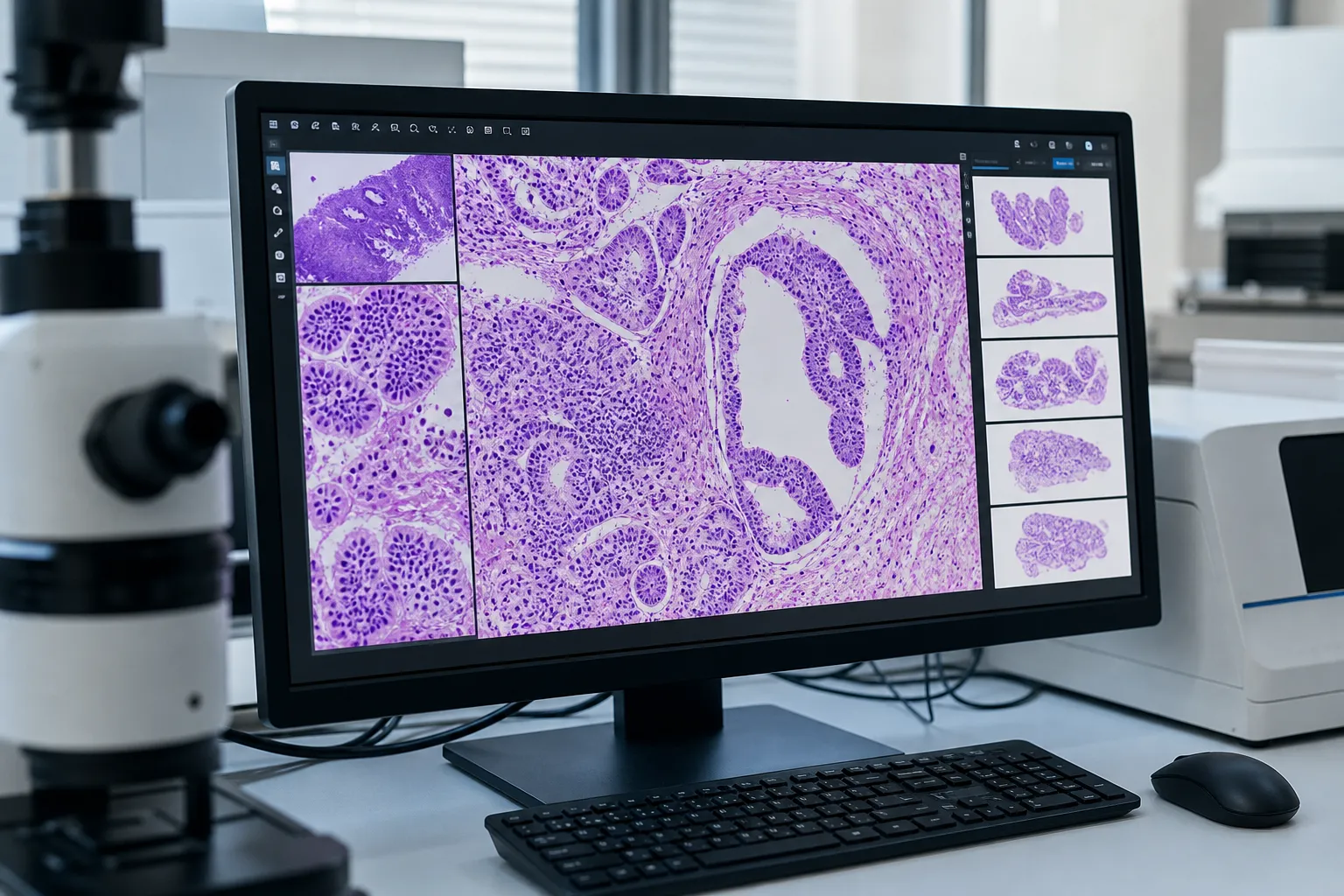
Researchers developed the Pathology-o3 artificial intelligence system, which was trained to review digital images of tissue samples following the way pathologists work. The algorithm first scans the entire slide at low resolution, identifies areas for closer examination, and then analyzes them at higher resolution. Live Science reports on the results of the study, published in July in the journal Nature.
Training on specialists’ actions
Unlike many systems that work with preselected fragments or divide a slide into fixed-size areas, the new approach takes into account a specialist’s navigation through the image. While working, pathologists move across the slide, change the magnification, and stop at suspicious areas.
The team recorded the actions of eight pathologists while they reviewed slides: movements across the image and changes in magnification. The researchers filtered out random movements, retaining actions that indicated purposeful attention. The results were also compared with eye-tracking data. For each examined area, the AI generated a short explanation that specialists could accept, edit, or reject.
More current news is available on the UA.News Telegram channel Telegram.
Testing results
Pathology-o3 was tested on images of lymph nodes obtained in cases of colorectal cancer. Some of the slides contained metastatic cancer that had previously been marked by pathologists. The system correctly identified all slides with cancer, but 15.5% of the slides it marked as positive were actually negative.
For comparison, OpenAI o3 correctly detected 87.5% of positive slides, while 53.3% of the samples it marked as positive did not actually contain cancer. On an independent dataset that the algorithm had not previously seen, Pathology-o3 correctly identified 97.6% of positive samples; among those it marked as positive, 37.1% turned out to be negative.
Potential application
The authors of the study did not compare Pathology-o3 directly with pathologists and did not assess whether the system would make doctors’ work more accurate or faster. According to Mohammad Asadi, a Stanford University data analysis specialist not involved in the study, the algorithm is not accurate enough to make a diagnosis independently, but it could help a specialist pay attention to areas worth checking. The team’s next experiment is expected to compare the work of pathologists with and without the system.


