
Tourism in Finnish Lapland is growing but remains sensitive to conflicts
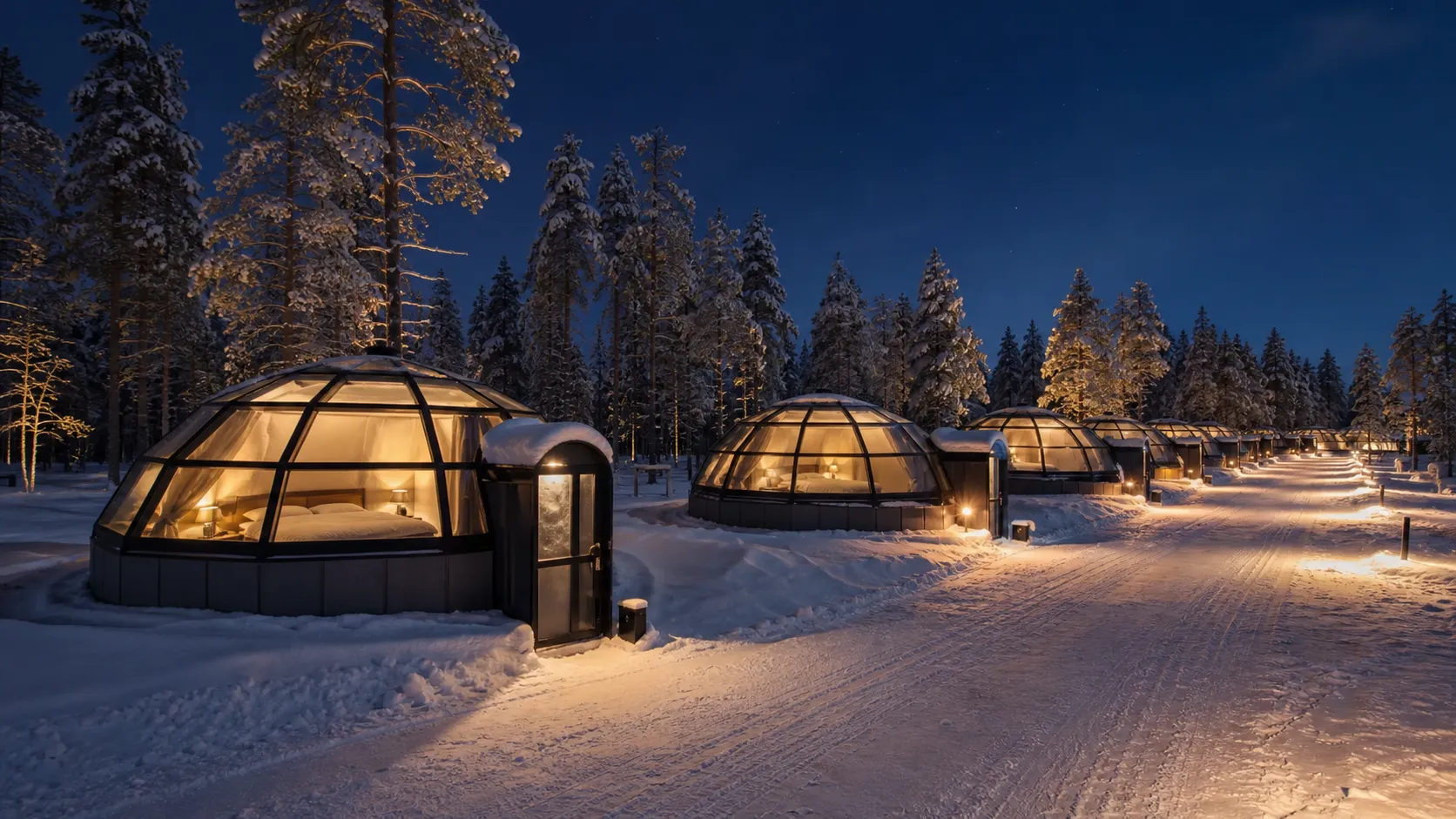
In Rovaniemi, Finland, the Apukka Resort tourist complex is increasing its turnover and investing millions of euros in new igloos. At the same time, international tourism in Lapland is vulnerable to global events: as YLE News reports, last spring the number of resort guests fell due to the closure of Middle Eastern airports used for transfers during the war between the United States and Iran.
Apukka Resort’s turnover has increased more than fivefold since 2022. At the end of the most recent financial year, it amounted to around €27 million, while the profitability indicator was approximately 50%. This year, the company expects turnover to exceed €30 million.
New igloos and restaurants
This year, Apukka Resort completed the largest investment in its history: the complex added 35 new igloos and two restaurants. The resort targets foreign tourists who require well-developed services rather than young backpackers.
Most Apukka Resort clients arrive from outside Europe. The largest number of tourists comes from the United States, followed by Australia, the United Kingdom, Italy and Germany. Several tourism projects are also being prepared in the Rovaniemi area, intensifying competition for visitors.
More current news is available on the UA.News Telegram channel Telegram.
Risk to service quality
Apukka Resort CEO Harri Mällinen called increased competition a positive development but warned that rapid growth could affect service quality. According to him, if the level of service does not remain high, it will reduce tourists’ interest in Lapland.
More than a year ago, Sweden’s First Camp Group fully acquired Apukka Resort Oy. The group, which specializes in camping, owns 90 campsites and tourist villages in the Nordic countries, Germany and Switzerland. Apukka Resort management says the company operates independently and that the new owner has provided a different financing channel.
The company has shortened its investment planning horizon to one year, whereas plans were previously made for three and five years. Marketing Director Kaisa Heiskari noted that the closure of Middle Eastern airports immediately affected the flow of guests to Lapland.


