

59 Years Old—and Facing a Medical Examination: How Female Pharmacists Are Caught Between “Reserve+,” the TCC, and Old Medical Certificates
07 September 2026 14:19In Ukraine, more than 25,000 female pharmacists are currently registered for military service. But for some of them, the registration process itself still involves months of trips to the Territorial Military Registration and Enlistment Office, searching for old documents, and problems with the “Oberig” registry.
There is also another problem: without a military registration document, a female pharmacist cannot be officially hired—even if she has the necessary education and is ready to work.
At a meeting of the Verkhovna Rada’s Temporary Investigative Commission, representatives of the Pharmacists’ Association spoke about women who have been unable to start work for months because their information has not been entered into the registry. Among the cases cited were a 59-year-old pharmacist from Odesa who was summoned to a medical examination board, and women whose old certificates of unfitness for military service remain only on paper to this day.
Andriy Bobkov, a representative of the Ministry of Defense, acknowledged that there are indeed cases where the information in the registry does not match the documents or is entered late.
Why isn’t the transition period being extended?
One of the main problems arose due to changes in military registration rules.
At a meeting of the Temporary Investigation Commission, Commission Chair Oleksiy Honcharenko asked Yulia Klymenyuk, a representative of the NGO “Association of Pharmacists of Ukraine,” whether the transition period—which allowed women to find employment without a military registration document—is still in effect:
— So, is the transition period still in effect?
— No, it isn’t. That’s the problem.
— But why isn’t it in effect, if December 31, 2026, hasn’t arrived yet?— This exchange took place between the TSC chair and Yulia Klymenyuk, a representative of the NGO “Association of Pharmacists of Ukraine.” She explained that female pharmacists were initially given until the end of 2026 to register for military service. However, in May 2024, this transition period was canceled.
Andriy Babkov, a representative of the Ministry of Defense, explained that the relevant changes were related to new legislation on mobilization.
“During the one-and-a-half-year soft transition period, 2,669 women were registered. And after its cancellation in May 2024—more than 22,000 immediately. In total, 25,288 people were registered in the system. If we examine this systematically, we face a specific issue: the Donetsk and Luhansk regions, where people received their education prior to 2014, and we also have a non-digitized database covering the years 1991–2014. “Some people have Soviet-era military registration documents, while others are pharmacists by training, but they are either not registered at all or their records have not been digitized, even though they are subject to military service,” emphasized Yulia Klymenyuk.
In other words, some people still have paper documents that haven’t been entered into the electronic registry. And if a person isn’t in “Oberez,” they simply cannot update their information through “Reserve+.”
A 59-year-old pharmacist was summoned to a military medical commission
During the TSK meeting, they discussed in detail cases where female pharmacists are referred to a military medical commission. For example, one such case recently occurred in Odesa. It involves a 59-year-old woman who was already registered for military service.
“Today we looked at the city of Odesa: a 59-year-old woman was summoned to the military medical commission. Why? Why are female pharmacists—who have been registered their entire lives—now being summoned separately to the military medical commission? I don’t know. That’s not a question for me; I can’t answer that,” noted the Association’s representative.
Oleksiy Goncharenko agreed: “This defies common sense,” said the chairman of the TSK. After all, summoning pre-retirement-age pharmacists to the Medical Examination Commission creates an additional and unnecessary burden on the Medical Examination Commissions themselves and hinders the normal work of pharmacists. Meeting participants also noted that referring women to the Military Medical Commission creates an additional burden on the Military Registration and Enlistment Offices themselves. And for the pharmacists themselves, it’s not just a matter of time spent traveling to the Military Registration and Enlistment Office, but also the inability to go to work if the necessary documents haven’t been processed.
A three-month wait for data entry
Due to bureaucratic delays at the Military Registration and Enlistment Offices, women are deprived of their right to work for months: “One of the complaints, for example, involved a 17-year-old girl who is a trained pharmacy assistant, was supposed to start working at a pharmacy, but they couldn’t assign her to a position. Because we don’t know—should a 17-year-old woman be assigned or not? Another issue is the burden on the TCC: we have to refer such a woman to a medical examination committee to determine whether she is fit for work or not. There was also a complaint about a young woman who submitted all her documents in April, but her information wasn’t entered into the system until three months later. She was effectively unable to work. There are also women with certificates of unfitness dating back to 2006, but they’ve changed their last names—so how can we prove that they’ve been removed from the registry? No one has digitized this data or entered it into “Oberig.” There are even certificates of ineligibility from 2024, but they aren’t entered into the database, and during an inspection, the employer cannot prove that they are not in violation,” Yulia Klymenyuk explained in detail.
She added that in such cases, a vicious cycle arises. People are told to update their information through “Reserve+,” but if their data isn’t in “Oberig,” it’s impossible to do so.
“When we received responses like, ‘Let them update Reserve+,’ they can’t update Reserve+ because they aren’t in ‘Obereg.’ In other words, these people simply won’t appear in Reserve. If there’s an error in the records, it’s much simpler—you can log into ‘Reserve’ and correct it. But if there’s no current medical certificate, she may receive a summons to the Labor Exchange and even a fine. And when a person is hired, the employer already sends a written notice to the TCC; when transferring to another position—another notice; upon termination—yet another notice. She’s already tied to this company through her education. Why can’t she be registered so she doesn’t have to go anywhere?”
This is precisely what the Association proposes to change: since the employer already submits information about the employee to the TCC, they believe that military registration could be arranged without the woman having to visit the TCC in person.
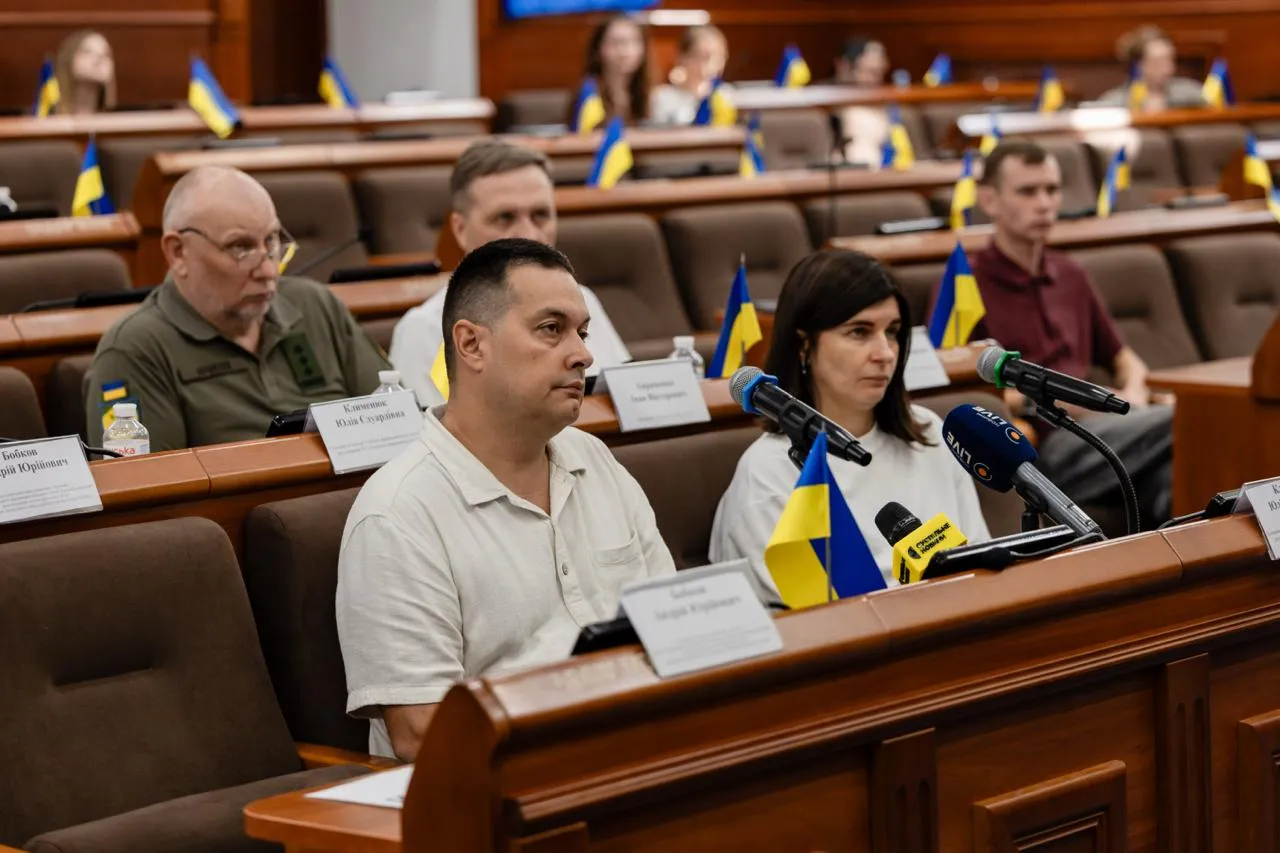
Andriy Bobkov and Yulia Klymenyuk
Over 100 letters
The Association has repeatedly raised these issues with government agencies: “We wrote to the Ministry of Health; we wrote to the Ministry of Education, because this is a matter for the military departments. We also wrote to Vereshchuk, the Office of the President, Radutsky, the committee, lawmakers, and the governors of various regions. Members of the committee wrote separately to Syrskyi... There were a great many letters—over a hundred. The responses were roughly as follows: ‘Create a talent pool of women.’ How do you interpret this response? We really do have room to improve and optimize things so that, given the conditions in which pharmacists serving frontline territories work, they don’t have to run around constantly, just to meet the TCC’s requirements in order to pass the medical examination. Because, unfortunately, we even have pharmacists who have been wounded while trying to obtain referrals for medical examinations in Poltava,” Yulia Klymenyuk stated.
But this time, the issue was brought before a meeting of the parliamentary TSC, and the Ministry of Defense has already proposed a specific solution.
The Ministry of Defense’s Response
Andriy Babkov, a representative of the Ministry of Defense, acknowledged that there are problems with military registration.
“The requirement to present a military registration document upon hiring is stipulated by Article 24 of the Labor Code of Ukraine. That is the first point. Second, yes, we understand that there are frequent cases of untimely entry or updating of information, as well as discrepancies between the registry and the documents provided by the individual. And this poses difficulties for the employer. “But most of the issues we discussed with Yulia are organizational and coordination matters regarding the direction of the TCC and the Joint Staff’s activities,” stated Andriy Babkov.
According to him, the Ministry of Defense does not currently plan to amend the Cabinet of Ministers’ resolution. Instead, they intend to resolve the issue through the General Staff and the TCC.
“Therefore, we, as the Ministry of Defense of Ukraine, have issued instructions to the General Staff regarding this matter—specifically, to resolve the issue primarily through organizational means, without introducing additional exceptions to the established military registration procedure. These instructions have been communicated to the General Staff. Another Cabinet of Ministers resolution is not appropriate at this time. It is advisable to resolve this issue through organizational directives and guidance, but in the form of written, official clarifications. We also agreed, as a matter of course, to form a working group consisting of representatives from the General Staff, the Army Command, the Mobilization Department, and the Association of Pharmacists to address these issues on an ongoing basis.”
In other words, instead of a new resolution, the Ministry of Defense proposes providing the TCC with clear written instructions on how to proceed in cases where data is missing, submitted late, or does not match the paper documents.
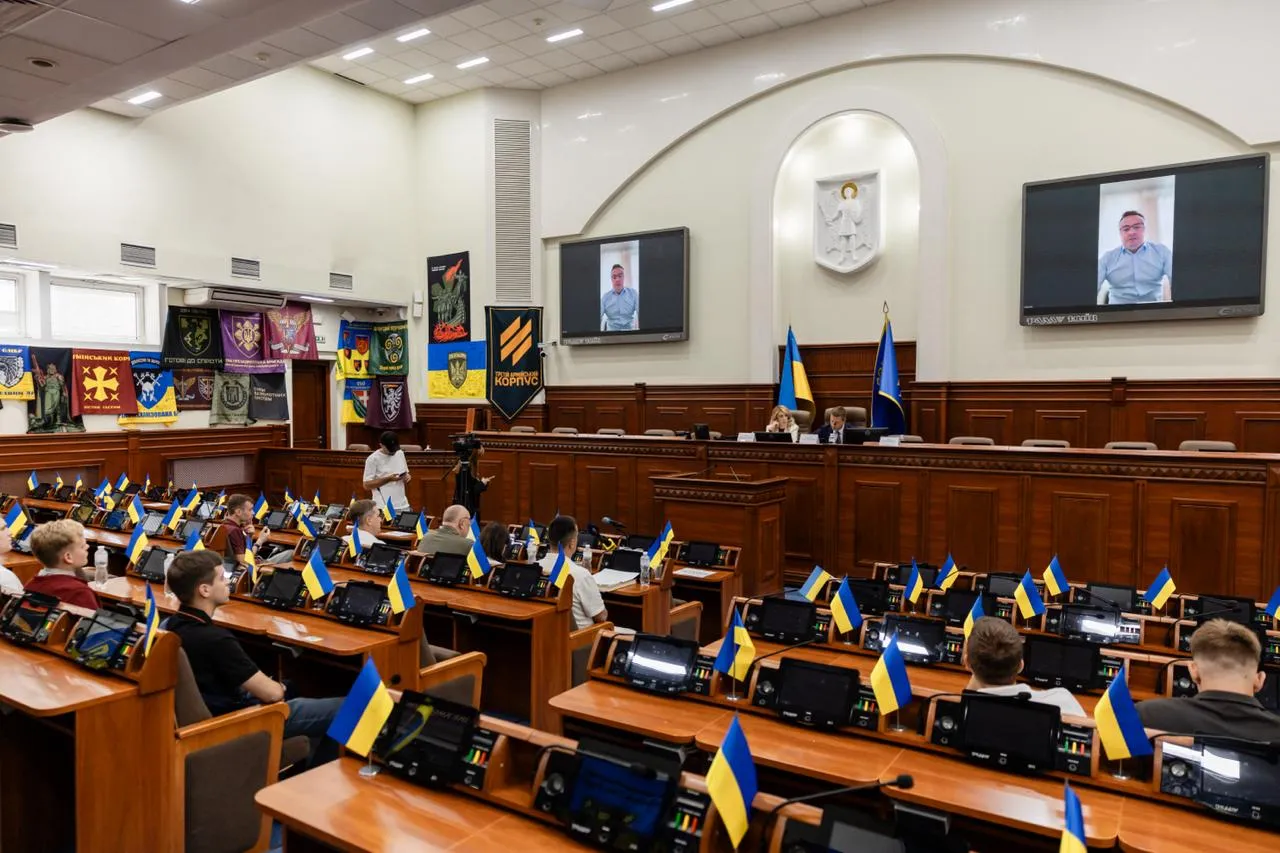
An algorithm for the TCC must be provided by September 10
Deputy Minister of Defense Lyubov Galan signed a document stipulating that the General Staff must, by September 10, 2026, provide the TCC and the Joint Staff with an algorithm for handling cases involving women with medical and pharmaceutical education.
This applies to cases where information about an individual is missing from the registry, was entered late, does not match the documents, or needs to be updated. Representatives of the Pharmacists’ Association are also to be involved in addressing this issue.
The TSK, for its part, stated that it will await the outcome. If the problems persist after September 10, lawmakers are prepared to revisit the issue and consider legislative changes.
There is now a deadline by which the Ministry of Defense must explain to the TSK how to handle such cases. It remains to be seen whether anything will change afterward for the pharmacists themselves—those who currently cannot go to work, cannot find themselves in the “Obereg” system, or are forced to prove the existence of their own certificate issued many years ago.


