
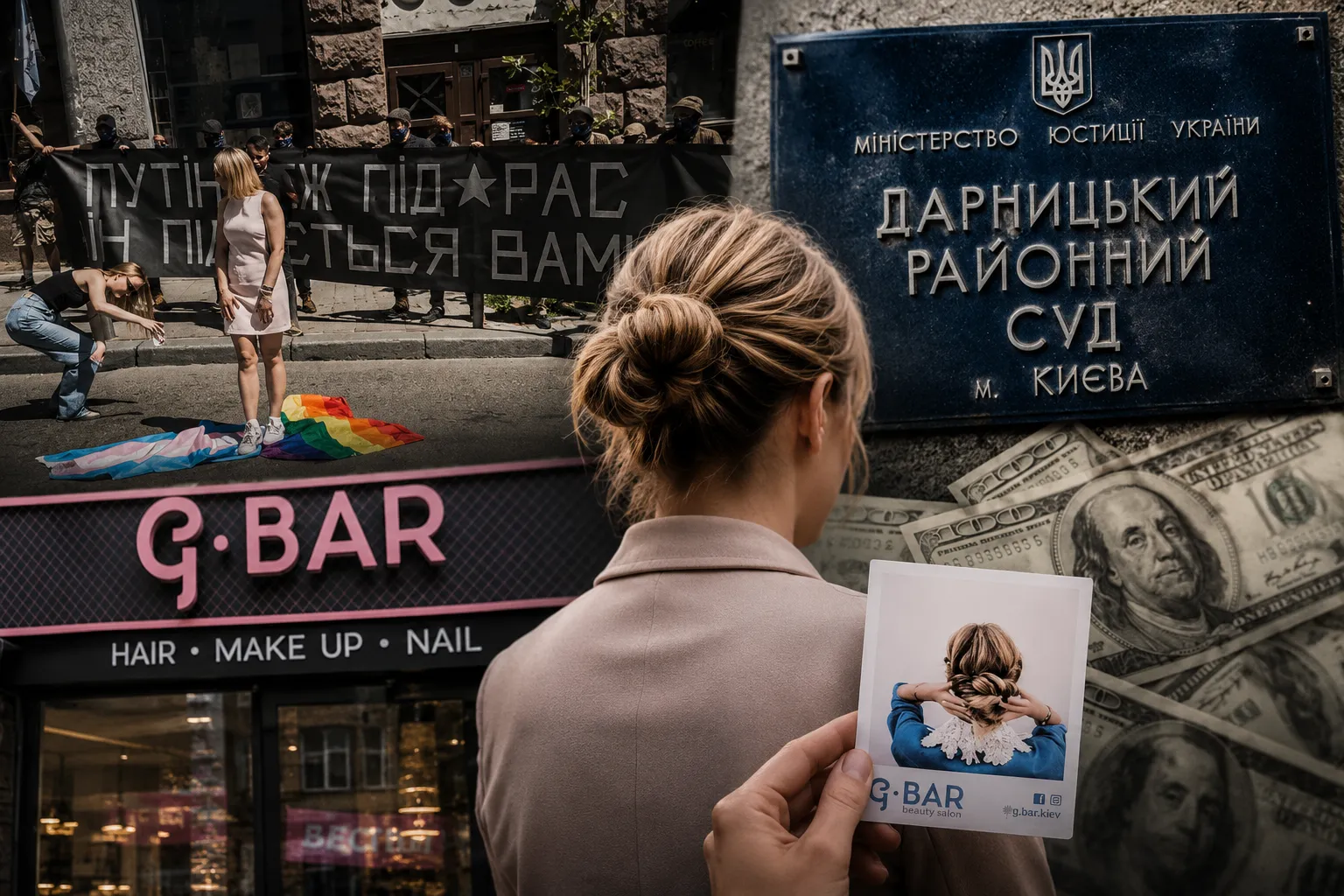
Scandal at “G.Bar”: The firing of an employee over an LGBTQI+ flag has drawn attention to the brand’s allegedly shady startup funding
29 June 2026 16:10Yuliana Kaznodiy, an employee of the G Bar beauty salon chain who wiped an LGBTIQ+ person’s shoes with a flag during the “KyivPride” march, has been fired, despite having publicly apologized for her actions.
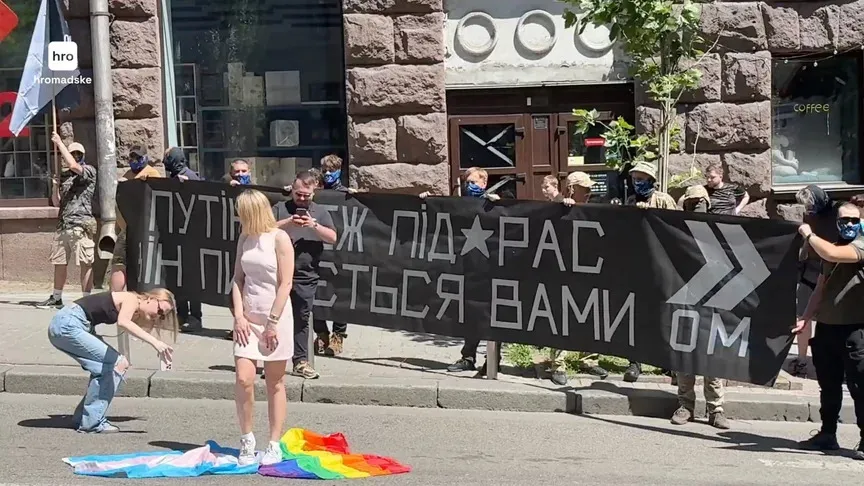
As a reminder, the incident occurred on June 21, when the “KyivPride” march was taking place near Taras Shevchenko National University of Kyiv. Yuliana, who was rushing to the university at the time, was outraged by the number of obstacles in her path: “I couldn’t get through that crowd. There were police everywhere; I had to stop at many checkpoints, and they checked my ID. I have no idea why they’re holding such events during wartime—gathering large crowds and provoking shelling.”
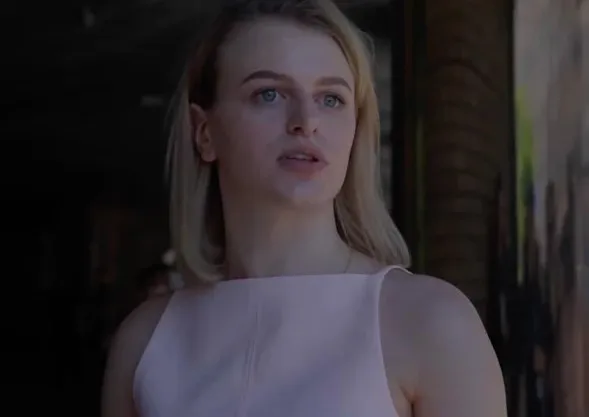
The young woman also confirmed, in a rather cynical tone, that she had deliberately wiped her feet on the rainbow flag because her shoes had gotten dirty: “My sneakers got muddy; there was a rag under my feet. It picks up dirt really well. I recommend it.”
And as is traditional with all similar public incidents, three days later Yuliana apologized in a post on Threads, saying she understood that she had offended many people with her actions but that she has a different view of the institution of the family.
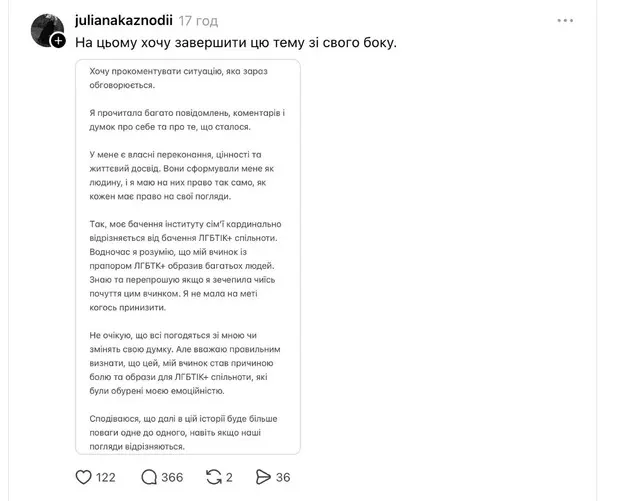
“Yes, my view of the institution of the family is radically different… At the same time, I understand that my action with the LGBTQI+ flag offended many people. I know this, and I apologize if I hurt anyone’s feelings with this act. I did not intend to humiliate anyone,” the young woman stated.
However, LGBTQI+ organizations and other social media users have not stopped calling on the beauty bar G × KYIV to respond to the situation surrounding their employee.
“The LGBTQI+ flag is a symbol of freedom and dignity for people fighting for their right to exist. Wiping one’s feet on our symbol is unacceptable and sends a message to an entire segment of Ukrainians that they are all in danger here,” noted the organization UKRAINEPRIDE.
Eventually, G Bar responded. They stated that they do not share Yuliana’s views and have terminated their employment with her—in other words, she has been fired.
“We absolutely do not condone what Yuliana said or what was done to the flag. We were outraged by this as well. Of course, we reacted immediately, making our position clear. Furthermore, we are no longer working with her,” G.Bar stated.
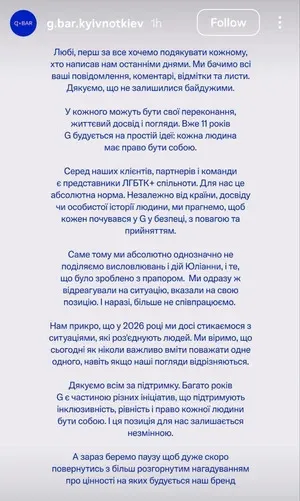
The company added that it is taking a break from communications in order to later return with a detailed reminder of the values upon which the brand is built.
On the surface, G.Bar is the story of a successful Ukrainian brand that promotes values, philanthropy, and responsible business practices. But if you look into the history of beauty salon chains, many questions arise. And the origin of the startup capital is the first question—but not the last.
Where did the money for G.Bar come from?
According to Andriy Trushkovsky, a crypto trader, Andriy Trushkovsky, co-owner of Main Cream media and former owner of the Vklybe.tv platform, was created using funds derived from a large-scale corruption scheme in the defense sector. He is referring to funds that, according to him, were illegally embezzled by Konstantin Cherednichenko—the ex-husband of the chain’s co-founder, Sabina Musina—while he was serving as deputy general director of the state-owned enterprise “Ukrinmash.”
Trushkovsky made these claims in early September on his YouTube channel. He was in a relationship with Musina for several years and claims to have inside knowledge of the business’s origins.
How G.Bar Was Born
The story of G.Bar began in 2015. That was when Sabina Musina, together with her friend Lera Borodina, opened the first beauty bar, which later grew into an international franchise chain.
At first, it wasn’t even a standalone beauty salon. The first G.Bar operated as a beautyzone inside the Oh My Look showroom—a service for renting evening and cocktail dresses that Borodina launched back in 2013 at the Lybid Business Center in Kyiv. Only later did this format evolve into a standalone salon.
The project turned out to be surprisingly successful. Just a year after its launch, the founders began selling franchises in Ukraine, and soon the brand expanded abroad. In 2017–2018, G.Bar opened locations in Poland, the Czech Republic, Georgia, and Kazakhstan. By 2019, the chain already comprised more than 35 stores in ten countries, including Russia and Belarus.
According to Ukrainian media reports, in 2021, Musina and Borodina’s business generated approximately $4.2 million in revenue, while the total turnover of the entire franchise network reached nearly $8.8 million. By 2025, G.Bar had made it onto the list of the fifty most influential Ukrainian brands.
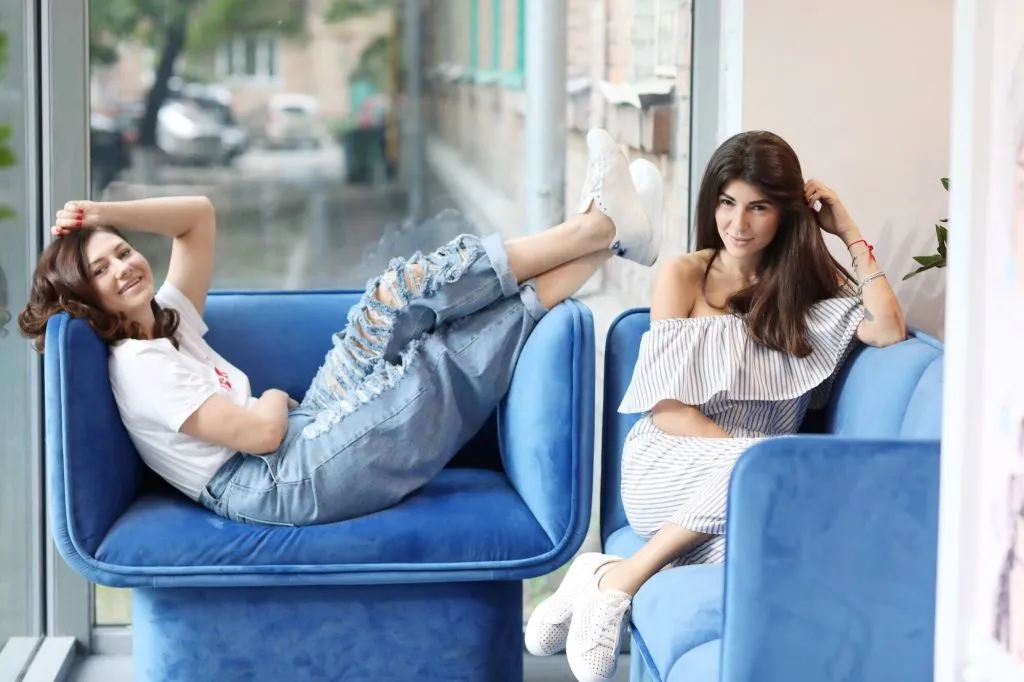
Today, the chain has over 65 beauty bars in various countries around the world. Each operates under a franchise model and has a separate owner, but all use a single brand, operational standards, and concept defined by the company’s central team.
Where Did the Start-up Capital Come From?
The key question posed by Andriy Trushkovsky is: whose money was used to create G.Bar? According to him, the start-up capital was provided by Kostyantyn Cherednichenko—Sabina Musina’s husband at the time, who has been linked to the embezzlement of state funds allocated for Ukraine’s defense.
Or did Sabina Musina and Lera Borodina finance the launch of this project on their own?
According to investigators’ rough estimates, opening the first G.Bar in 2015 could have cost about 3.5 million hryvnias, or approximately $160,000 at the exchange rate at the time. This amount included rent, renovations, interior design, furniture, professional equipment, cosmetics, tools, supplies, marketing, advertising, obtaining permits, and the payroll fund for staff.
At that time, Lera Borodina already had her own business—the dress rental service Oh My Look—which served as the inspiration for G.Bar. Back in 2012, she registered Good Good Service LLC as an advertising agency. Subsequently, this company became the owner of the Oh My Look trademark. Since May 2024, Sabina Musina has officially served as the company’s director.
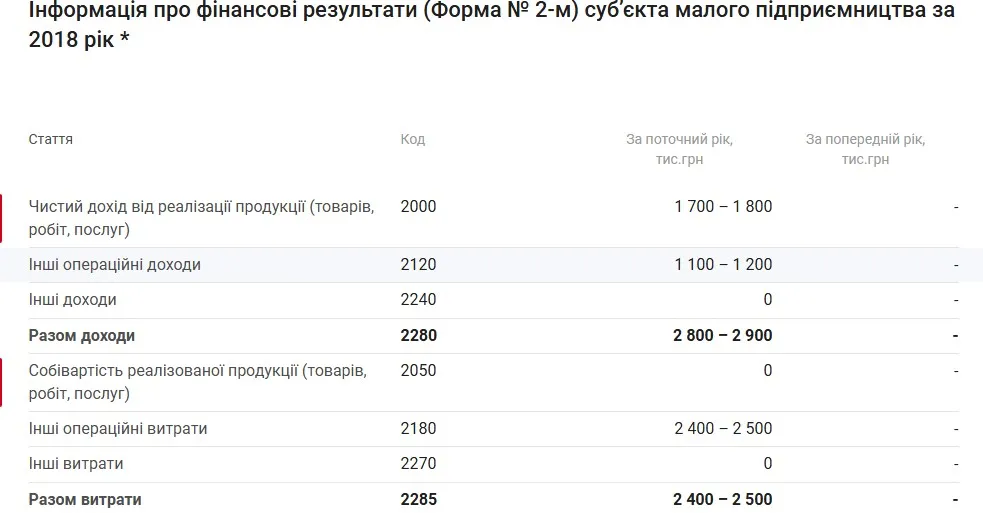
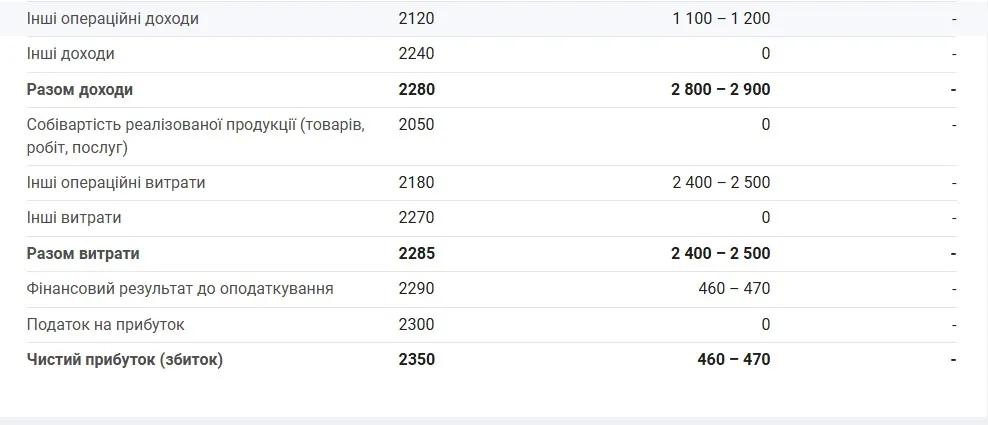
However, publicly available financial data does not indicate that this business could have accumulated hundreds of thousands of dollars to launch a new project. Since its inception, the company has effectively not filed any financial statements, and for 2014, it reported zero revenue.
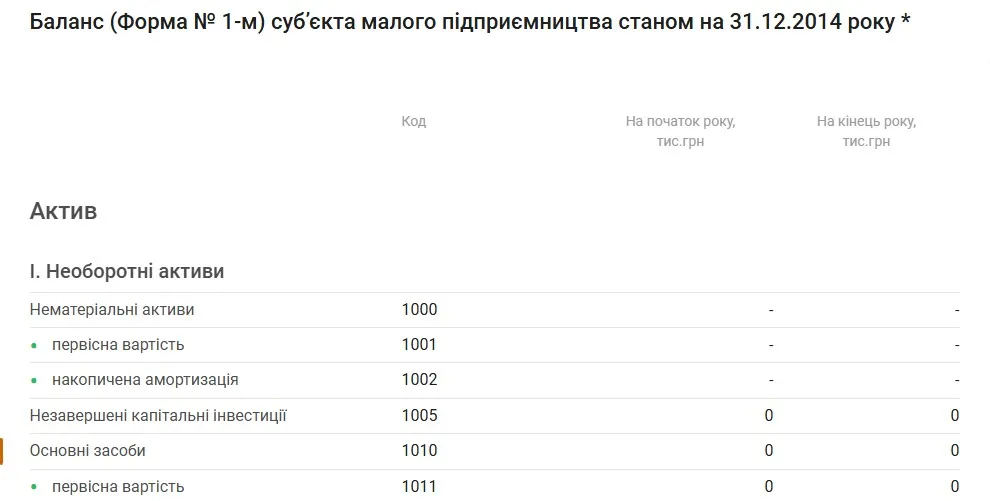
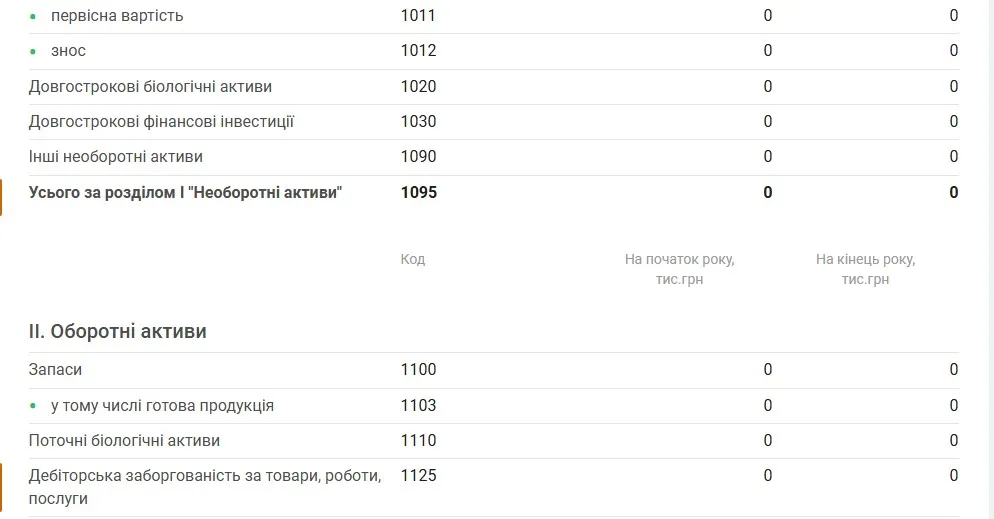
The report submitted in 2018 also shows that the company did not generate a net profit in 2017. In other words, the company has not officially reported financial results that could explain the source of such significant investments.
According to media reports, it was Sabina Musina who initiated the new business. Initially, she allegedly considered the idea of creating a children’s entertainment center, but ultimately, together with Lera Borodina, decided to focus on the beauty industry.
Prior to the launch of G.Bar, Musina’s career path had little to do with big business. Born in Baku, she moved to Zaporizhzhia with her mother when she was still a child. After graduating, she worked for several months as an assistant to the Zaporizhzhia regional prosecutor, and later devoted herself entirely to developing her personal blog on Instagram and YouTube.
Judging by her archived posts and their popularity in 2015, it’s hard to believe that the blog generated enough revenue to finance a business requiring an investment of around $160,000. There was also no information about other assets—expensive real estate, cars, or successful companies—the sale of which could have provided the necessary start-up capital.
Sabina Musina was married to Konstantin Cherednichenko. The couple officially married in April 2008; their daughter Kira was born in 2010, and in 2016—a year after the opening of G.Bar—the couple divorced.
Sabina’s Husband and Millions from the Defense Budget
At the time of the opening of the first G.Bar in 2015, Sabina Musina’s husband, Konstantin Cherednichenko, was serving as deputy general director of the state-owned enterprise “Ukrinmash,” which was part of “Ukroboronprom” and was engaged in the export and import of weapons.
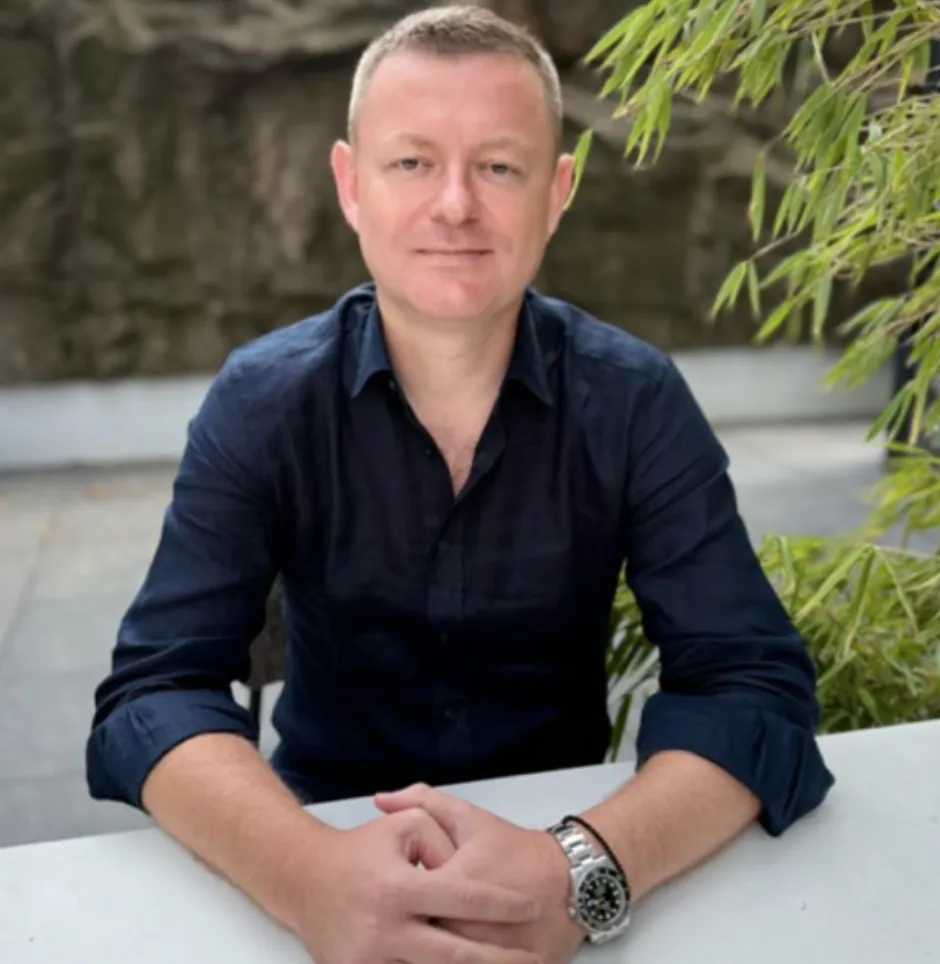
It was during this period, according to investigators, that Cherednichenko became one of the key participants in a scheme to siphon off funds from the state-owned enterprise through fictitious agency contracts.
In March 2016, NABU detectives opened a criminal investigation into the embezzlement of “Ukrinmash” funds. According to the case file, in May 2015, the company entered into an agency agreement with the British company Fuerteventura Inter LP, which was allegedly supposed to assist with the sale of ammunition to the United Arab Emirates.
The company received nearly $1.95 million for its “services.” However, the investigation found that the firm was established shortly before the contract was signed, had a registered capital of only two pounds sterling, had no experience in the arms market, and in fact provided no services to “Ukrinmash.” After the funds were received, they were transferred through a series of foreign companies, and part of the money eventually returned to Ukraine.
According to the investigation, all the documents that served as the basis for the payment of nearly two million dollars were signed by Konstantin Cherednichenko, who was acting as the company’s CEO at the time.
However, this was not the only incident. As early as 2018, NABU opened another criminal case regarding a similar scheme. Investigators determined that, through fictitious agency agreements with Triangle Group Incorporated—whose director was an acquaintance of Cherednichenko—more than 3.5 million hryvnias were illegally siphoned off from the state-owned enterprise.
It was this case that went to trial. In November 2024, the High Anti-Corruption Court found Kostyantyn Cherednichenko guilty of official forgery and embezzlement on an especially large scale. The court sentenced him to eight years in prison, a three-year ban on holding executive positions, and the confiscation of two-thirds of his assets.
However, the verdict never marked the beginning of his sentence. Until the verdict became final, Cherednichenko remained free on bail, and by 2025, it became known that he had left Ukraine, despite the restrictions imposed by the court.
Even before the verdict was handed down, Cherednichenko began divesting himself of his assets. He sold some of his real estate and transferred ownership of the rest to close relatives. Among these properties was a 117-square-meter apartment in the “Tvorets” residential complex in Kyiv, which he purchased in 2016 and later gifted to Sabina Musina. According to available information, the co-founder of G.Bar still lives there today.
It is currently impossible to determine whether funds obtained through criminal means were used to launch G.Bar. At the same time, the timeline of events is noteworthy. At the time the chain opened, neither Sabina Musina nor Lera Borodina officially reported any income that could explain investments of this scale. Instead, Musina’s husband was already working in a position where, according to the investigation, schemes were carried out to siphon off millions from a state-owned defense enterprise.
Why G.Bar Is Still Operating Without Its Own LLC
The issue of start-up capital is not the only question raised by G.Bar’s financial model. Although the brand has grown over the past 10 years from a single salon in Kyiv to an international franchise network, it still does not operate in Ukraine through a separate legal entity. Instead, a significant portion of its operations is structured through individual entrepreneurs.
Operating through sole proprietorships is not, in and of itself, a violation of the law. Thousands of Ukrainian companies use this structure. At the same time, in the case of G.Bar, the scale of the business and its structure raise questions.
Sabina Musina registered her sole proprietorship on June 17, 2015—almost simultaneously with the launch of the first G.Bar. It was through this entity that payments for the salon’s services began to be processed.
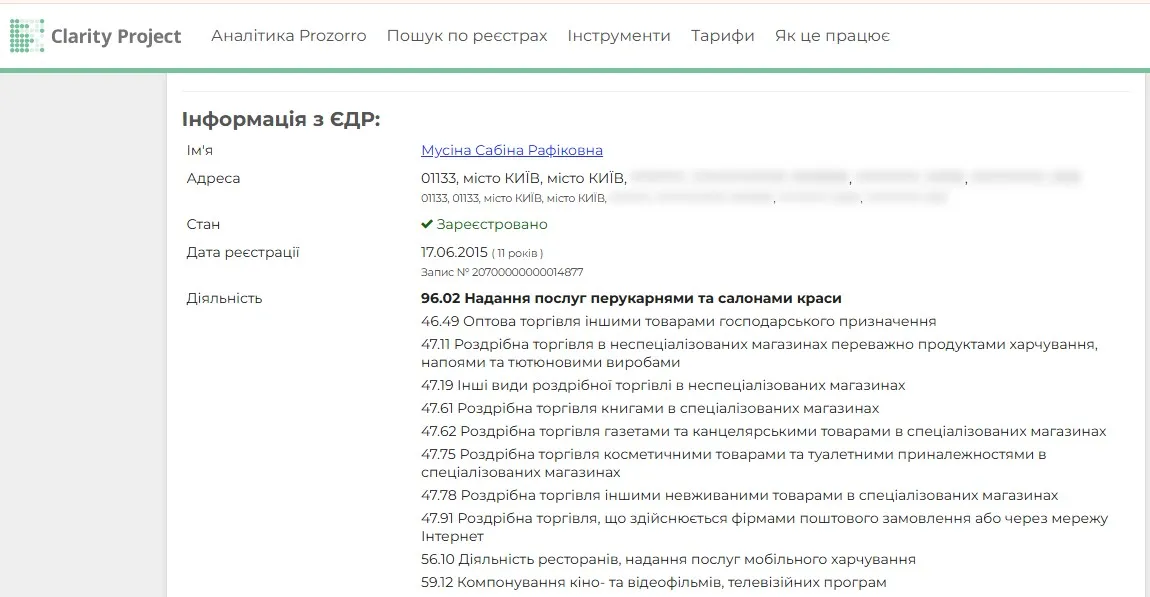
However, the law sets an annual income limit for third-group sole proprietorships. When revenue approaches this limit, businesses typically transition to operating as a limited liability company or under a different tax regime. In the case of G.Bar, this did not happen. Instead, as public data shows, the network operates using sole proprietorships registered to other individuals.
At the time of writing, the G.Bar online store is no longer operational, and the website states that the team has “gone offline”; the contact information for the sellers still lists the sole proprietorships of Vladyslava Kolyada and Veronika Kozeletska.
If these sole proprietorships are indeed used to distribute revenue within a single business, the question arises: why hasn’t a company that, according to Forbes, was generating millions in revenue as recently as 2021, yet transferred its operational activities to a legal entity?
The financial statements of the sole LLC associated with the founders of “Good Good Service” are no less intriguing. Despite revenues in the millions, the company has reported either losses or minimal profits in recent years. For example, according to its 2025 financial statements, with total revenue of 9.27 million UAH, the company’s net profit amounted to only 344.3 thousand UAH. By comparison, in 2024, with revenue of 9.81 million UAH, the company reported 198.4 thousand UAH in net profit. Another detail concerns franchise fees.
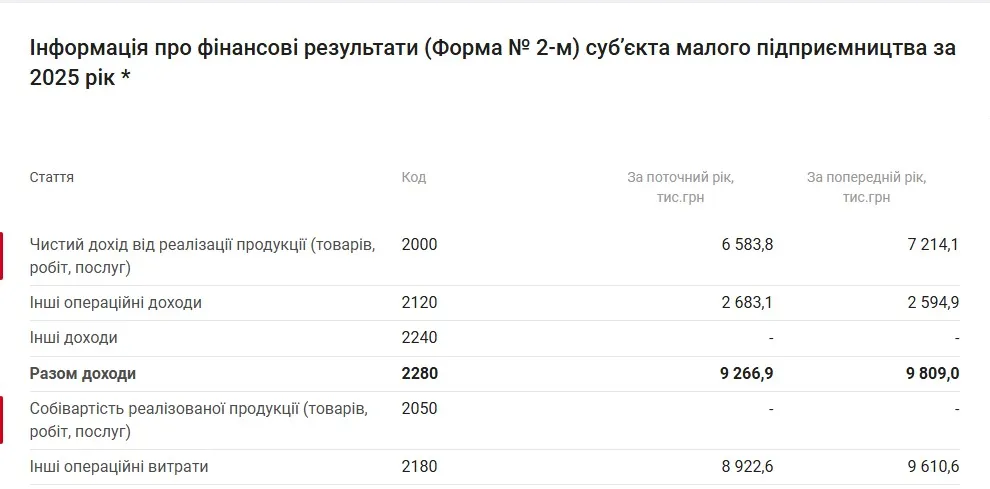
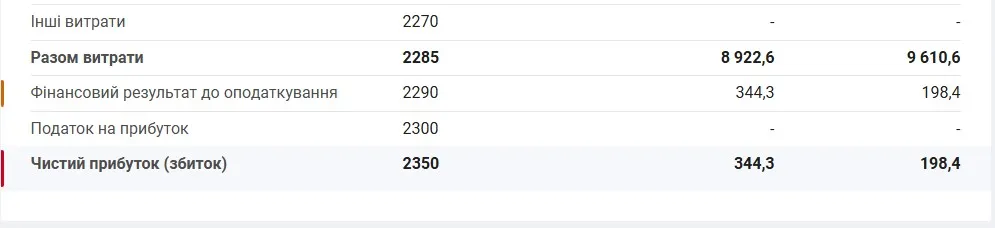
According to investigators, between 2019 and 2023, Sabina Musina’s sole proprietorship officially received only a few small royalty payments from Good Good Service LLC. At the same time, the G.Bar chain now comprises dozens of salons in various countries, and its total revenue, according to Forbes estimates, amounted to $8.8 million as early as 2021.
Thus, an analysis of publicly available data shows that the version put forward by Andriy Trushkovsky does not appear to be unfounded.
What’s Next
Immediately after Andriy Trushkovsky’s public statements, the co-founders of G.Bar called them false and promised to defend their business reputation in court. Now this story is moving from the public sphere to the legal arena.
The first court hearing in the lawsuit filed by the G.Bar chain against Andriy Trushkovsky is scheduled for July 1. It is there that the parties will publicly present their arguments and evidence for the first time. If new documents or testimony regarding the origin of G.Bar’s seed capital are made public during the proceedings, they may provide answers to questions that remain unresolved.
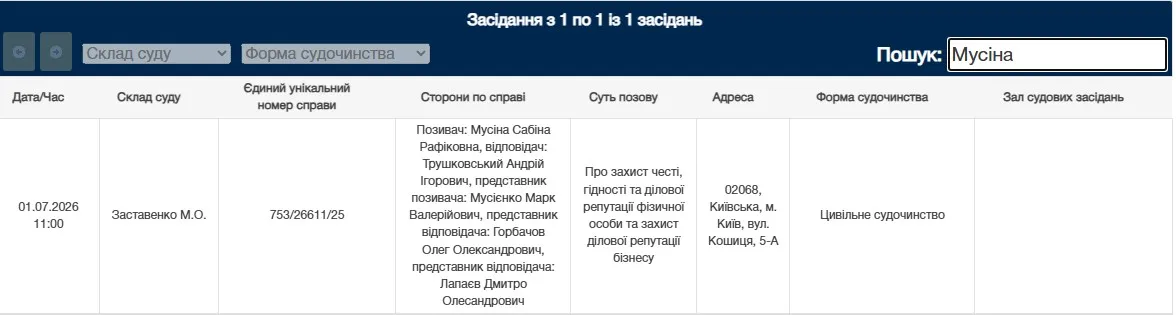
Incidentally, the controversy surrounding allegations of possible corruption in the origins of G.Bar’s start-up capital has already damaged the brand’s reputation. According to Andriy Trushkovsky, after the public conflict began, the business partnership between Sabina Musina and Lera Borodina effectively ceased to exist. To back up his claims, the blogger published screenshots of his correspondence with Borodina and also addressed Musina with the following statement:
“Even your best friend and business partner has turned her back on you, because you are the very embodiment of evil posing as a victim. Go ahead, ‘get your act together’ with your notaries… I’m waiting and ready to go over the dates and transactions and extend your husband’s sentence.”


