
Traditional clothing with a story: the most interesting collections of modern Ukrainian vyshyvanka brands
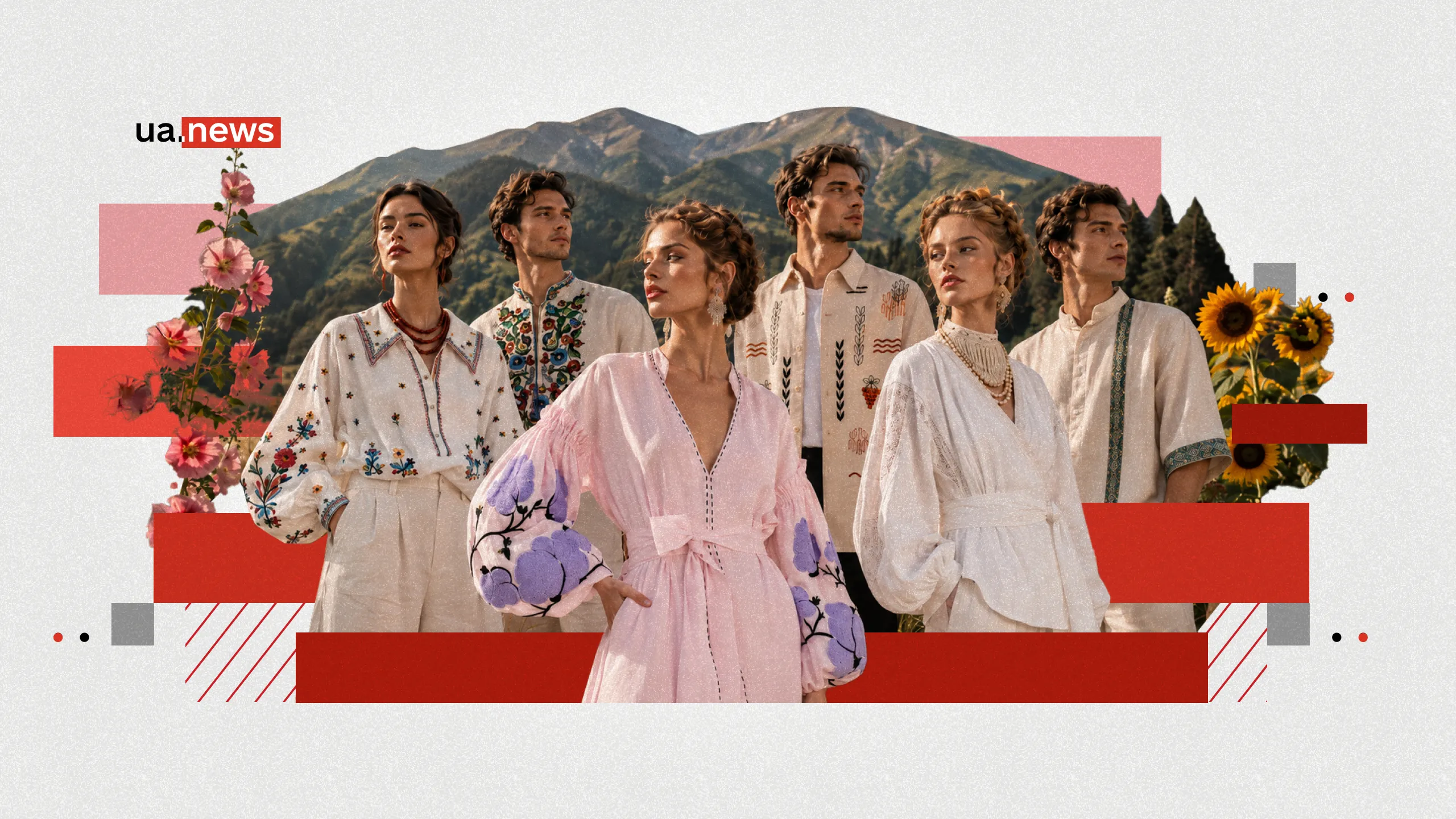
Contemporary Ukrainian vyshyvanka brands not only promote traditional clothing but also transform it into a cultural statement. Through patterns, symbols, and original collections, designers tell stories about the repressed intelligentsia, the war, the Carpathian Mountains, masterpieces of Ukrainian literature, and Ukraine’s national memory.
In 2026, World Vyshyvanka Day will be celebrated on May 21. This holiday does not have a fixed date, as it is traditionally observed on the third Thursday of May each year.
On the eve of this holiday, UA.News is publishing a selection of fashion brands that create embroidered shirts imbued with profound meaning.
Etnodim
One of the most well-known Ukrainian manufacturers of contemporary embroidered clothing and linen textiles. The company’s history began in 2009, when Andriy Cherukha, a student at Ostroh Academy, founded an online store for handmade vyshyvankas. Later, Etnodim moved to Kyiv, where they opened a showroom, and with the start of the full-scale invasion, they relocated to Lviv. Interestingly, Etnodim attaches a tag to every embroidered shirt listing the names of those who worked on creating the garment. In this way, the brand highlights the contribution of every team member.
Embroidered clothing from Etnodim has been repeatedly chosen to create looks for public figures: President Volodymyr Zelenskyy and First Lady Olena Zelenska, Queen Letizia of Spain, Ukrainian Prime Minister Yulia Svyrydenko, as well as cultural figures Yaroslava Hres, Jamala, and the band Kalush.
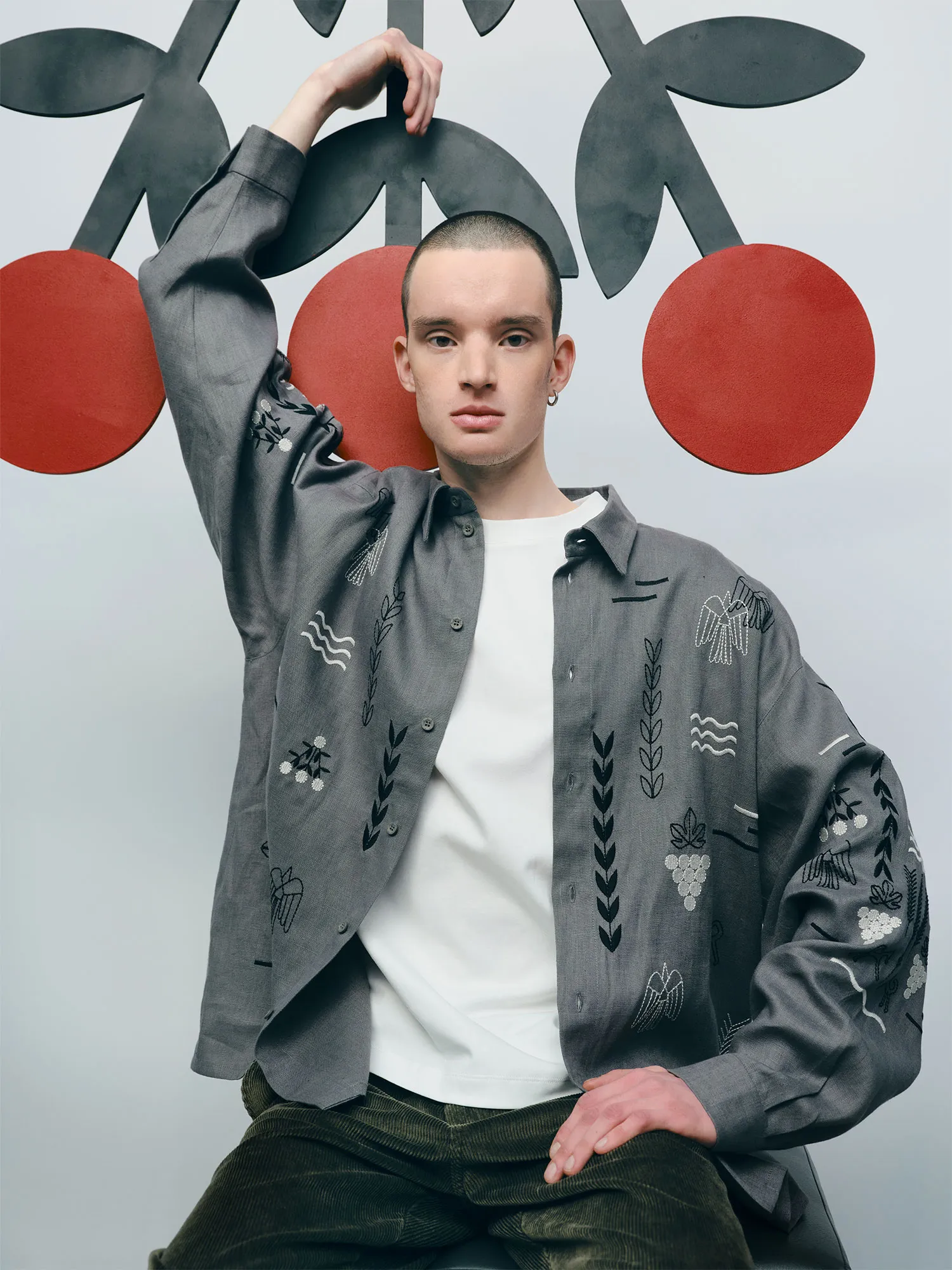
Among the brand’s notable projects is the embroidered shirt “Slovo.” Its design is dedicated to the “Slovo” house in Kharkiv, where representatives of the Ukrainian intelligentsia who suffered repression and persecution lived. The ornamental motifs evoke figures such as Mykola Khvylovy, Les Kurbas, Ostap Vyshnia, Mykhailo Yalovyi, and others. In late 2022, this embroidered shirt became part of the Ivan Honchar Museum’s collection.
Vita Kin
The brand, which has become an international phenomenon, was created by designer Vita Kin in 2013. She transformed the modern embroidered shirt into a high-fashion staple: her dresses and shirts featuring Ukrainian motifs have been worn by global celebrities, including Demi Moore and Dita Von Teese. The designer works in the boho-luxe style, combining traditional Ukrainian embroidery with luxurious fabrics and loose silhouettes.
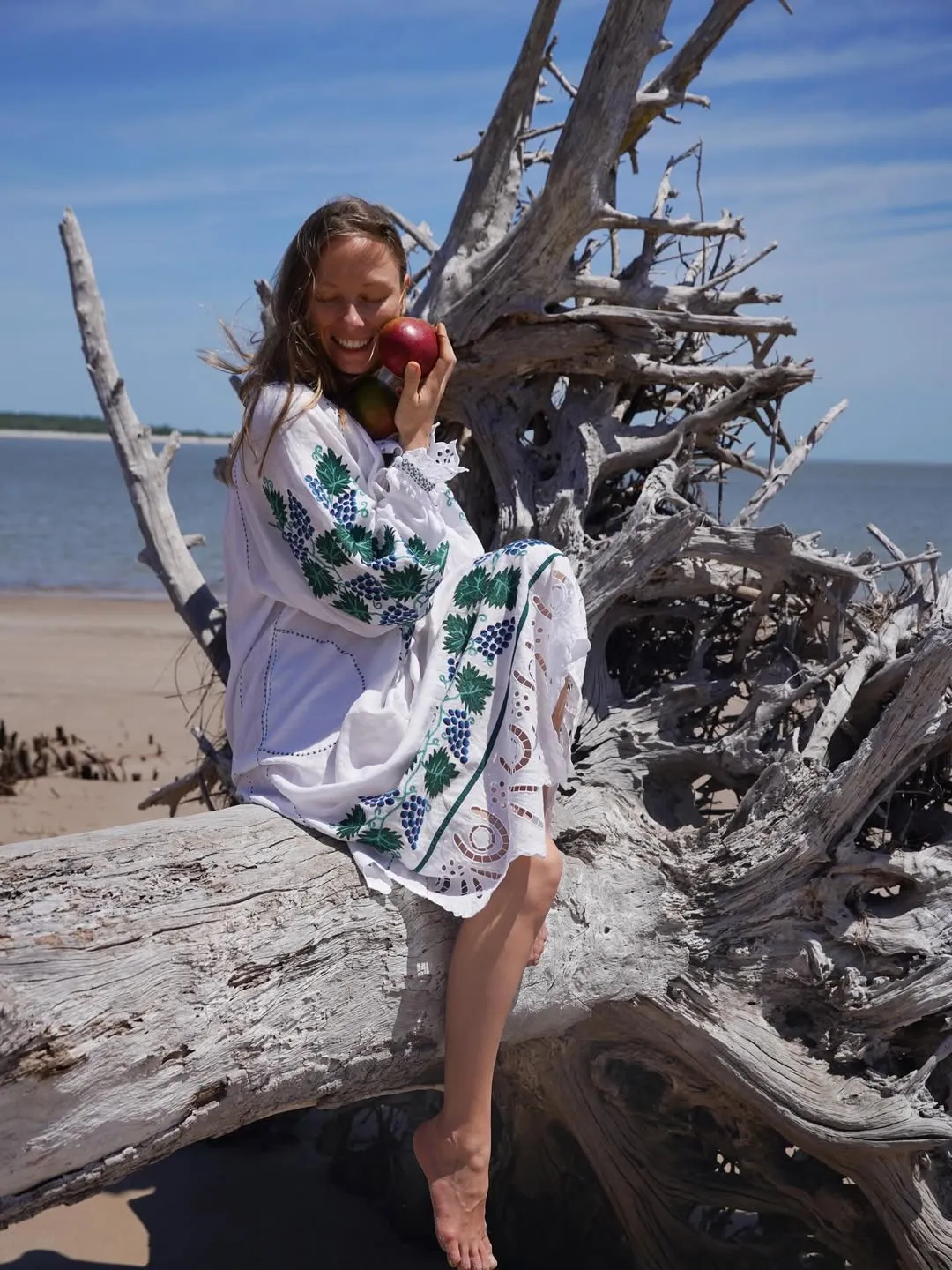
The Vyshyvanka by Vita Kin collection was a true breakthrough, effectively launching a global trend for Ukrainian ethnic motifs in fashion. It reinterprets Borschiv and Poltava ornaments, presenting them in the form of premium designer clothing. This iconic collection has been featured in Vogue and Harper’s Bazaar and has become a fashion symbol of Ukraine around the world.
Free People
The brand was founded in 2014 during the Revolution of Dignity. The designers describe their vyshyvankas as stories of free people, as well as the embodiment of an emotional connection to their homeland and an invisible source of strength. The brand’s collections are dedicated to Ukrainian folk songs, traditional cuisine, and motifs from hand-embroidery across various regions. One of the most evocative series was created for Ukraine’s Defenders’ Day and is titled “Weapons.” It is a limited edition of men’s and women’s embroidered shirts featuring motifs of Ukrainian weaponry.
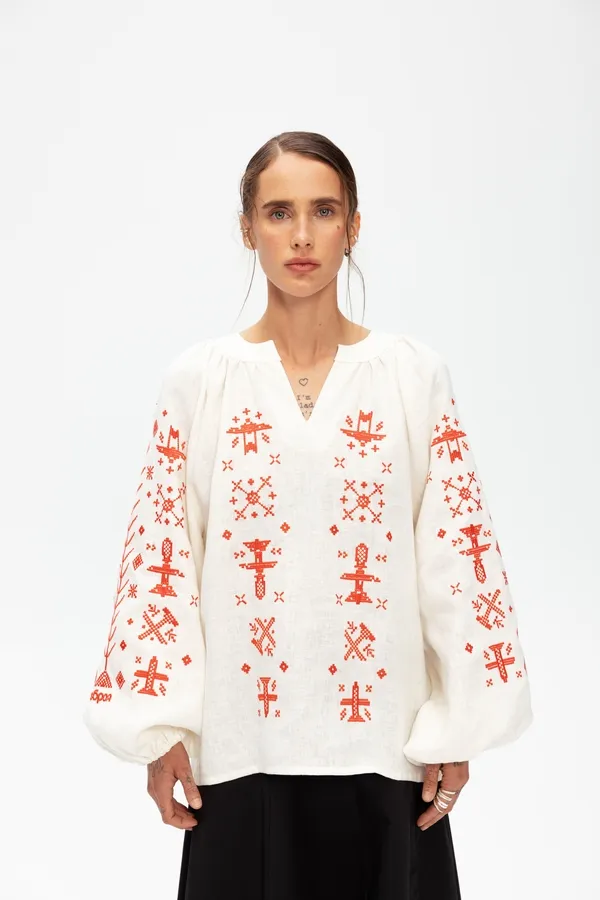
The design features stylized images of FPV drones, long-range and reconnaissance drones, as well as the “Neptune” cruise missile that destroyed the Russian cruiser “Moscow.” The brand has enlisted Ksenia (Hertz), a female soldier from the 12th Special Forces Brigade of the National Guard “Azov,” and Dmytro Kozatsky (Orest), a veteran of the “Azov” regiment and defender of Mariupol, for the advertising campaign.
March 11
The brand was founded in New York in March 2015. Its creators are Ukrainian stylist Robert Mishchenko, who has worked with stars such as Naomi Campbell, Milla Jovovich, and Tina Karol, along with former model Svitlana Golovchenko, who has graced the covers of Vogue and Harper’s Bazaar in China. The brand’s name is linked to the founder’s birthday, and the project itself arose from a desire to combine Ukrainian ethnic motifs with contemporary European fashion. The brand releases limited-edition collections of linen dresses, shirts, and outerwear featuring hand embroidery.
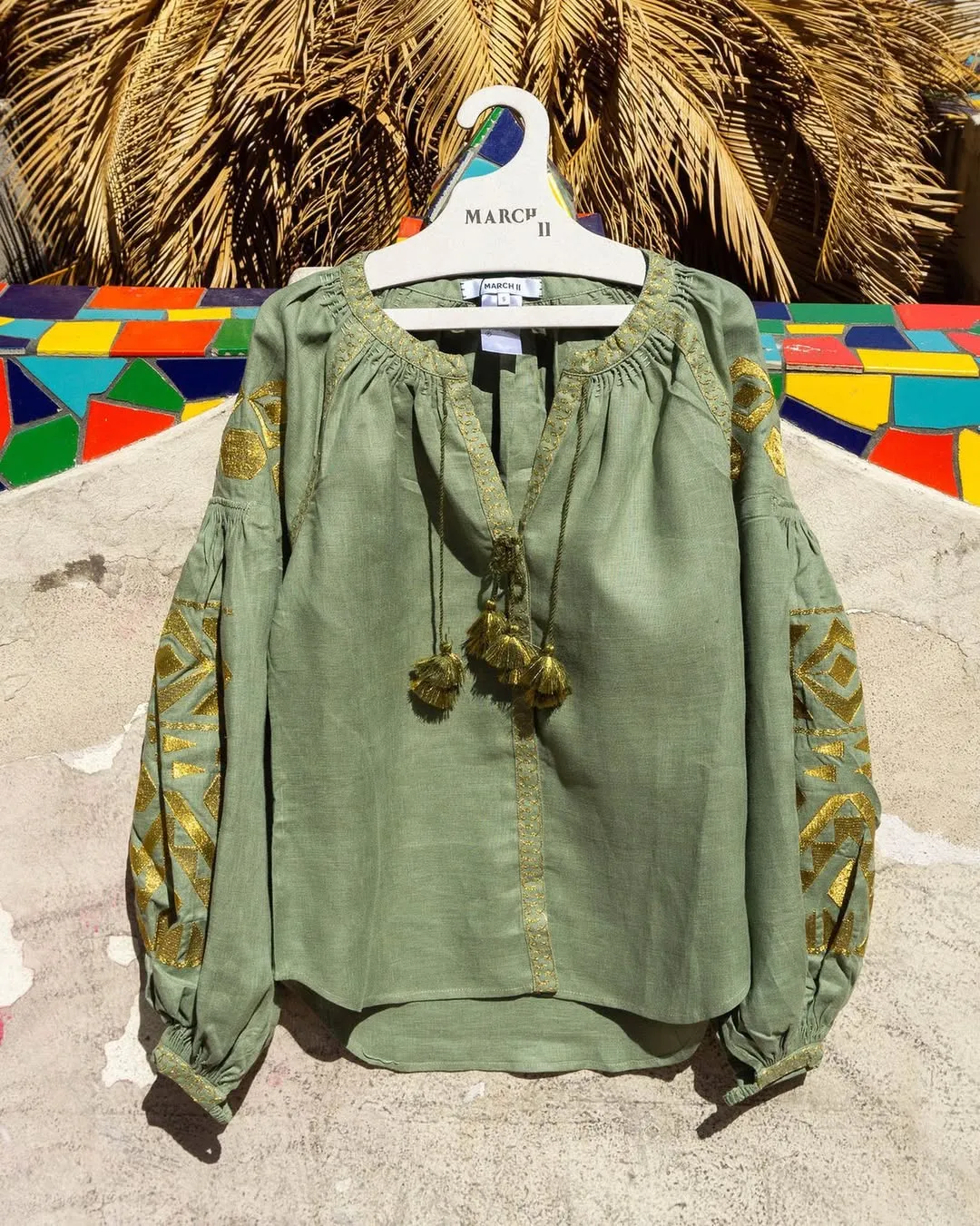
One of the most interesting collections was inspired by the Ukrainian Carpathians and Hutsul ornaments. It combines intricate hand embroidery, natural linen, and a modern oversized cut. The brand has gained popularity in Europe and the U.S., and its pieces have appeared in the wardrobes of international influencers and fashion bloggers.
2KOLYORY
This brand was launched in 2015 and named after the legendary Ukrainian song “Two Colors.” Founded by husband-and-wife team Igor and Oksana Kovalenko, the brand is known for its bold reinterpretation of Ukrainian national fashion, blending tradition with new technologies. 2KOLYORY gained popularity thanks to its limited-edition collections for festivals and expressive artistic projects.
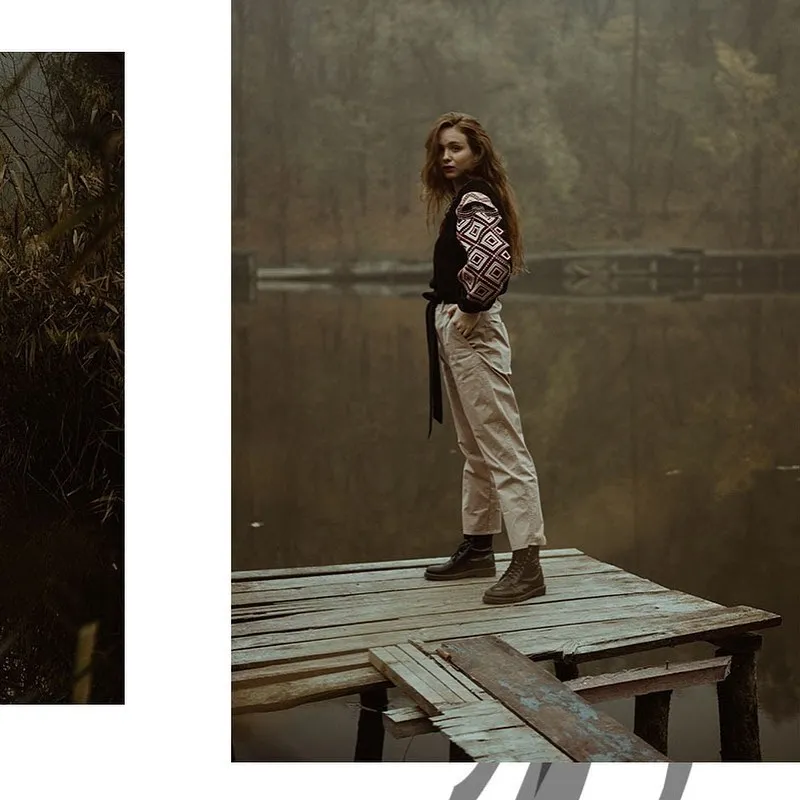
Among the brand’s notable projects are modernized vyshyvankas from Maria Dolinovska’s “Rusovychi” family museum. For ten years, the artist studied and collected traditional costumes from Western Volhynia and the Volhynian Pribuzhzhia region. The updated ethnographic designs reflect the rich traditions of Eastern Podillia, Sumy, Ivano-Frankivsk, and other regions.
Hrushenka
The makers of this ethnic clothing made their debut in 2022 under the Pupu brand. Following a rebranding in 2024, the team officially changed the name to Hrushenka. The brand’s creators offer embroidered shirts, corsets, dresses, jackets, and vests that blend symbolism, style, and comfort. The garments are primarily made from natural linen using authentic techniques and symbolic patterns. The collections are inspired by Ukrainian literature and art (the “Kaidashev Family” shirts, the “Mavka and Lukash” corsets, and the “Forest Song” collection).
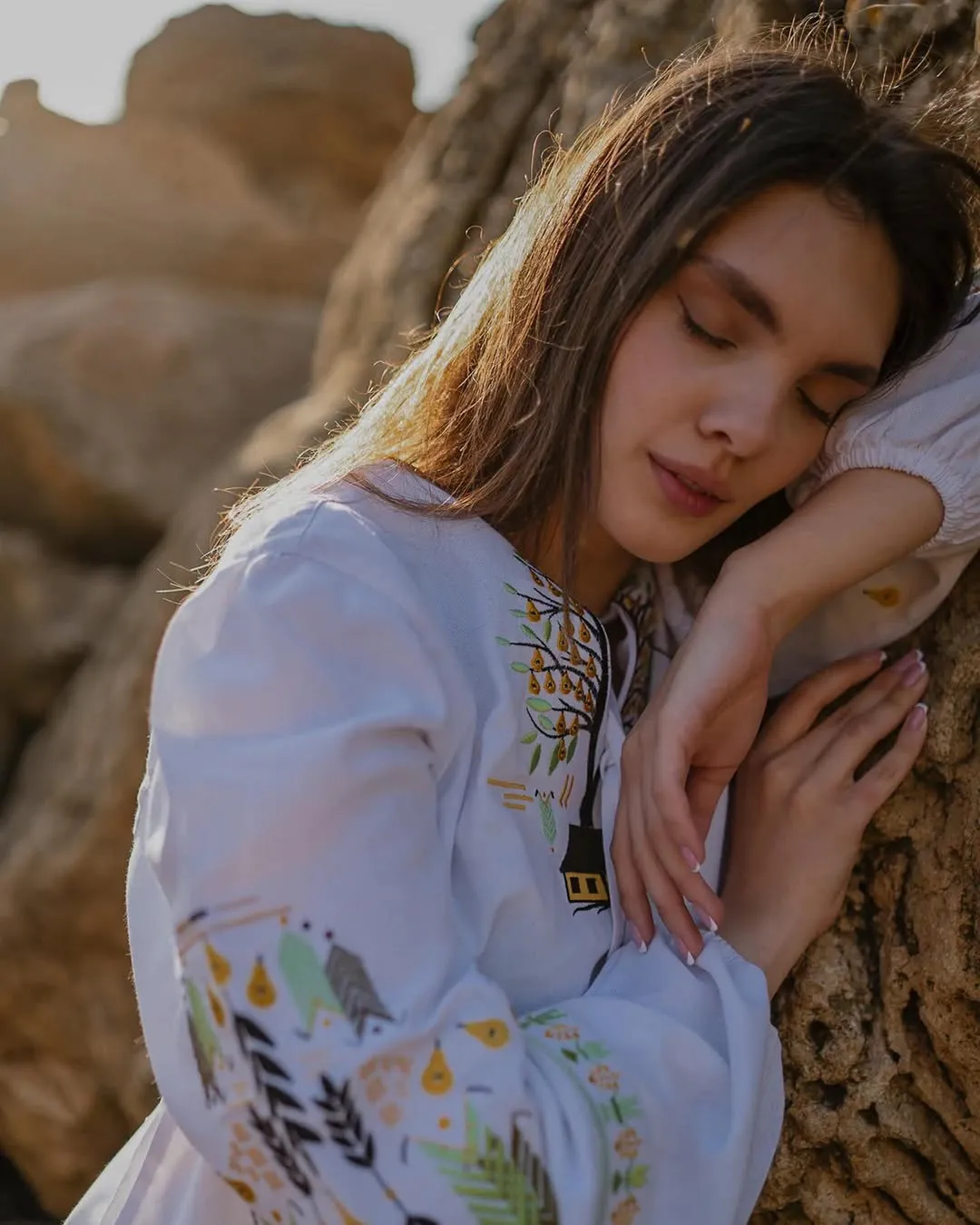
For example, the “The Kaidashev Family” embroidered shirts are a true textile interpretation of Ivan Nechuy-Levytsky’s novella, which depicts the life of a Ukrainian peasant family with its everyday dramas, love, and conflicts.
EmbroideredGem
The ethnic clothing manufacturers from Sumy have been in business since 2016. In their collections, they reinterpret ancient Ukrainian motifs while incorporating global trends. The designers aim for the authenticity and quality of the embroidered shirts to make them a new family heirloom that people will want to preserve and pass down.
In many collections, the brand draws on traditional ornaments and techniques from the Sumy, Poltava, Dnipro, and Slobozhanshchyna regions. For example, the “Crown of Slobozhanshchyna” style is based on a fragment of embroidery from a unique late 19th-century Bohodukhiv towel from the Ivan Honchar Museum, as well as Ukrainian-themed paintings by Chuguev native Ilya Repin and portraits of Kharkiv social activist, educator, and patron of the arts Khristina Alchevska in traditional dress.
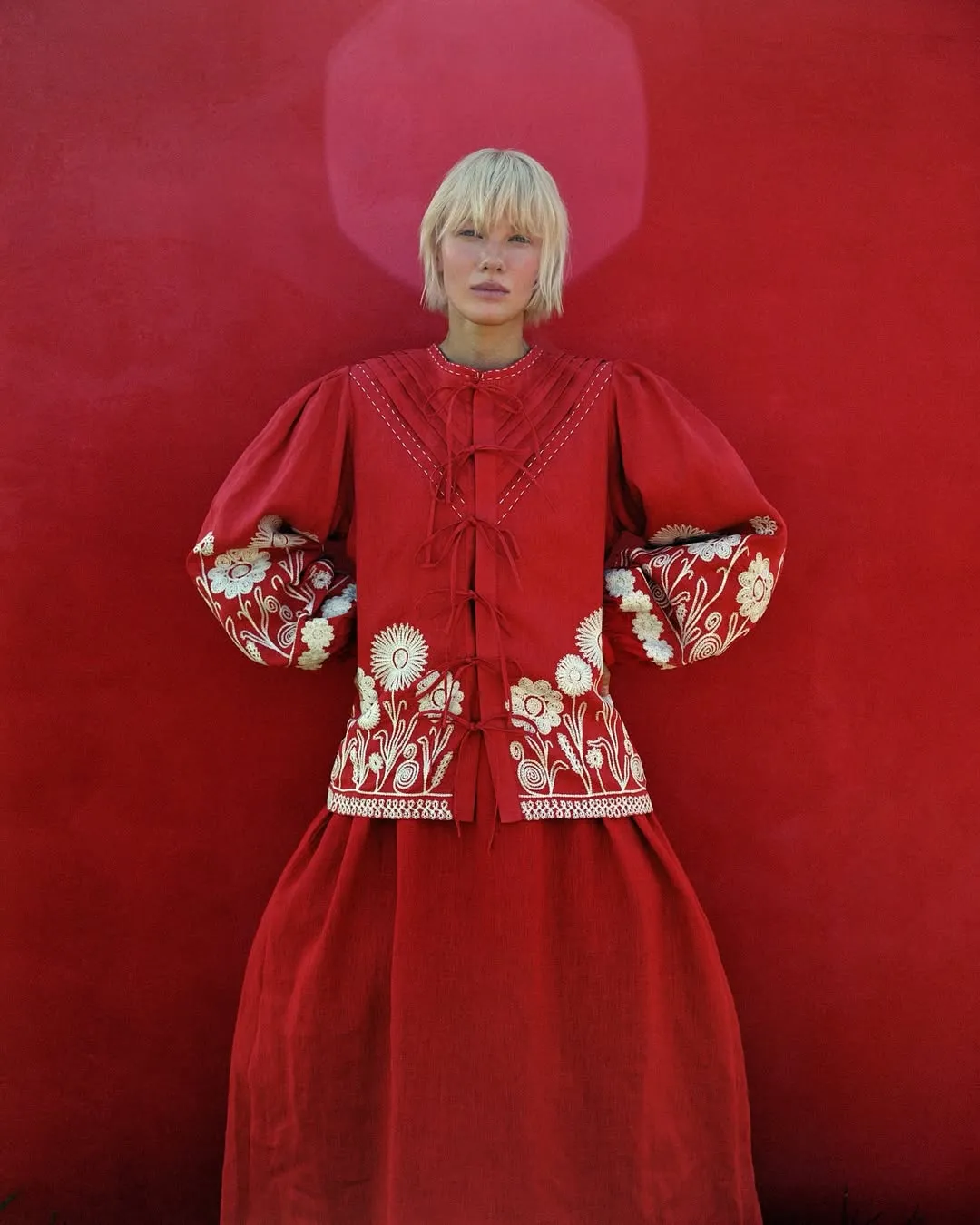
The creators of the collection explain that the name “The Crown of Slobozhanshchyna” has a double meaning. First and foremost, it is, of course, a wreath of imaginary flowers, but it is also a gathering and interweaving of the prominent figures of Slobozhanshchyna—cultural and public figures who preserved and developed this region a century ago and who inspire us today.
GAPTUVALNYA
A well-known brand of embroidered clothing founded in Ivano-Frankivsk by entrepreneur Nataliia Herheliuk. Clothing from GAPTUVALNYA has become popular among Ukrainian and international influencers. It is worn by First Lady Olena Zelenska.
The creators of this brand believe that traditional patterns carry much more than just an aesthetic component—they are a manifesto of love for Ukrainian traditions and values. Right now, Ukrainians need this energy more than ever: a connection to our ancestors and an awareness of our own identity can give us confidence in the future, as well as hope and faith.
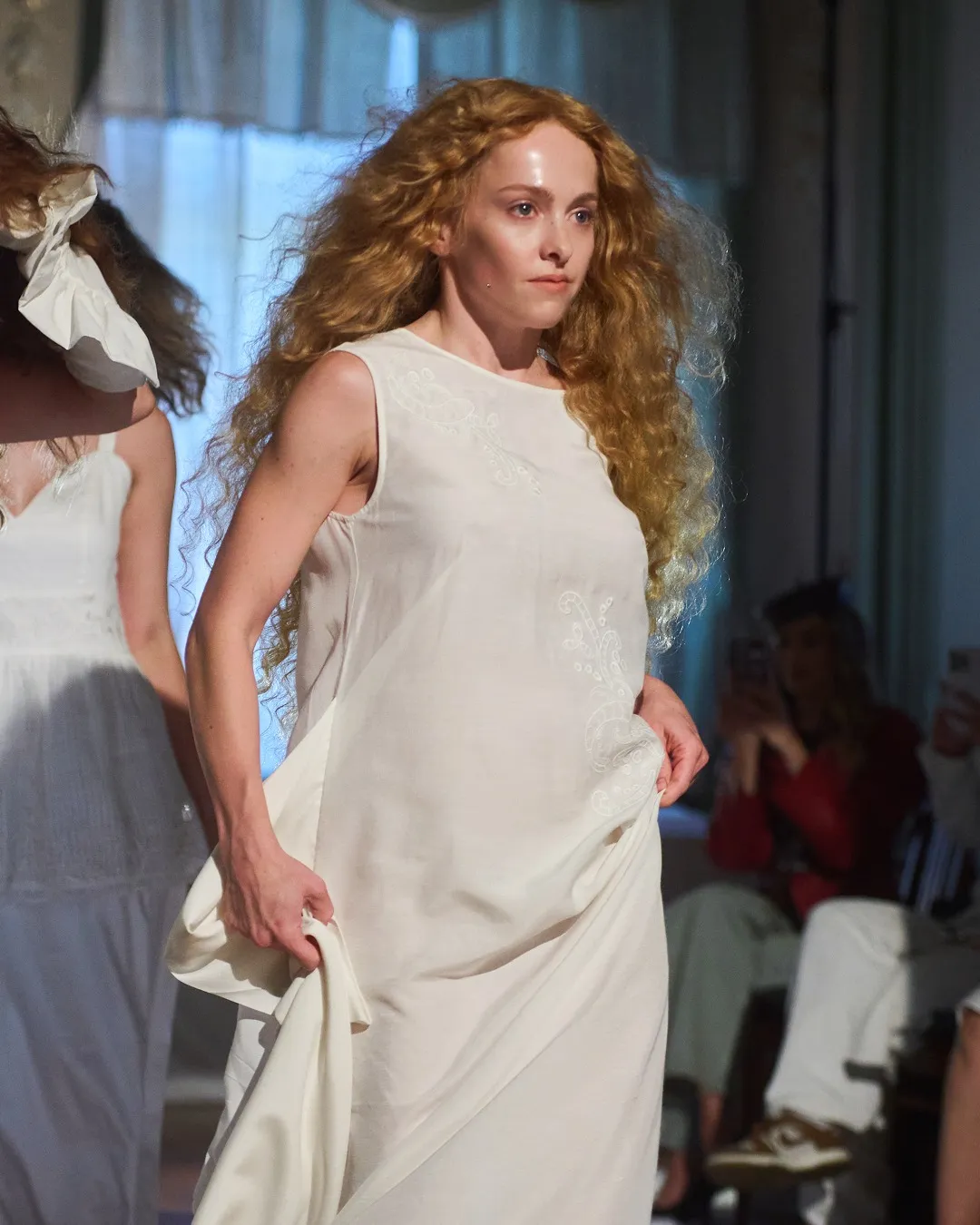
Among the brand’s many collections, the “Rusalky Dnistrovi” series is imbued with special symbolism, inspired by the first Ukrainian-language almanac, published in 1837 in Lviv. The publication is considered a symbol of the cultural awakening and national self-assertion of Ukrainians in Galicia. The collection’s concept is a fusion of fashion, literature, and historical memory.
Read also:
Mothers of Billionaires: Who Was Behind the Success of Musk, Jan Koum, Akhmetov, and Pinchuk


