
Apple has changed how Siri works in China: user data will be processed by Alibaba
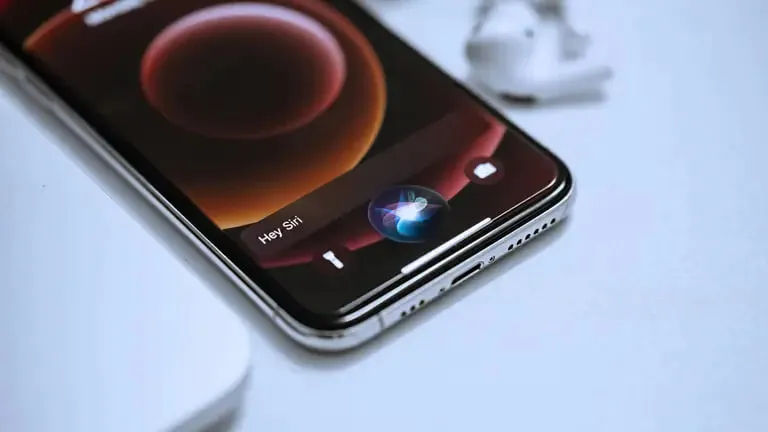
Apple has revealed details about how the updated AI-powered Siri will work for users in China. The technical approach will differ from the one the company uses in most other markets, which has already raised questions about data privacy.
For the Chinese market, Apple plans to use Alibaba’s Qwen AI model. Meanwhile, in other countries, the company is partnering with Google and using Gemini models for Siri’s new AI features.
Why will Siri work differently in China?
The reason for this decision is related to Chinese legislation. Local regulations require the use of Chinese AI models in such services, so Apple must work with a local technology partner.
The use of Qwen came to light after Apple published an updated user guide in Chinese. The document was brought to light by Reuters. The guide describes how the new features work on the Mac, but Reuters reports that the same model will also be used on the iPhone, iPad, and Vision Pro.
In other words, this is not a feature exclusive to Mac computers. Qwen is set to become the foundation for Apple’s new AI capabilities across the company’s various devices for the Chinese market.
At the same time, the choice of a localized model may have implications beyond just Siri’s functionality. A separate issue concerns exactly how user data will be processed and what privacy safeguards will be in place when using these features.
How does Apple work with Gemini in other countries?
In most markets, Siri’s new AI features will use Google’s Gemini models. Computations will be performed either on Apple’s own Private Cloud Compute servers or on Google servers specifically allocated for Apple.
Apple emphasizes specific privacy requirements for Siri AI operations. These must meet the same standards that apply to Private Cloud Compute servers.
One of the key principles of this system is that neither Apple nor Google has access to user interactions with the AI. In other words, the companies must not be able to view the requests and other data that users transmit to the system while using the new Siri features.
In China, the situation differs due to local legal requirements.
Why have privacy concerns arisen?
In China, Apple cannot simply use the same Gemini model that is available to users in other countries. Instead, the company must use a Chinese model—in this case, Alibaba’s Qwen.
Reuters notes that this requirement is likely related to the government’s ability to monitor the use of AI systems. At the same time, there is no reason to believe that specific users’ data will automatically be transferred to Chinese authorities.
However, Apple has not yet clarified whether the Chinese version of Siri will have exactly the same privacy guarantees as systems that use Private Cloud Compute or Google’s dedicated servers.
There is another important detail. According to Reuters, Mac users in China will need their own Qwen account to use Qwen. They will have to log in to that account to use the service.
This requirement is particularly noteworthy because it differs from Apple’s described approach to processing Siri requests in other markets. The existence of a separate account does not in itself prove that Alibaba will have access to all user data, but it does indicate that the service’s architecture in China will be different.
What new capabilities will Siri gain with Qwen?
According to Apple’s updated Chinese-language guide, users who agree to use Qwen will be able to receive more detailed answers to certain queries via Siri.
The AI will be able to handle more than just text-based questions. Among the announced capabilities are the analysis of photos and documents.
This will allow Siri to handle more complex tasks than those traditionally associated with Apple’s voice assistant. The system will be able to analyze information provided by the user and generate more detailed responses.
Qwen will also be available for the Writing Tools feature. It will be able to use Alibaba’s service to generate text or images based on the user’s description.
Thus, the Chinese version of Siri AI will cover several areas at once—working with text, photos, documents, and content generation.
How will the Chinese version of Siri differ from the global version?
The main difference lies not only in the name of the AI model. Outside of China, Apple uses Google’s Gemini in combination with its own Private Cloud Compute infrastructure or dedicated Google servers. For this system, the company has outlined requirements designed to restrict access to user data.
In China, however, Alibaba’s Qwen will be used, and Mac users, according to Reuters, will need a separate Qwen account.
Apple has not stated, however, that Chinese users are completely deprived of privacy protections. Therefore, it is not yet possible to conclude that their queries will definitely be viewed by Alibaba or Chinese authorities.
At the same time, the difference in the services’ architecture is evident. It demonstrates just how significantly local regulatory requirements can influence the operation of Apple’s global AI products.
For the company, this means it must develop different technical solutions for different markets. For users, it means a potential difference in how the same Siri features work and which data processing rules apply to them.
9to5mac reports on this.
Apple will stream Friday Night Baseball games on Vision Pro.
The most reliable smartphone of 2026 has been named.
Apple will allow users to rent iPhones and other devices with the option to buy them later — Bloomberg




