
Astrophotographer Kevin Boardman captures details of the Crescent Nebula
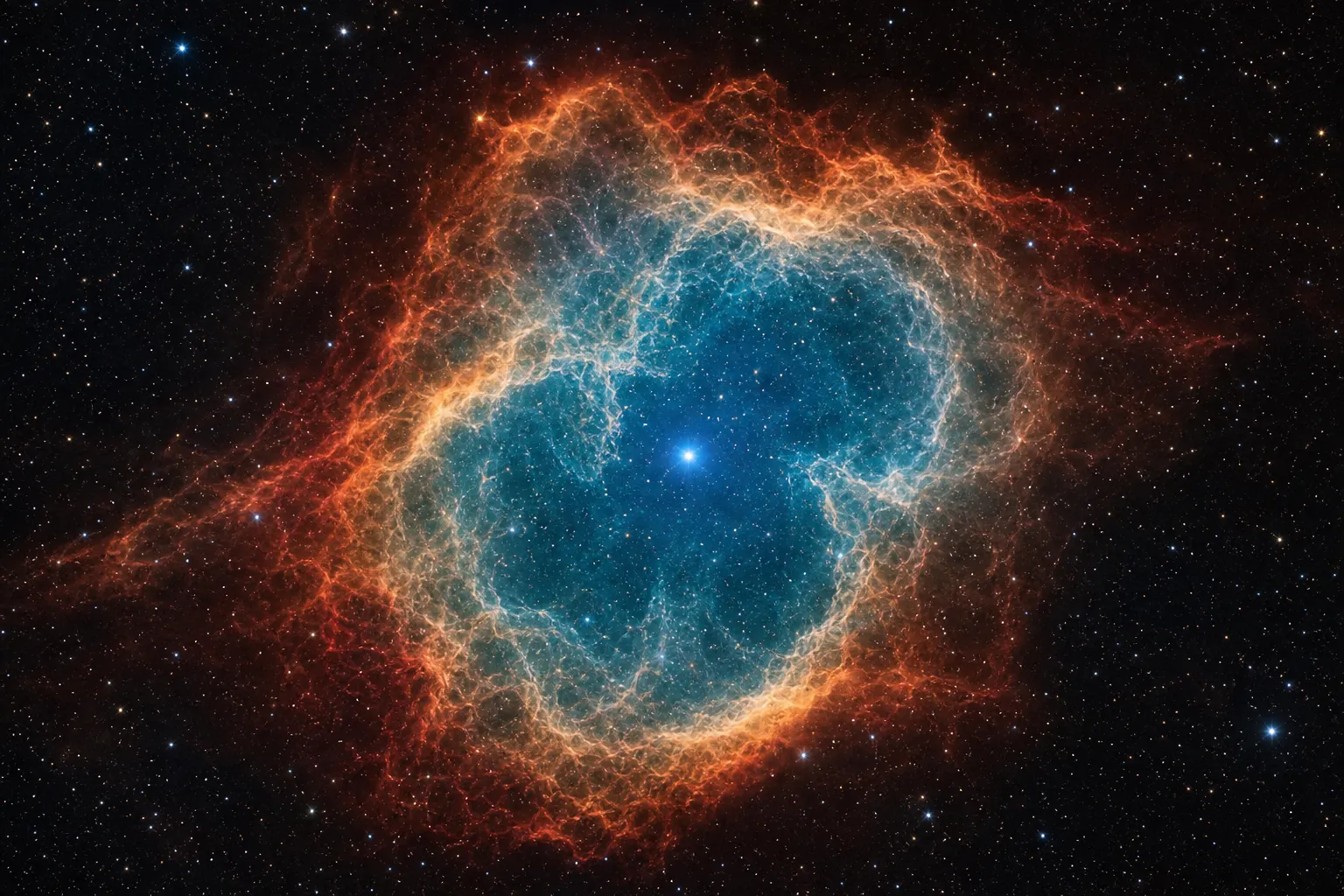
Astrophotographer Kevin Boardman created an image of the Crescent Nebula in the constellation Cygnus, showing intricate gas filaments around the massive star WR 136. The object, also known as NGC 6888 or Caldwell 27, is located about 4,700 light-years from Earth.
A gaseous shell around the star
At the center of the image, WR 136 is visible as a blue dot. It is a Wolf-Rayet star which, according to the publication, is expected to end its existence in a supernova explosion in about 100,000 years. The nebula has a diameter of about 25 light-years. According to NASA, its shell formed from matter ejected by the star as it transformed into a red giant. Fast stellar winds later caused shock waves in the outer shell, forming the filamentary structures visible today.
More current news is available on the UA.News Telegram channel Telegram.
More than 16 hours of imaging
As Space.com reports, Boardman collected data for 16 hours and 18 minutes over five nights in late July. He used narrowband filters that isolate specific wavelengths of light emitted by ionized gases. According to Boardman, H-alpha is rendered in orange-red tones in the image, while emission from doubly ionized oxygen O III is shown in blue-turquoise tones.
The astrophotographer devoted about 12 hours of data to the nebula itself and another 4 hours and 20 minutes to imaging the stars around it. He then combined the exposures using the astronomical software PixInsight. The nebula is too faint to be seen with the naked eye, but it can be observed through a medium- or large-sized telescope with a light-pollution filter.




