
Astronomers have released the largest two-dimensional map of the universe
The DESI Legacy Imaging Surveys team has released the largest two-dimensional map of the universe ever created. It covers about three-quarters of the sky and contains nearly 4 billion celestial objects, including stars, galaxies, and other cosmic phenomena, according to Space.com.
The map has 5.6 trillion pixels and combines more than 263,000 telescope exposures collected over more than a decade. Observations were conducted in the visible and near-infrared wavelengths. The final dataset is the result of 13 years of observations and data processing.
The Legacy Imaging Surveys were originally created to help the DESI dark energy spectroscopic instrument determine where to point thousands of robotic optical fibers. This formed the two-dimensional foundation for DESI’s larger-scale mission—to construct a three-dimensional map of the universe.
For more breaking news, follow the UA.News Telegram channel.
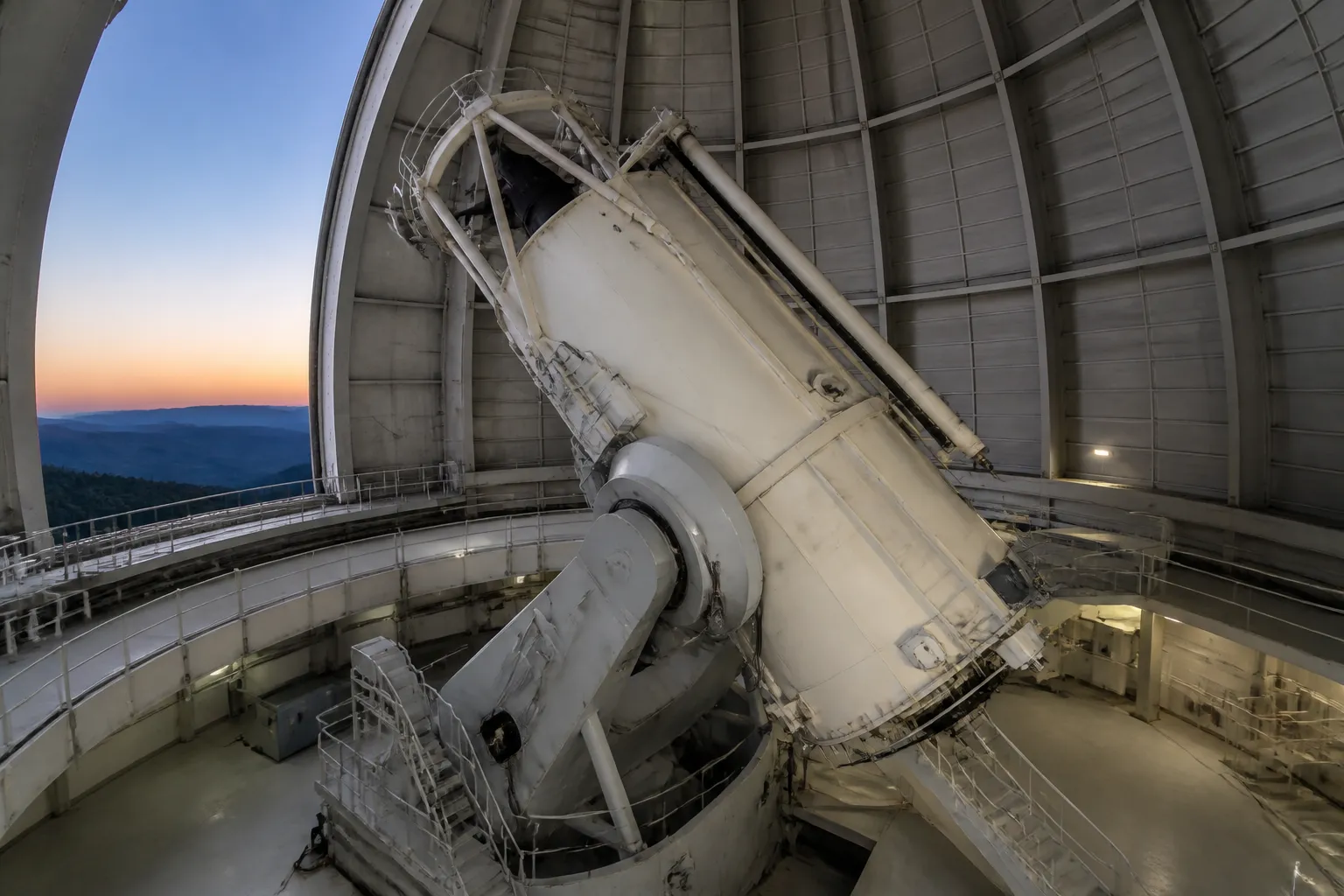
DESI is mounted on the Nicholas W. Mayall 4-meter telescope at the Kitt Peak National Observatory in Arizona. The instrument measures the spectra of galaxies and quasars. By determining their redshift—the stretching of light caused by the expansion of the universe—astronomers can calculate distances to objects and transform a flat image of the sky into a three-dimensional map of space.
The main DESI survey began in 2021 to study the expansion of the universe and dark energy. As of April 2026, the project had mapped more than 47 million galaxies and quasars in three dimensions. According to David Schlegel, co-lead of the Legacy Surveys at Lawrence Berkeley National Laboratory, the survey has become an important part of astronomical research, and scientists frequently use the Legacy Imaging Viewer to study celestial objects.
Previous versions of the dataset have already been cited in more than 1,800 scientific papers. The latest release can help astronomers search for rare objects and phenomena, study the evolution of galaxies, and train artificial intelligence systems to analyze large datasets from future observatories.




