
Scientists in the US recorded alternating neural patterns 15 times per second — ScienceAlert
Researchers at the University of California, Berkeley, in the United States, described in a preprint an experiment in which the neural activity of macaques under conditions of rivalry between two images alternated about 15 times per second. As ScienceAlert reports, the work has not yet undergone peer review.
An experiment with two faces
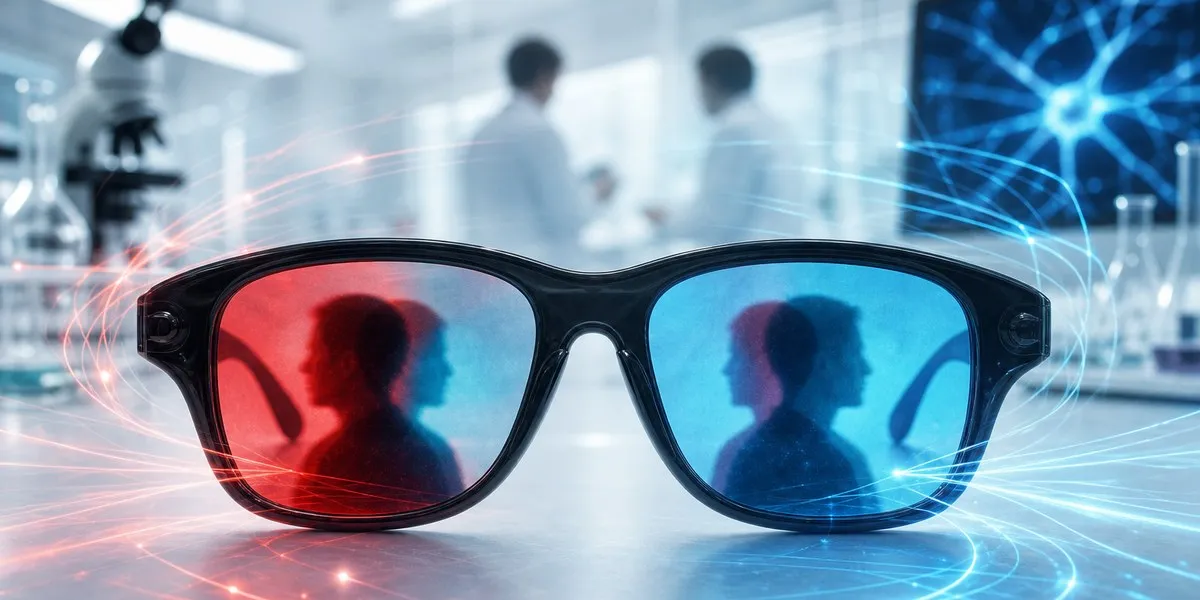
A team of neuroscientists led by Janis Hesse and Doris Tsao used the binocular flash suppression method. Macaques were shown two different faces through anaglyph glasses: first, one image was presented to one eye, and later another was presented to the other eye.
Both images continued to reach the eyes, but the new one usually dominates conscious perception, while the first is suppressed. To test this effect, the researchers involved people who could report which face they saw. This confirmed that after the second image appeared, it was predominantly the one that became available for conscious perception.
More current news is available on the UA.News Telegram channel Telegram.
What the neural recordings showed
In macaques, scientists simultaneously recorded the electrical activity of hundreds of neurons using electrodes in brain regions associated with visual information processing and face recognition. They identified two distinct activity patterns — for the first and second faces.
Despite the expected dominance of the second face, the neurons did not maintain the pattern associated with it continuously. Instead, activity rapidly alternated between patterns associated with the face that, according to the method check in humans, was supposed to dominate conscious perception, and the image suppressed from awareness. At moments associated with the consciously perceived face, neurons responded more accurately to its features than to those of the suppressed image.
The authors suggest that this process may help the brain process alternative visual information without changing current behavior. At the same time, the study included only two macaques, which could not report their own perception, and measurements were conducted only in specific visual areas of the brain.




