
Experts identify key barriers to terraforming Mars
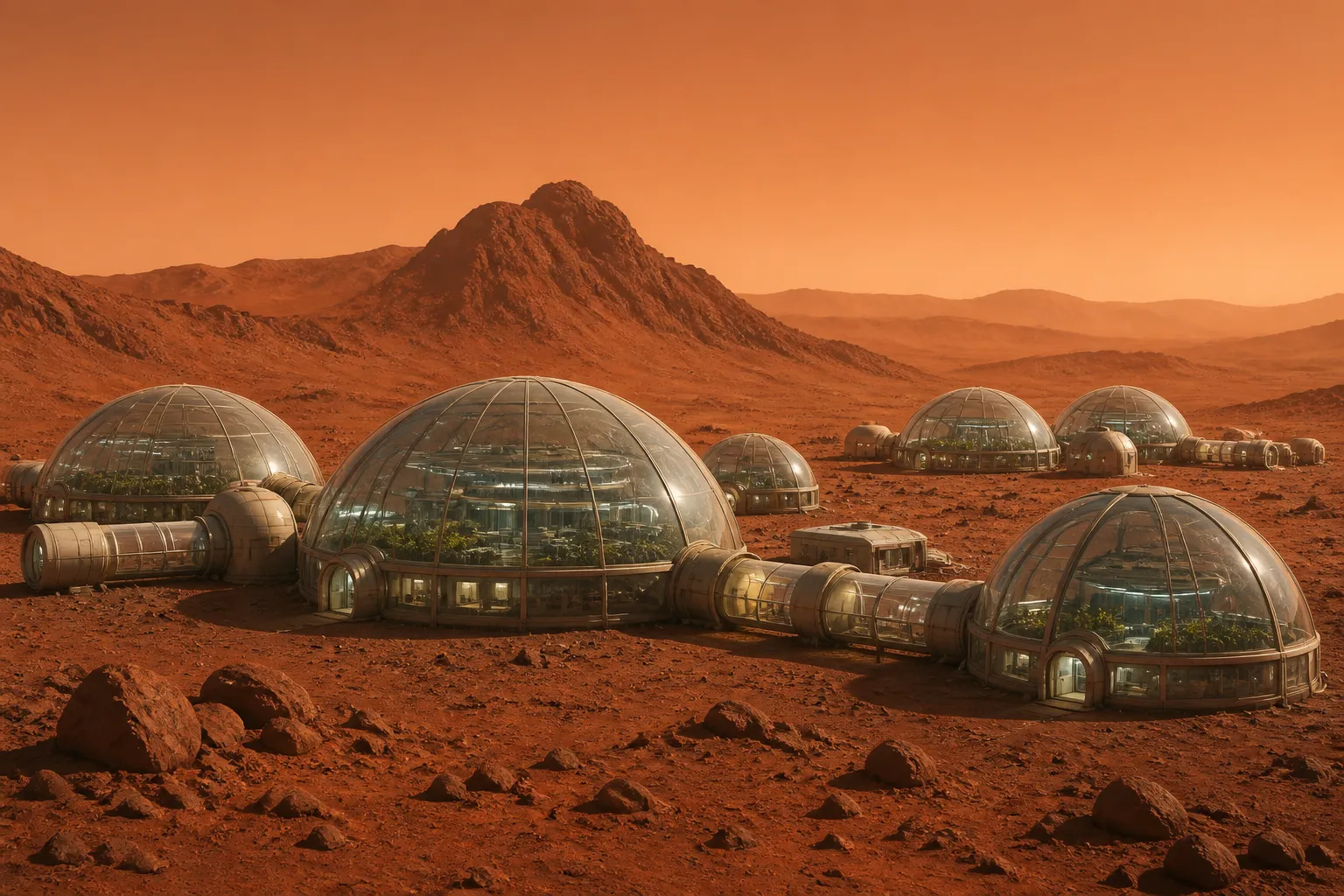
Full terraforming of Mars is currently impossible due to a lack of carbon dioxide, technological limitations and enormous cost, according to experts surveyed by Space.com. The discussion was timed to the 25th anniversary of John Carpenter's science-fiction film “Ghosts of Mars,” in which the Red Planet is 84% terraformed and inhabited by humans.
CO₂ shortage and cost
The Planetary Society's chief scientist Bruce Betts called the very limited amount of available carbon dioxide on Mars the main obstacle. According to him, global alteration of the planet would require extremely expensive programs with long-term, multigenerational support at a high level. He also pointed to political, economic and legal issues, including international agreements on planetary protection.
Betts cited a 2018 scientific paper by Bruce Jakosky and Christopher Edwards, which states that terraforming Mars is impossible using current technologies. He suggested that local environments, including domes using aerogel, could be a more realistic approach than transforming the entire planet. At the same time, the scientist doubts that such technologies will be easy to implement in practice.
Gravity and isolated life
Astronomer, science communicator and founder of Starlight Planetarium Mark Galloway named human life in enclosed settlements and the lack of data on the long-term effects of Martian gravity on the human body among the challenges. He noted that gravity on Mars is 0.38 of Earth's, while the consequences of prolonged stays in such conditions for human physiology remain unknown.
More current news is available on the UA.News Telegram channel Telegram.
According to Galloway, conflicts arose between participants during some experiments involving closed environments on Earth. He also drew attention to what he considers the toxicity of Martian soil for life, which could complicate growing plants in future colonies and require the delivery of suitable soil.
Ethics and space settlements
Astronomer and writer Jeffrey Bennett emphasized the ethical issues of changing the Martian atmosphere, including the possible impact on life forms that may exist on the planet. In his view, humanity should first learn to maintain Earth's climate before trying to make another world habitable.
Betts does not expect humanity to come significantly closer to real terraforming of Mars by 2176. As an alternative, Galloway proposed developing space settlements, including inside asteroids, which could be set rotating to create artificial gravity close to that of Earth.


