
Hubble has captured an image of a spiral galaxy with a black hole at its center
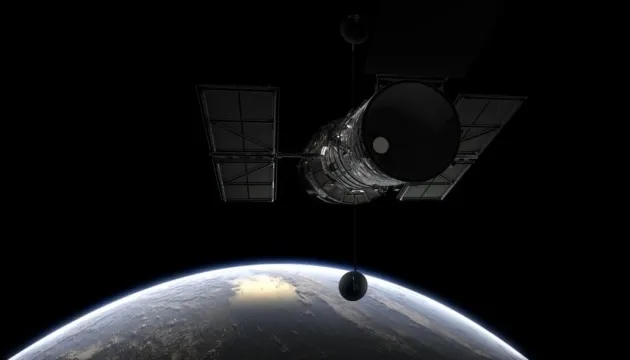
The Hubble Space Telescope has captured a detailed image of the spiral galaxy NGC 3137. It is located in the constellation Aquarius and contains a supermassive black hole. This was reported by NASA.
The NASA and ESA Hubble Space Telescope has captured a new image of the spiral galaxy NGC 3137, located in the constellation Eridanus. At the center of the galaxy, surrounded by dense dust structures, lies a supermassive black hole whose mass is approximately 60 million times that of the Sun. The galaxy itself is located about 53 million light-years from Earth.
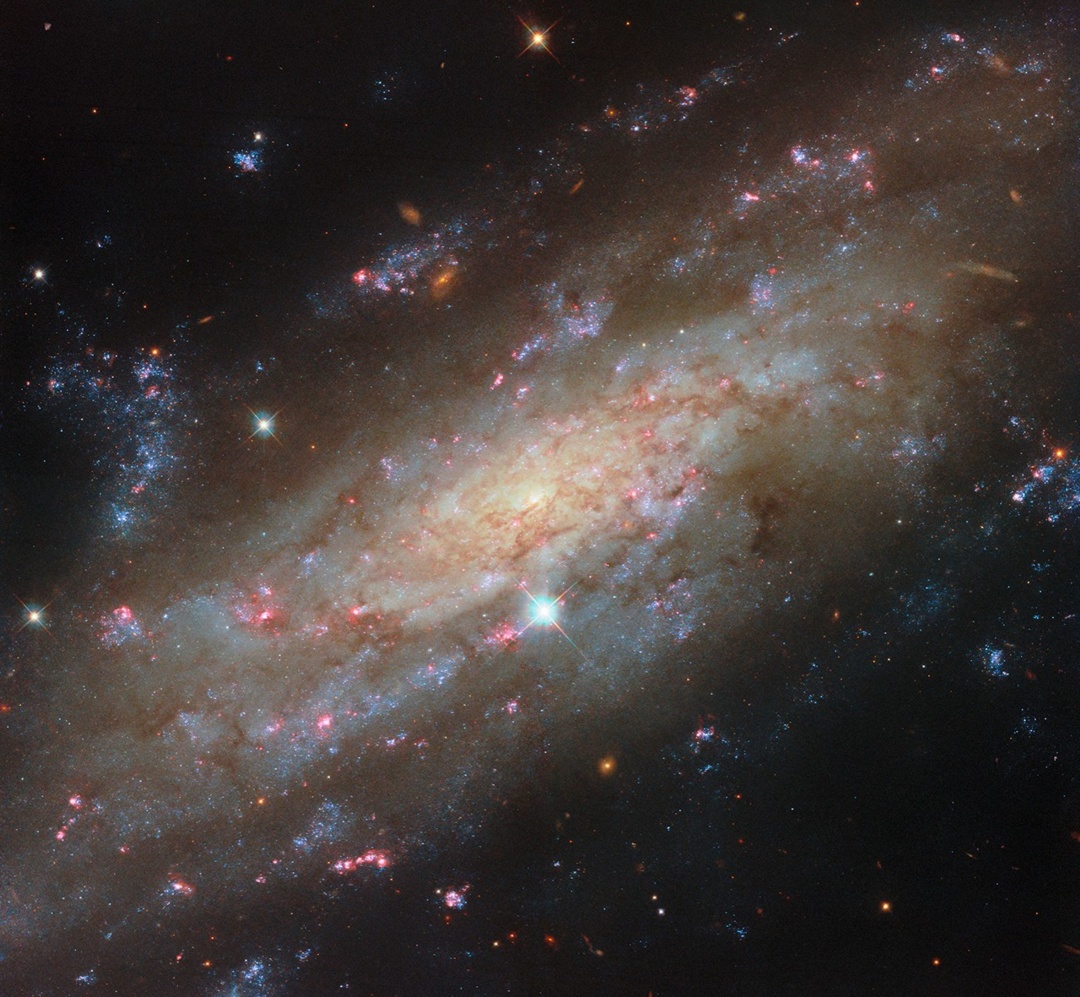
Scientists note that NGC 3137 is part of the NGC 3175 galaxy group, which resembles our “Local Group”—the system that includes the Milky Way—in structure.
Just like in our cosmic neighborhood, this group contains two large spiral galaxies—NGC 3137 and NGC 3175—as well as numerous dwarf galaxies. Researchers have already identified over 500 candidates for such objects.
Astronomers emphasize that studying such groups helps us better understand how galaxies form and interact, and also provides more data on the structure of our own galactic environment, where the Milky Way and the Andromeda Galaxy are located.
NASA has released new panoramic images of Mars taken by the Curiosity and Perseverance rovers.
It should be noted that such compounds are a common occurrence in space. The Japanese Hayabusa-2 probe delivered similar compounds from the asteroid Ryugu. And NASA researchers have detected organic compounds, including sugar molecules, in samples brought back from the asteroid Bennu.
The Curiosity rover has identified more than 20 types of organic molecules, including a nitrogen-containing compound structurally similar to the building blocks of DNA.


