
China tested a handheld magnetometer on a subway train — South China Morning Post
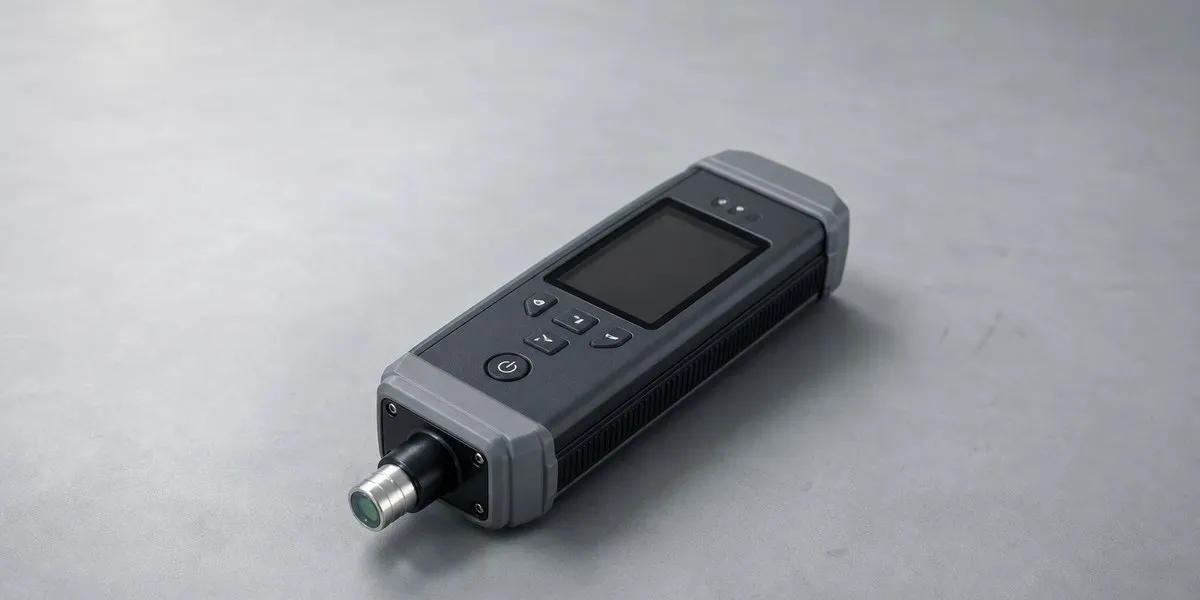
Chinese researchers tested a handheld quantum magnetometer, recording magnetic disturbances from a subway train moving beneath a city street. The device was developed by Peng Xinhua and his colleagues at the University of Science and Technology of China, South China Morning Post reports.
During the test, the device identified the stages of the train’s movement: braking before the station, stopping and departing under traction. The magnetometer has a volume of about 7 cubic centimeters, is nearly the size of a pencil and consumes 5 watts of power. A study of the device was published in the journal Acta Physica Sinica on September 14.
How the device works
The magnetometer uses laser light that passes through a small cell containing rubidium vapor. Changes in the magnetic field affect the response of rubidium atoms and the amount of light passing through the cell. Based on these changes, the system calculates magnetic field strength.
More current news is available on the UA.News Telegram channel Telegram.
In the low-frequency range from 0.1 to 10 hertz, the device’s sensitivity is approximately 10 picotesla per square root of hertz. The authors noted that their device is less sensitive than some superconducting and atomic magnetometers, but is designed to operate in a moving environment and under strong magnetic interference.
Field testing
The developers used an algorithm that controls atomic resonance and, if a stable signal is lost, reacquires it in less than a second. According to the study, the device’s rate of tracking magnetic field changes reaches 25,200 nanotesla per second, while the article gives a figure of about 10,000 nanotesla per second for the Mz magnetometer made by the U.S. company QuSpin.
The device was also tested during a G4-level geomagnetic storm, when its data were compared with readings from an INTERMAGNET network station in Cheongyang, South Korea. Separately, the magnetometer was used to search for a magnetic rod buried about half a meter deep in a 40-by-25-meter agricultural plot. The authors named navigation, mineral exploration, demining, urban traffic flow monitoring and submarine detection among the technology’s potential applications.




