
Chinese scientists create X-ray system for imaging moving objects
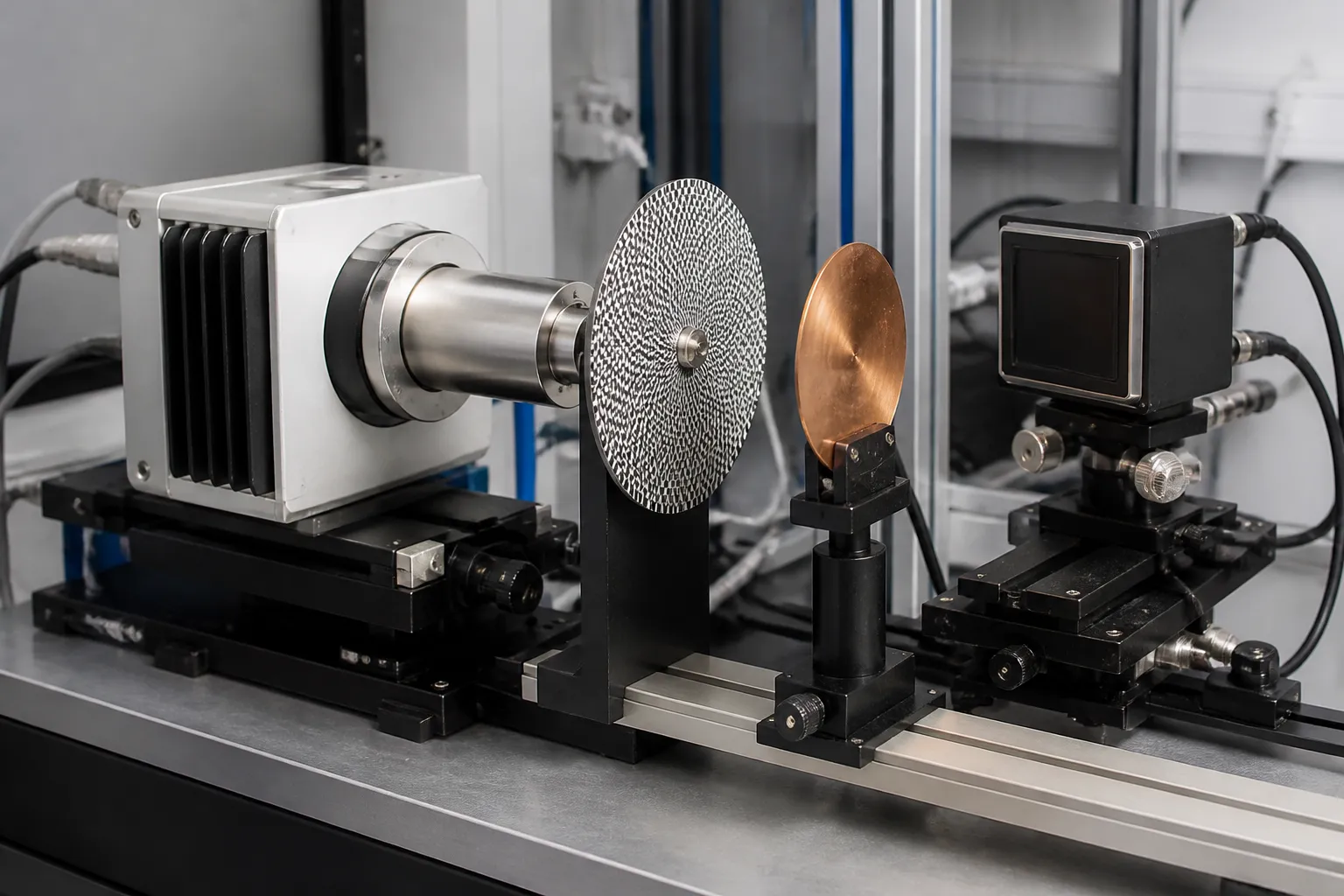
Researchers from the Chinese Academy of Sciences and Shanghai Jiao Tong University have developed a tabletop X-ray “ghost” imaging system for recording images of moving objects at speeds of up to 200 frames per second. The development was reported by South China Morning Post. The results of the work were published on August 15 in the peer-reviewed journal Communications Physics.
The scientists believe the method could be used for non-destructive inspection of moving mechanical components, including rotating aircraft engines, as well as for in vivo medical imaging, such as heart movements.
How the method works
In conventional X-ray imaging, radiation passes through an object, while a detector or film on the other side directly forms its image. In “ghost” imaging, X-rays first pass through a filter with patterns. A single-pixel detector measures the total signal intensity, after which a computer compares the measurements with known patterns and reconstructs the image.
More current news is available on the UA.News Telegram channel Telegram.
Typically, this method requires changing the patterned filter after each exposure, which increases the total image acquisition time. The Chinese team used a rotating mask with fine patterns: as it rotates, the patterns change rapidly, speeding up data collection.
Testing on a copper disk
The system was tested on a rotating copper disk bearing letters. The setup reconstructed the letters and continuously recorded their movement, although image quality deteriorated as the rotation speed increased.
Compared with a conventional X-ray camera, the new system generally produced lower-quality images. At the same time, a traditional camera delivered sharper frames of stationary letters, but when they moved, it encountered blurring and gaps between frames, which could make images distorted or incomplete. According to the researchers, the method’s speed is primarily limited by the mask’s rotation speed and the sampling rate of the detection system. The team also stated that the technology has potential to operate with a lower radiation dose and a simpler configuration than some conventional X-ray methods.




