
NASA is investing nearly $600 million in new missions to the Moon
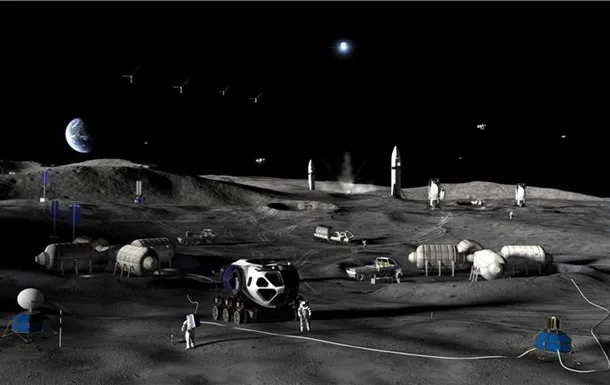
NASA has awarded contracts worth nearly $600 million to three U.S. companies to carry out new commercial missions to the Moon. The project is intended to be an important step toward establishing a permanent base on Earth’s moon, supporting future crewed expeditions, and preparing for flights to Mars.
By the end of 2028, Astrobotic, Firefly Aerospace, and Intuitive Machines will carry out four robotic scientific missions as part of the Commercial Lunar Payload Services (CLPS) program.
Astrobotic received the largest contract—$297.9 million to carry out two lunar missions.
Firefly Aerospace received two contracts—$144.2 million for one mission—and Intuitive Machines received $148.3 million, also for one mission.
The total value of the contracts is nearly $600 million.
NASA reported that the new missions will use upgraded versions of landers already developed by private companies. This will increase launch frequency, improve flight reliability, and accelerate the development of lunar infrastructure.
“These new contracts with our commercial partners, totaling nearly $600 million, demonstrate our commitment to accelerating the establishment of a long-term human presence on the Moon’s surface,” said Lori Glaze, deputy director of NASA’s Human Spaceflight Directorate.
Ryan Stefan, Acting Director of the Lunar Lander Program, noted that each new landing will serve as a testing ground for technologies for a future lunar base, and the experience gained will be used to improve future missions.
NASA has already planned 17 commercial missions to deliver cargo to the Moon.
Each of the four new expeditions will deliver three NASA scientific instruments that will help prepare for future astronaut flights.
Among them are:
- Stereo Camera for Lunar Plume Surface Studies — a system that will generate high-resolution 3D images to study the impact of landing module exhaust plumes on lunar dust.
- Laser Retroreflector Array — a laser navigation beacon that will help spacecraft more accurately determine their location on the Moon’s surface.
- Linear Energy Transfer Spectrometer — an instrument for measuring cosmic radiation levels, which will help improve the safety of future crewed expeditions.
According to Joel Kerns, deputy director of NASA’s research division, using the same instruments on different missions will help create a detailed map of conditions on the Moon, much like how a network of weather stations provides a picture of Earth’s climate.
At the same time, NASA is expanding its collaboration with industry partners to develop future lunar infrastructure.
In particular, the agency is evaluating the potential use of the PROMISE rover, based on technologies from the Perseverance and Curiosity Mars rovers. It is expected to search for natural resources and explore areas near the Moon’s south pole.
NASA also plans to announce new solicitations for the development of commercial landers, technology demonstrations, missions to image the Moon’s south pole, and communication relay systems between lunar infrastructure and Earth.
NASA emphasizes that the implementation of these projects should lay the technological foundation for a long-term human presence on the Moon and prepare for future expeditions to Mars.
This is reported by Interesting Engineering.
Earlier, NASA’s Curiosity rover detected the most diverse set of organic compounds in the history of Red Planet exploration.


