
NASA has halted its attempt to raise the Swift observatory's orbit
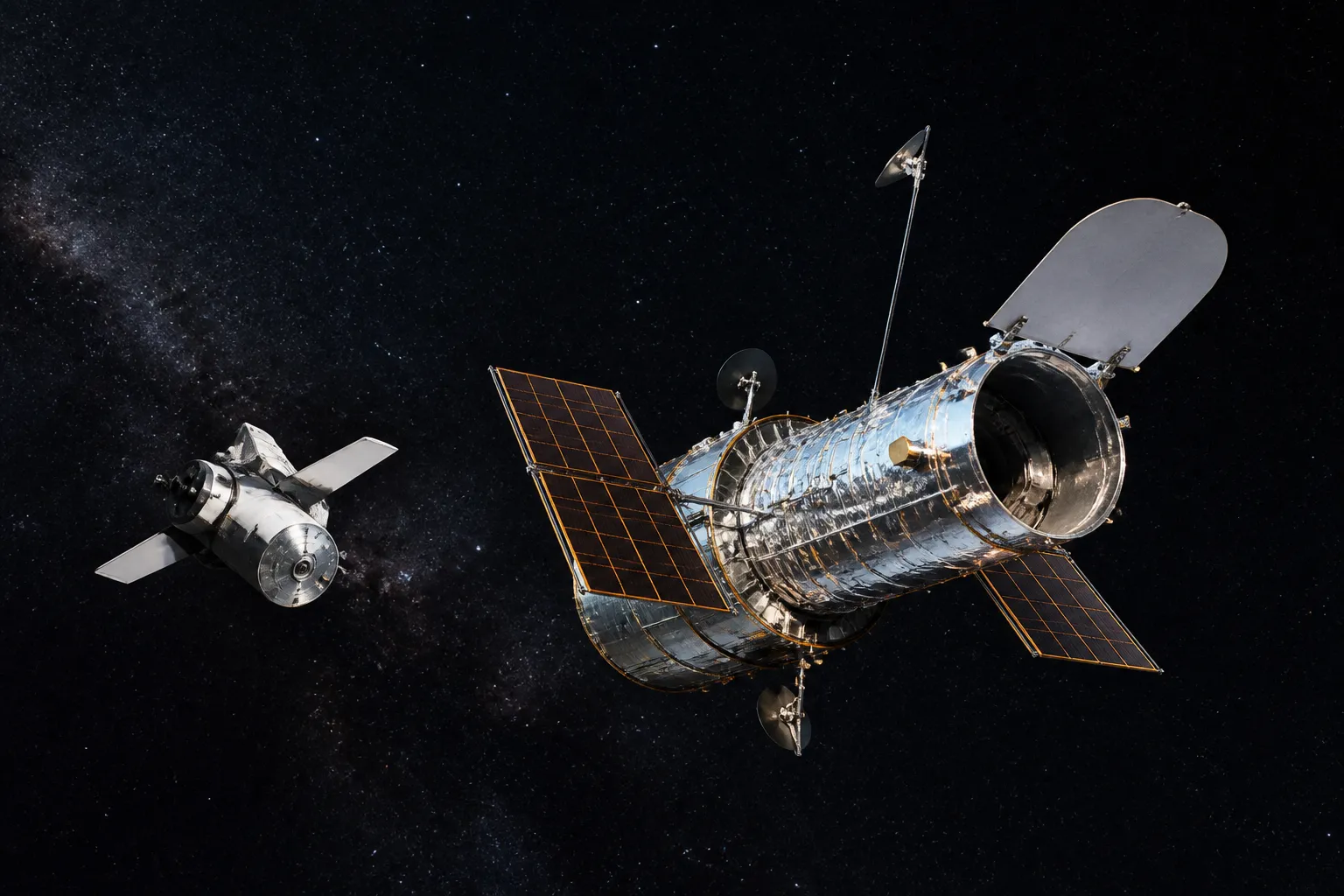
NASA has halted its attempt to raise the orbit of the Neil Gehrels Swift space observatory due to problems with Katalyst Space’s private LINK spacecraft, according to Space.com. The spacecraft was supposed to approach Swift, capture the observatory, and move it into a more stable orbit.
LINK was launched into space on July 3 aboard a Northrop Grumman Pegasus XL air-launched rocket. About three weeks after launch, the spacecraft began spinning uncontrollably. On August 19, NASA announced the end of its attempts to raise Swift’s orbit, citing ongoing problems with LINK’s attitude control system.
However, NASA has not canceled the mission entirely. LINK is still set to attempt to approach Swift to practice operations near another spacecraft and demonstrate capabilities unrelated to satellite capture. According to NASA, the results of this demonstration could be useful for future spacecraft servicing missions.
For more breaking news, follow the UA.News Telegram channel.
NASA has awarded Katalyst Space a $30 million contract for the Swift Boost mission in 2025. Due to increased solar activity, the observatory’s orbit was declining faster than expected. The company had less than a year to design, manufacture, and test LINK before the window of opportunity to rescue Swift closed.
The Swift observatory is designed to study high-energy phenomena in the universe. It is capable of detecting sudden events, such as gamma-ray bursts, and quickly directing its instruments to study them in the X-ray, ultraviolet, and visible light ranges. It is also used for operational observations of newly discovered supernovae, black hole outbursts, fast radio bursts, and other short-lived astronomical phenomena.
According to NASA’s assessment, without an orbital correction, Swift will descend to a critically low altitude in Earth’s atmosphere by the end of the year. The agency stated that it will continue to seek ways to respond quickly to space events, and existing missions will temporarily help fill this gap.


