
NASA has launched Artemis II: the first crewed flight to the Moon in 50 years
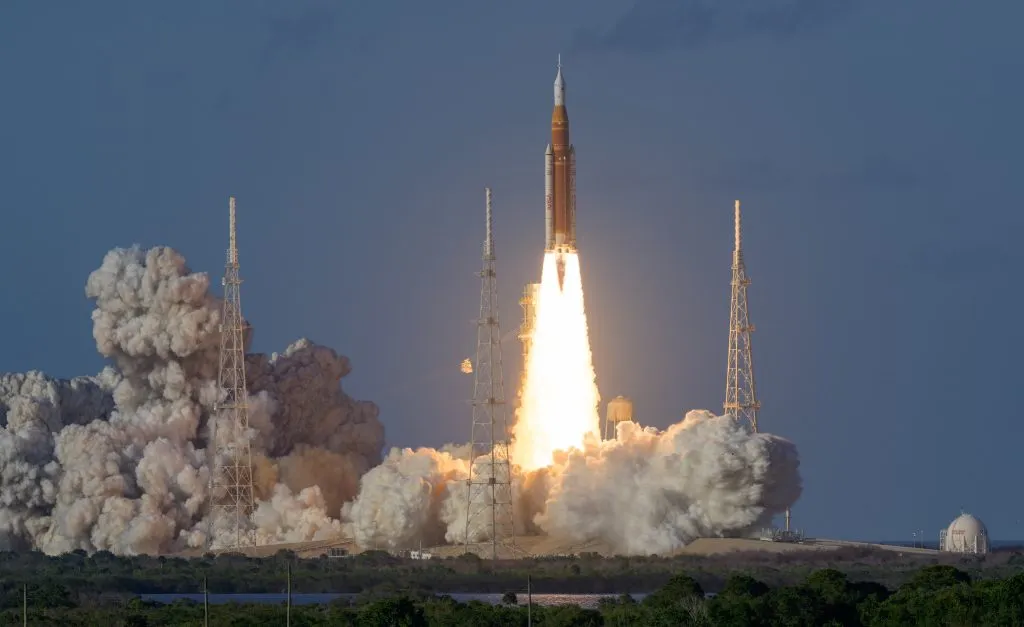
On Wednesday, April 1, 2026, NASA successfully launched the Artemis II mission, marking the first crewed flight around the Moon in more than half a century.
The crew of four astronauts will spend 10 days in space, ushering in a new era of lunar exploration and testing systems for future flights.
The massive Space Launch System (SLS) rocket, as tall as a 30-story building, lifted off from the Kennedy Space Center, carrying the Orion capsule with the crew into deep space. The powerful launch was accompanied by a massive plume of vapor illuminated by the evening sun.
Artemis II Crew
- Reed Wiseman (NASA) — commander;
- Victor Glover (NASA) — pilot;
- Christina Koch (NASA) — mission specialist;
- Jeremy Hansen (Canadian Space Agency) — mission specialist.
A few minutes before launch, Canadian astronaut Jeremy Hansen addressed the world: “We are going for all of humanity.”
Mission objectives and flight records
- The astronauts will travel 406,000 km from Earth, setting a record for the farthest human journey into space, surpassing the legendary “Apollo 13.”
- They will manually control the Orion spacecraft, testing its maneuverability after separation from the rocket’s upper stage.
- Testing of life support systems, as this is Orion’s first flight with humans on board.
- Performing a gravity assist maneuver on the far side of the Moon to ensure a safe return to Earth.
The success of Artemis II will be a major milestone for Boeing and Northrop Grumman, which have been developing the SLS rocket for over a decade. NASA is also actively engaging private companies—SpaceX and Blue Origin are competing to build landing modules for future Moon landings.
NASA Administrator Jared Isaacman emphasized that every step of the mission has been carefully planned: “This flight opens the door to a sustained human presence on the Moon and future expeditions to Mars.”
The Artemis II mission symbolizes the beginning of a new phase in space exploration, as well as the U.S. ambition to outpace China in the “moon race,” as the landing of American astronauts on the lunar surface is already scheduled for 2028.
The mission will be a crucial step in the Artemis program, which is preparing humans to return to the lunar surface.
A previous launch attempt in February was postponed due to technical issues with the valves in the SLS rocket’s fuel system. Now, following the successful completion of critical tests, the agency is confident: the rocket is ready for flight, and the crew is ready for a historic mission.


