
Scientists identify alloys resistant to damage at −253°C — ScienceDaily
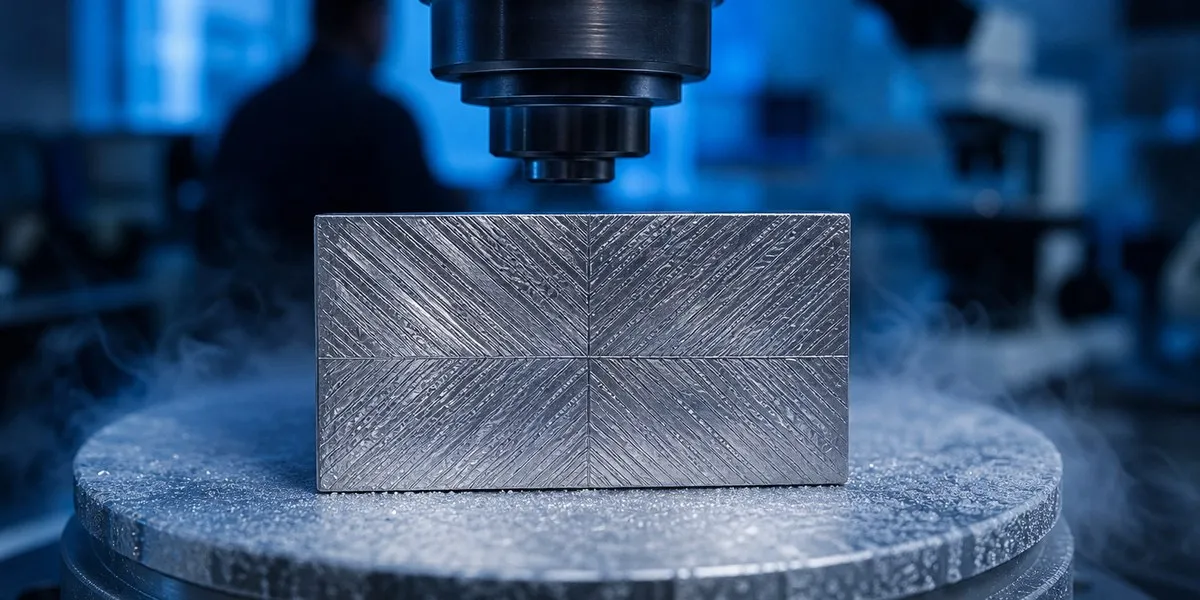
In the United Kingdom, an international group of scientists identified two experimental niobium- and titanium-based alloys that showed no noticeable transition to brittle fracture at a temperature of 20 kelvin, or −253°C. Tests on the samples were conducted in Oxfordshire. ScienceDaily reports on the results of the study, published on October 14 in the journal Nature.
An alternative way of deformation
At low temperatures, metals usually become stronger, but they can also become brittle: instead of deforming under load, they tend to crack. This is particularly characteristic of metals with a body-centered cubic crystal lattice, including iron, tungsten, and chromium.
Normally, a metal deforms through the movement of dislocations — defects in the crystal structure that allow layers of atoms to shift. In the cold, this movement becomes more difficult, so stress near a crack more often leads to material failure.
More current news is available on the UA.News Telegram channel Telegram.
In the alloys studied, scientists recorded a different process — nanoscale twinning. Small regions of the crystal structure rearranged into mirror-symmetrical configurations; this was accompanied by a local structural change. Local stress concentrations arose at the boundaries between neighboring crystallites, creating new dislocations. This allowed the material to deform and absorb loads instead of propagating cracks.
Testing with neutrons
The samples were cooled with gaseous helium to approximately −253°C and stretched at the Engin-X facility at the ISIS Neutron and Muon Source. During the tests, a beam of neutrons was directed through the metals to track changes inside the material under load. A special setup made it possible to measure the forces the samples withstood and determine how far they could be stretched before failure.
The samples were then examined using electron microscopy and atom-probe analysis, which showed the distribution of elements in the alloys. These data, together with computer modeling, made it possible to describe the mechanism that prevents brittle fracture. The researchers believe the results could offer a new approach to developing structural metals for energy, transport, and aerospace equipment operating at extremely low temperatures.




