
Treated wastewater can be used to cool data centers
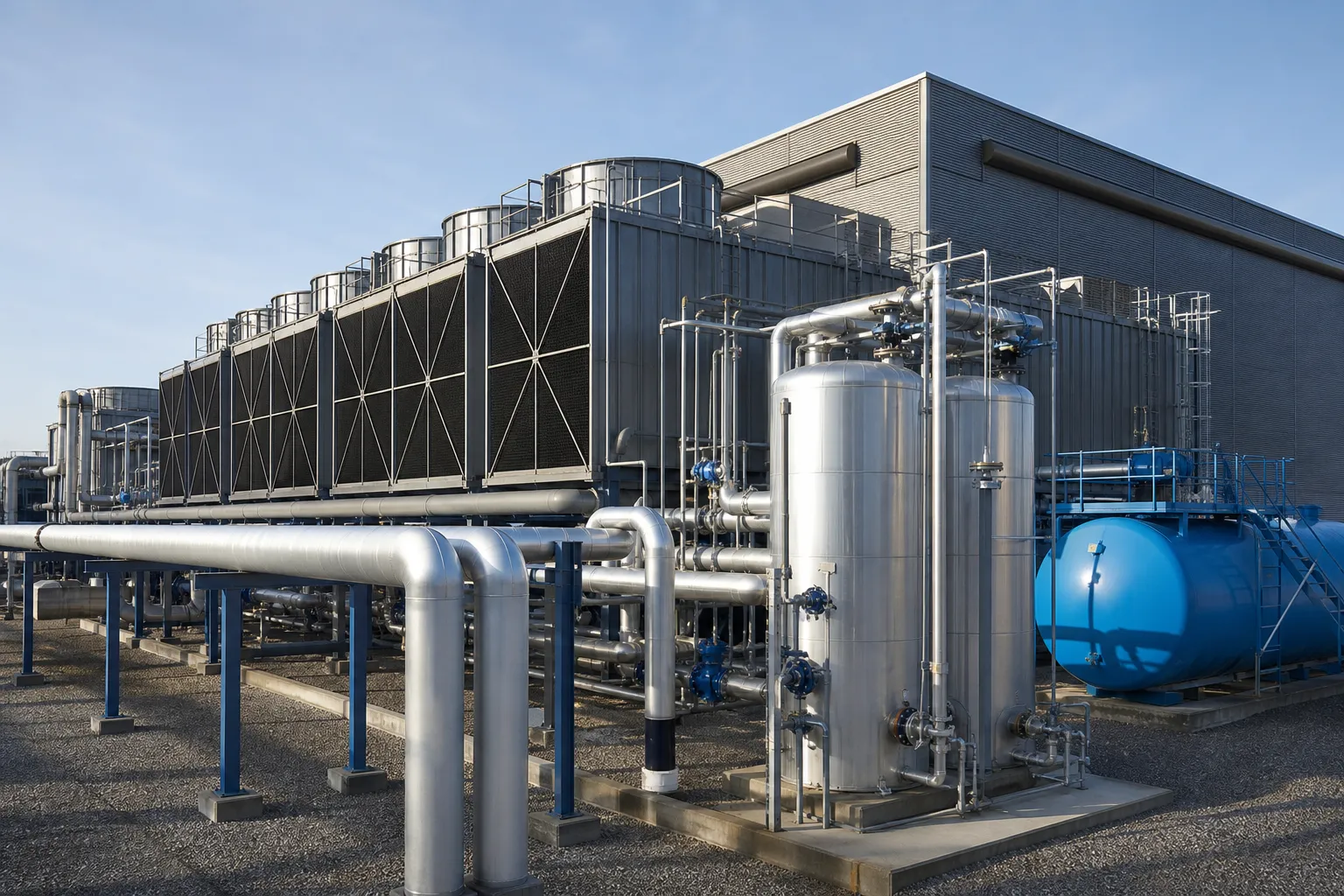
The use of treated wastewater can partially reduce data centers’ need for drinking water to cool servers. TechCrunch drew attention to this practice following an advertising campaign by Liquid Death and Garage Beer featuring former Philadelphia Eagles player Jason Kelce, who jokingly suggested using urine for this purpose.
As Bruno Pigott, executive director of the WateReuse Association, explained to the publication, urine cannot be used directly in cooling systems. It contains salts, urea, bacteria, and organic substances that can form mineral deposits and require constant cleaning of the equipment. Specifically, in evaporative cooling systems, hot air is passed through water to remove heat through evaporation.
Instead, wastewater can be treated to a standard suitable for industrial use. To achieve this, wastewater treatment plants use membrane bioreactors, reverse osmosis, ultraviolet radiation, and other methods. In some cases, the water is even treated to drinking water standards, though data centers can use it for industrial purposes.
Read more breaking news on the UA.News Telegram channel.
Greta Zornes, head of the water reuse practice at engineering firm CDM Smith, noted that treated water has been used for cooling in various industries for decades, and demand for such solutions for data centers has grown. At the same time, their implementation depends on the availability of sufficiently powerful treatment facilities and pipeline infrastructure, especially if data centers are built in rural areas.
In Loudoun County, Virginia, which is home to more than 250 data centers, there are plans to build at least two dozen more. As of 2025, the county’s data centers were using about 200 million gallons of treated water daily. According to Loudoun Water, this accounted for 43% of their daily water consumption; another 260 million gallons, or 57%, came from the drinking water supply.
Ecolab Vice President Michael Obradovich believes that the artificial intelligence industry can help develop water infrastructure. In particular, Meta plans to invest at least $270 million in wastewater infrastructure projects near its data centers.


