
OpenAI is developing a smartphone with AI agents instead of apps

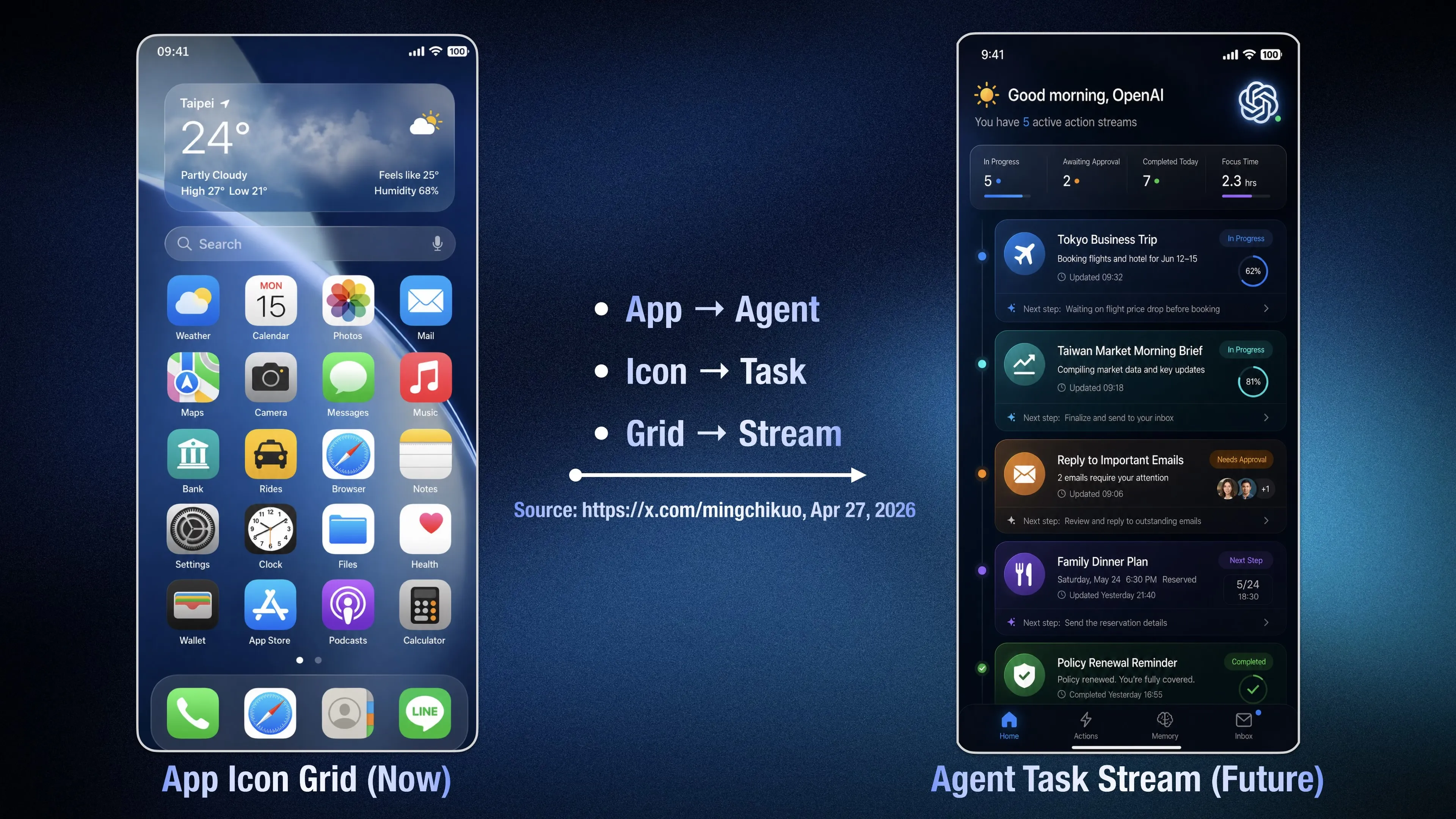
OpenAI is working on developing its own next-generation smartphone that will operate without traditional apps. Instead, all tasks will be performed by artificial intelligence acting as a universal agent.
The developers announced this on the X network.
The concept envisions that users will no longer open individual apps. The AI agent will interact with services independently—executing requests, processing information, and delivering results in the background.
Leading technology partners, including MediaTek and Qualcomm, are involved in the device’s development and are working on the processors. Meanwhile, Luxshare is responsible for system design and manufacturing.
OpenAI plans to control both the hardware and software components of the device. This will allow for system-wide integration of artificial intelligence and ensure real-time data processing.
Computations will be distributed between the smartphone itself and cloud services: basic functions will be performed locally, while complex tasks will be handled in the cloud.
According to preliminary estimates, mass production of such a smartphone could begin in 2028. Key technical specifications are expected to be finalized in late 2026 or early 2027.
The company views this project as the foundation for creating its own ecosystem that will integrate the device, subscriptions, and developer tools.
Earlier, OpenAI unveiled its new GPT 5.5 AI model, which no longer simply responds to queries but can independently understand tasks and execute them without detailed instructions. Essentially, this marks a step toward a system that is less dependent on the user and functions more as a standalone tool.
OpenAI has released a new version of its image generator in ChatGPT. This is ChatGPT Images 2.0, which features improved capabilities and support for searching for information on the internet.


